
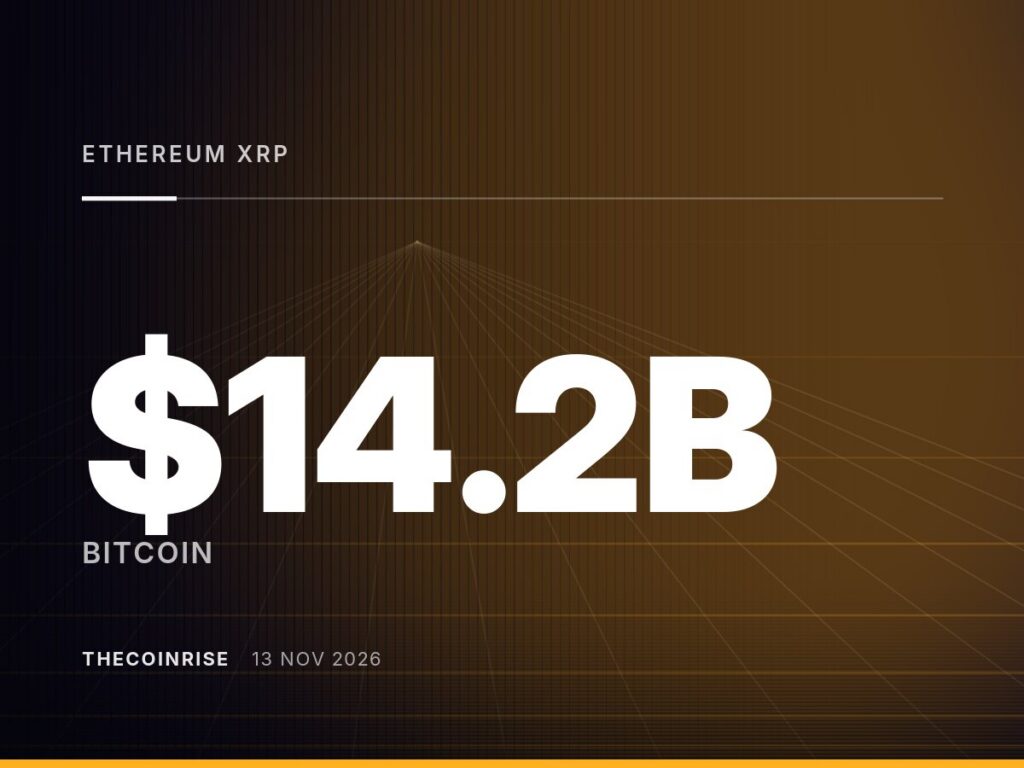


A sharp pullback in stablecoin supply has coincided with a broad sell-off across major cryptocurrencies, according to crypto.news and Cryptonews.com.
Bitcoin, Ethereum and XRP all posted steep losses as traders woke up to a market that had turned sharply negative overnight. Crypto.news reported the declines were tied to a broader tightening of liquidity across digital asset markets. Cryptonews.com separately reported a $14.2 billion drop in stablecoin supply, describing it as the trigger that escalated an otherwise ordinary bad morning into a market-wide rout.
Stablecoins serve as the primary settlement currency for most crypto trading. They sit between exchanges, market makers and investors, providing the liquidity that keeps bid-ask spreads tight and price swings manageable. When stablecoin supply contracts quickly, it signals that capital is leaving the ecosystem rather than simply rotating between tokens. That outflow can leave order books thinner and more vulnerable to sharp price moves.
A shrinking stablecoin base matters because it often reflects reduced willingness among traders and institutions to hold dollar-pegged assets on-chain. Redemptions can occur for many reasons, including risk aversion, regulatory pressure, or simply profit-taking after a run-up. Whatever the cause, a fast drain removes a cushion that otherwise absorbs selling pressure during volatile sessions.
The simultaneous declines in Bitcoin, Ethereum and XRP suggest the sell-off was not limited to a single asset or sector. Instead, it appears to reflect a market-wide repricing as liquidity conditions deteriorated. Large-cap tokens, which typically have deeper markets than smaller altcoins, still registered notable losses, pointing to the scale of the pressure.
Market liquidity crunches of this kind have occurred before in crypto history, often following periods of rapid price appreciation or heightened macro uncertainty. Thinner liquidity amplifies both upside rallies and downside corrections, since fewer buyers and sellers are available to absorb large orders without moving prices significantly. That dynamic can make a modest initial decline snowball into a steeper one within hours.
Both crypto.news and Cryptonews.com framed the stablecoin drain as a central element of the story, even as they approached it from different angles. Crypto.news focused on the liquidity backdrop driving the price action across Bitcoin, Ethereum and XRP. Cryptonews.com emphasized the specific scale of the stablecoin outflow and its role in intensifying the broader market downturn.
Market Impact
A sudden stablecoin supply contraction tends to raise trading costs and increase volatility across crypto markets, since fewer dollar-equivalent tokens are available to facilitate trades. If the drain persists, exchanges and market makers may see wider spreads and shallower order books, conditions that historically have preceded further price swings in both directions.
For Bitcoin, Ethereum and XRP specifically, continued liquidity pressure could mean sharper reactions to future news events, whether positive or negative. Investors and traders are likely to watch stablecoin supply figures closely in coming sessions as an early indicator of whether liquidity conditions are stabilizing or deteriorating further.
The simultaneous decline in Bitcoin, Ethereum and XRP, paired with a significant stablecoin outflow, underscores how closely crypto price action remains tied to underlying liquidity conditions. Traders will be watching whether stablecoin supply stabilizes in the sessions ahead.
Frequently Asked Questions
What caused Bitcoin, Ethereum and XRP to fall sharply?
Crypto.news reported the declines were linked to tightening liquidity across crypto markets, while Cryptonews.com attributed part of the move to a $14.2 billion drop in stablecoin supply.
Why does a stablecoin supply drain affect prices across multiple cryptocurrencies?
Stablecoins provide the liquidity traders use to buy and sell other crypto assets. When that supply shrinks quickly, order books can thin out, making prices more volatile across the board.
Is this decline specific to Bitcoin, Ethereum and XRP, or broader?
Reports describe the sell-off as market-wide, with large-cap tokens like Bitcoin, Ethereum and XRP all affected alongside the broader liquidity squeeze.
What should investors watch going forward?
Analysts following this story suggest monitoring stablecoin supply levels, since further outflows could signal continued liquidity stress, while stabilization could ease volatility.




Read More
All News


November 13, 2026
Kraken Pushes Back Nakamoto Loan Deadline to December 2027
November 13, 2026