

The senator is asking Tether to explain payments to a consulting firm co-owned by the former White House crypto adviser
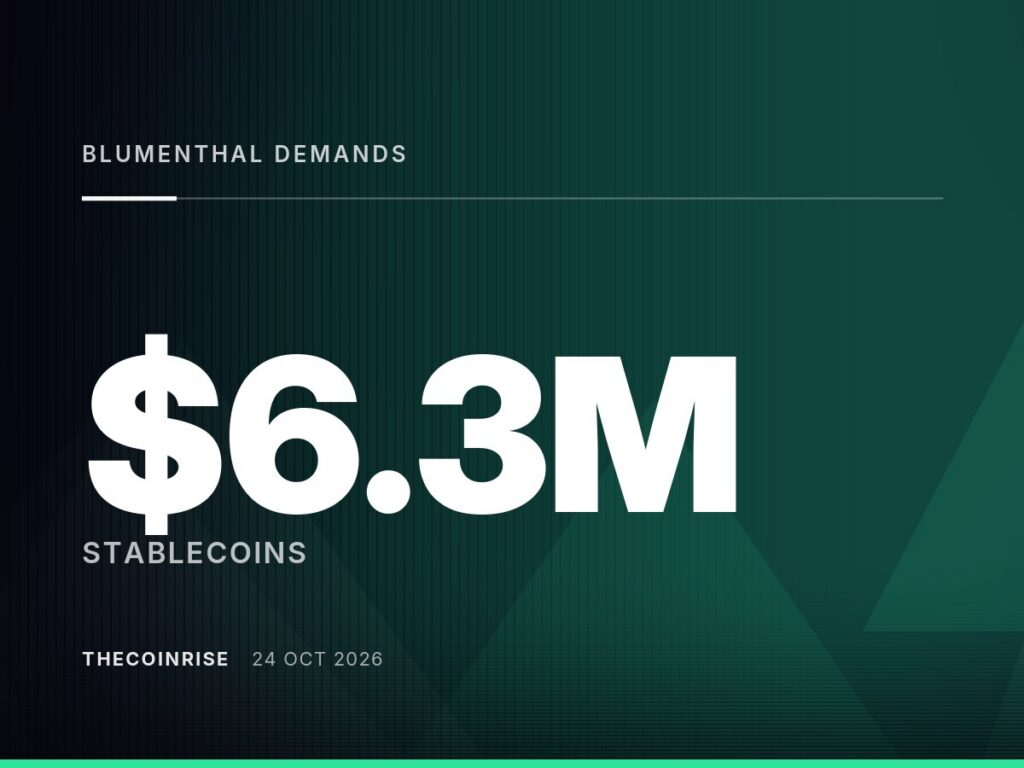
Senator Richard Blumenthal has opened an inquiry into Tether, the issuer of the world’s largest stablecoin. He wants records detailing roughly $6.3 million in payments allegedly sent to a consulting firm co-owned by Bo Hines. Hines previously served as a crypto adviser inside the White House.
The request, reported by multiple outlets covering Washington’s crypto policy beat, centers on whether Tether compensated a firm tied to someone who once helped craft federal digital asset policy. Blumenthal, a Senate Democrat, has pressed for documentation clarifying the nature, timing, and purpose of the payments.
Hines left his White House post earlier and later co-founded a consulting firm. That firm reportedly received payments from Tether, according to the reports driving this inquiry. The exact services rendered in exchange for the money have not been detailed publicly.
Tether has built its business around issuing USDT, a stablecoin pegged to the US dollar and widely used across crypto trading markets. The company has faced scrutiny for years over its reserves, banking relationships, and its influence in Washington as regulators debate stablecoin oversight.
Blumenthal’s inquiry fits a broader pattern of congressional interest in ties between crypto firms and former government officials. Lawmakers have grown more attentive to potential conflicts of interest as digital asset companies lobby for favorable rules. The senator’s request signals that oversight committees intend to examine not just company practices but also personal and financial connections between regulators-turned-advisers and the industry they once oversaw.
The timing matters. Congress has spent much of the past two years debating stablecoin legislation, with Tether frequently cited as a case study given its dominant market share. Any revelation about undisclosed financial relationships between Tether and a former policy adviser could complicate that legislative process. It could also fuel calls for stricter disclosure requirements for crypto firms engaging with current or former government personnel.
Neither Tether nor representatives for Hines have issued detailed public responses addressing the specific allegations referenced in the senator’s request, based on the available reporting. It remains unclear what documents Tether will provide or on what timeline. Blumenthal’s office has not specified a deadline for compliance in the materials reviewed so far.
The inquiry adds to a growing list of congressional requests aimed at crypto companies over the past year. Senators from both parties have sought information on everything from stablecoin reserves to political donations. This latest request narrows the focus to a specific financial relationship, rather than broader industry practices, which may make it easier for investigators to trace.
Sources disagree on this story
This article was published before the reports below were compared. The reporting above stands; what follows is where the published accounts do not agree.
Reports on Sen. Blumenthal's letter to Tether CEO Paolo Ardoino agree on the substance of the inquiry but disagree on the date by which Tether was told to respond.
What all sources agree on
- Sen. Richard Blumenthal sent a letter to Tether CEO Paolo Ardoino seeking records on Tether's dealings with Bo Hines and his consulting firm, Nxum.
- The Wall Street Journal reported that Nxum received approximately $6.3 million from a deal with Tether.
- Hines, while serving on the President's Council of Advisers on Digital Assets, is reported to have pushed to extend the GENIUS Act's stablecoin compliance window from 18 to 36 months.
- Blumenthal raised ethics, anticorruption, and lobbying law concerns over the arrangement.
Where the reports disagree
1Deadline given to Tether to respond to Blumenthal's records request
Blumenthal gave Tether until Nov. 3 to respond.
giving the firm until November 3 to respond
Both companies have until Nov. 6 to respond.
Lawmakers demand the submission of all contracts, financial statements, and encrypted message exchanges by November 6, 2026.
What would settle it: The text of Blumenthal's letter to Tether CEO Paolo Ardoino, which would state the response deadline explicitly.
What to make of it
Treat the existence of Blumenthal's inquiry, the $6.3 million figure, and the ethics concerns as established; the exact response deadline (Nov. 3 vs. Nov. 6) is unresolved until the underlying letter is checked.
Market Impact
The inquiry is unlikely to move stablecoin markets immediately, since Tether's USDT continues to function as a core liquidity instrument across exchanges regardless of political scrutiny. However, sustained congressional attention to Tether's Washington relationships could influence the pace and shape of pending stablecoin legislation.
If the probe uncovers undisclosed lobbying arrangements or conflicts of interest, it could strengthen arguments for tighter oversight of stablecoin issuers generally. That would matter for the broader digital asset industry, which has pushed for clear federal rules to support institutional adoption. Investors and exchanges relying on USDT liquidity will likely watch for any regulatory response stemming from the inquiry's findings.
The outcome of Blumenthal's request could shape how lawmakers approach stablecoin oversight going forward. For now, the scope of Tether's relationship with Hines' firm remains under review, with key details yet to be confirmed publicly.
Frequently Asked Questions
Who is Bo Hines?
Bo Hines previously served as a crypto policy adviser within the White House before later co-founding a consulting firm.
What is Senator Blumenthal requesting from Tether?
He is seeking records detailing approximately $6.3 million in alleged payments Tether made to the consulting firm co-owned by Hines.
Has Tether responded to the inquiry?
Based on available reporting, Tether has not issued a detailed public response addressing the specific allegations raised by the senator.
Why does this inquiry matter for the crypto industry?
It highlights congressional concern over financial ties between crypto firms and former government officials amid ongoing stablecoin legislation debates.