
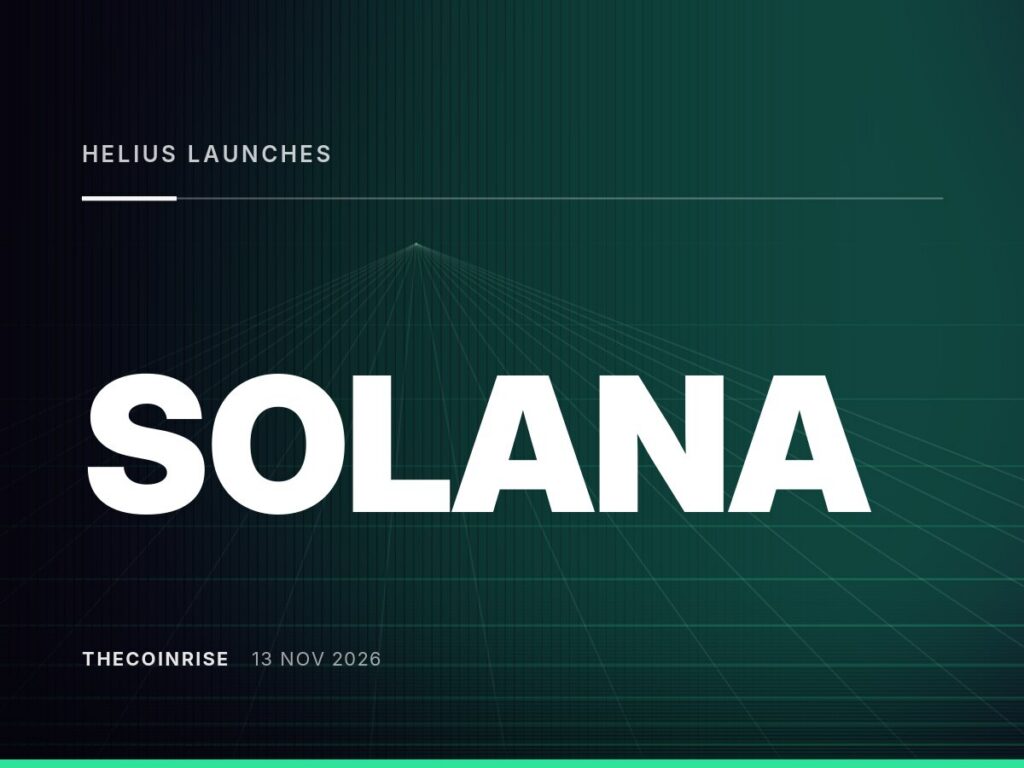


The new Privacy Rings feature hides balances and transaction details without making the system fully trustless.
Helius, a major infrastructure and RPC provider for the Solana blockchain, has introduced a new privacy feature known as Privacy Rings. The tool brings confidential balances and confidential transfers to Solana users, encrypting data that is normally visible on the public ledger.
On most blockchains, including Solana, transaction amounts and wallet balances are visible to anyone who inspects the chain. That transparency has long been viewed as both a strength and a weakness. It supports auditability but exposes sensitive financial information to competitors, surveillance, or targeted attacks. Privacy-preserving features like confidential transfers attempt to address that exposure while keeping transactions verifiable.
According to reporting from CryptoSlate, the encryption introduced by Helius does not eliminate the need to trust an operator. In practice, this means some party involved in processing or validating these confidential transactions retains visibility or control that a fully trustless system would remove. The distinction matters because privacy technology in crypto is often marketed as removing intermediaries entirely, when in reality many implementations still rely on a trusted component.
NewsBTC's coverage described the rollout as covering both confidential balances and confidential transfers, suggesting the feature applies broadly to how account holdings and transaction flows are represented on Solana. Confidential balances would obscure how much a wallet holds, while confidential transfers would hide the amounts moving between addresses. Together, these capabilities could appeal to institutions, trading firms, or individual users who want to keep financial activity off public display.
Privacy tooling on major smart contract platforms has become a recurring theme as the industry matures. Ethereum and other networks have seen similar efforts, often built through token standards or protocol-level extensions rather than separate privacy-focused chains. Solana's own token program has included confidential transfer extensions in prior updates, and Helius' Privacy Rings appears to build on or complement that broader direction.
The operator-trust caveat is significant for anyone evaluating the feature's security model. Fully trustless privacy, as pursued by protocols using zero-knowledge proofs without any privileged party, is technically difficult to achieve and often comes with performance trade-offs. A design that still relies on an operator may be easier to implement and faster to deploy, but it shifts risk onto whoever holds that trusted role. Users and developers considering the feature will need to weigh those trade-offs against their own threat models.
Helius has positioned itself as a key piece of Solana's developer and infrastructure stack, providing RPC services, data indexing, and now privacy tooling. Its move into confidential transfers signals growing demand for selective privacy within an ecosystem built around high throughput and public verifiability.
Market Impact
The introduction of confidential transfers and balances could influence how institutional and privacy-conscious users approach activity on Solana. If adoption grows, it may increase demand for infrastructure capable of handling encrypted transaction data without compromising network performance.
At the same time, the operator-trust element could temper enthusiasm among users seeking fully decentralized privacy guarantees. Market participants evaluating the feature will likely focus on who controls the trusted component and what safeguards exist around that role, rather than treating the rollout as a complete privacy solution.
Helius' Privacy Rings marks a notable step toward confidential activity on Solana, even as it leaves questions about operator trust unresolved. How the market and developer community respond may hinge on clarity around that trust model.
Frequently Asked Questions
What is Helius?
Helius is an infrastructure and RPC provider that supports developers and applications building on the Solana blockchain.
What does Privacy Rings do?
Privacy Rings encrypts Solana transaction data, enabling confidential balances and confidential transfers that hide amounts from public view.
Does this feature remove the need to trust any party?
No. Reporting indicates the encryption still relies on trust in an operator rather than creating a fully trustless privacy system.
How does this compare to Solana's existing privacy tools?
Solana has previously introduced confidential transfer extensions at the token-program level, and Helius' feature appears to build on that broader push toward selective privacy.
Who might use confidential balances and transfers?
Institutions, trading firms, and individual users seeking to keep financial activity off public display could find the feature useful, subject to its trust assumptions.




Read More
All News

November 13, 2026
Kraken Pushes Back Nakamoto Loan Deadline to December 2027
November 13, 2026