

Higher output from HIVE Digital and peer miner MARA failed to offset falling Bitcoin prices last period.
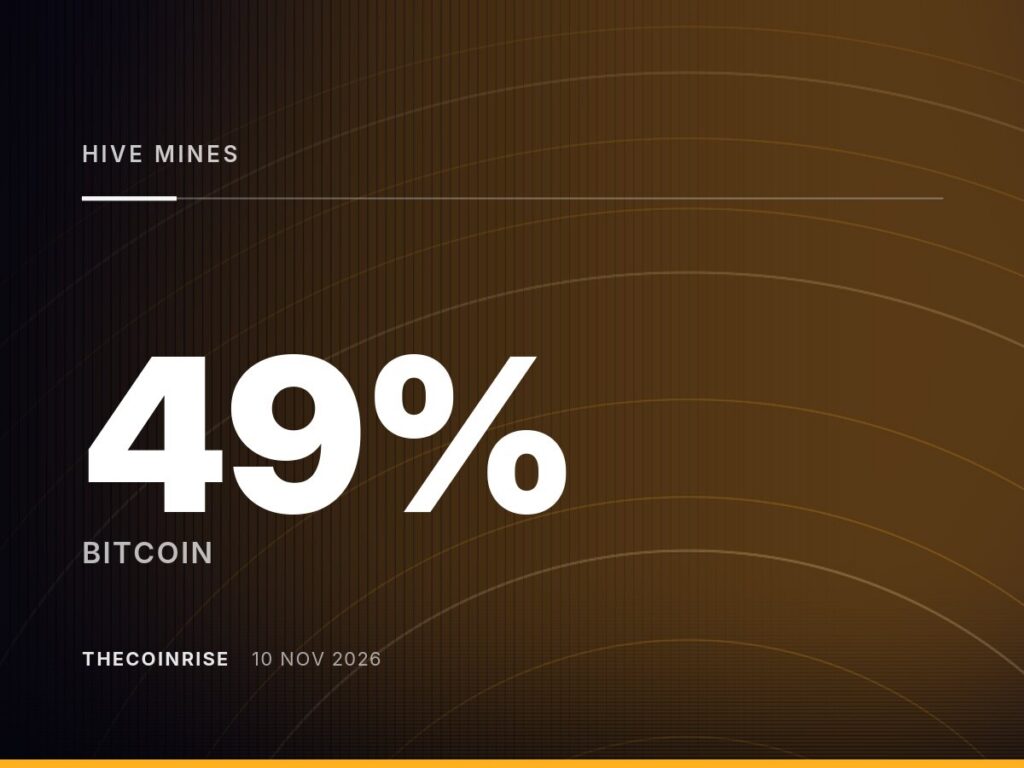
HIVE Digital Technologies increased its Bitcoin mining output by 49% compared to the prior period, according to Cointelegraph. Despite that jump in production, the company's mining revenue still declined. The disconnect highlights how falling Bitcoin prices can outweigh gains in operational efficiency for publicly traded miners.
CryptoBriefing reported that HIVE was not alone in this pattern. MARA Holdings, one of the largest publicly listed Bitcoin miners, also mined more Bitcoin during the same window while bringing in less revenue. Both companies' results point to a broader dynamic affecting the mining sector as Bitcoin's price has slid.
Bitcoin mining revenue is a function of two main variables: how many coins a company produces and what those coins are worth at the time of sale or on the balance sheet. When output rises but price falls faster, top-line revenue can shrink even as hash rate and production metrics improve. That appears to be what happened to both HIVE and MARA.
Public miners like HIVE and MARA typically report production figures monthly or quarterly, alongside average cost-per-coin and fleet efficiency metrics. Investors watch these updates closely because they offer an early signal of profitability trends ahead of formal earnings releases. A rising output figure is usually read as a positive signal for operational scale. But when paired with falling revenue, it shows how exposed these companies remain to Bitcoin's spot price.
The mining industry has spent much of the past two years focused on efficiency gains following the 2024 halving, which cut the block reward miners receive for validating transactions. Companies have expanded hash rate capacity, upgraded hardware fleets, and in some cases diversified into adjacent businesses such as high-performance computing and data center hosting. These efforts are designed to grow Bitcoin production even as the reward per block stays fixed.
However, production growth alone cannot insulate miners from broader market swings. Bitcoin's price has been under pressure recently, and that decline directly reduces the dollar value of newly mined coins, regardless of how many a company produces. For miners who sell a portion of their output to cover operating costs, a falling price can squeeze margins even when hash rate and production volumes climb.
HIVE and MARA are both closely watched bellwethers for the broader publicly traded mining sector, given their size and visibility to retail and institutional investors. Their overlapping results in the same period, both report higher output, both report lower revenue, suggest the pressure was market-wide rather than company specific. Other miners reporting similar monthly updates will likely show comparable patterns if Bitcoin's price weakness persisted across their operating windows.
Market Impact
The revenue decline despite higher Bitcoin production underscores how sensitive mining companies remain to spot price movements, even after years of efficiency investment. Investors in mining stocks often weigh production growth against revenue and cost-per-coin figures together, rather than production alone, to judge underlying profitability.
If Bitcoin's price weakness continues, other publicly traded miners reporting similar production increases could face comparable revenue pressure. That dynamic may prompt renewed investor focus on miners' cash reserves, debt levels, and diversification into non-mining revenue streams as buffers against price volatility.
The results from HIVE and MARA illustrate a recurring tension in Bitcoin mining economics, where operational growth does not guarantee revenue growth when prices move against producers.
Frequently Asked Questions
Why did HIVE's revenue fall even though it mined more Bitcoin?
Mining revenue depends on both the quantity of Bitcoin produced and its market price. A falling Bitcoin price during the period reduced the dollar value of HIVE's output, offsetting the gains from higher production.
Did other mining companies see similar results?
CryptoBriefing reported that MARA Holdings also mined more Bitcoin while bringing in less revenue during the same period, suggesting the pattern extended beyond HIVE alone.
Does higher Bitcoin output always mean higher revenue for miners?
Not necessarily. Revenue reflects both production volume and Bitcoin's market price, so output increases can be offset by price declines, as seen in this reporting period.
What should investors watch when assessing mining company performance?
Analysts typically look at production volume, revenue, and cost-per-coin together, since production growth alone does not confirm improved profitability if prices are falling.