

Risk advisor LlamaRisk flags valuation and liquidity concerns as Aave considers accepting tokenized SpaceX equity as loan collateral.
Aave, one of the largest decentralized lending protocols, is reviewing a proposal to accept tokenized SpaceX shares as collateral for loans. The idea fits a broader push across decentralized finance to bring real-world assets, including private company equity, onto public blockchains.
SpaceX is not a publicly traded company. Any tokenized version of its shares would represent exposure to a private, illiquid asset rather than stock traded on an open exchange. That distinction matters for a lending protocol, where collateral must be priced accurately and liquidated quickly if a borrower defaults.
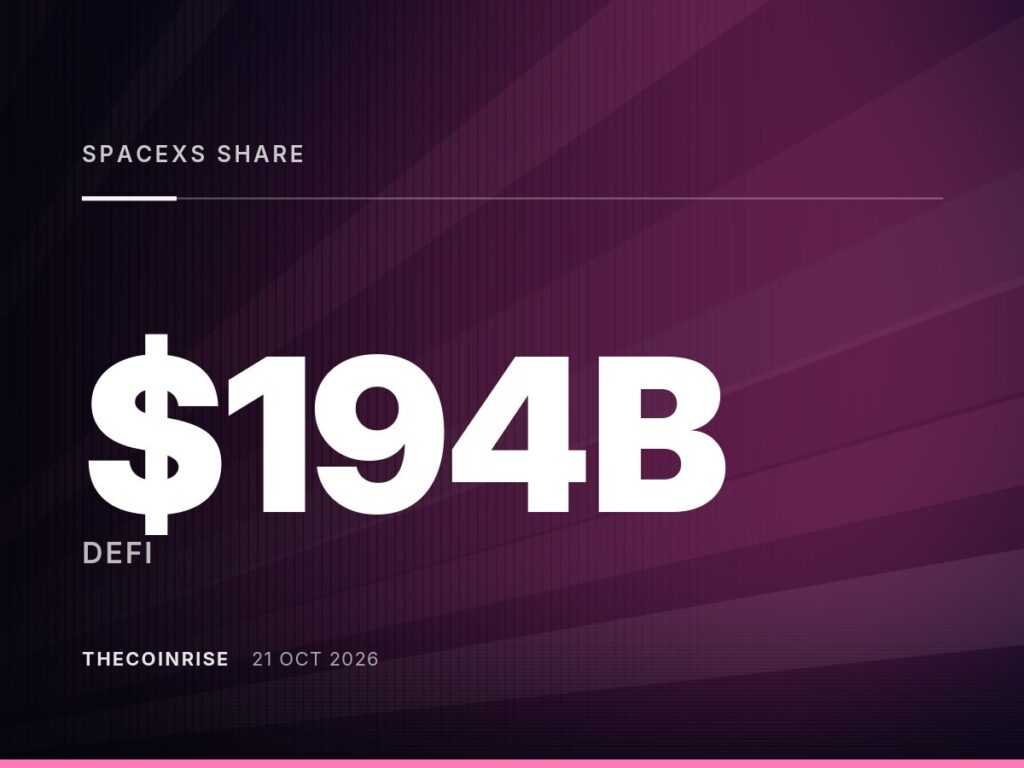
The proposal has drawn scrutiny because of a pending event at SpaceX itself. According to CryptoSlate, a $194 billion share unlock is set to hit the company, a development that could significantly affect the supply and valuation dynamics of SpaceX equity. CryptoBriefing reported that risk advisory firm LlamaRisk has urged Aave to proceed carefully given this backdrop.
LlamaRisk works with Aave governance to evaluate the risk profile of assets proposed for listing on the protocol. Its role typically involves assessing how an asset's price behaves under stress, how deep its market liquidity is, and whether that liquidity could evaporate during volatile periods. A private-company share unlock of this scale introduces exactly the kind of uncertainty risk teams are trained to flag.
Share unlocks typically release previously restricted stock, often held by employees, early investors, or insiders, into tradable form. For a private company like SpaceX, there is no public exchange absorbing that new supply in real time. That makes price discovery harder and raises questions about what value a tokenized version of those shares should reflect at any given moment.
For a lending protocol like Aave, inaccurate or stale collateral pricing is a core risk. If the value of tokenized SpaceX shares used as collateral is misjudged, the protocol could be exposed to under-collateralized loans. That risk becomes more acute when the underlying asset lacks the continuous public trading and transparent pricing feeds that publicly listed stocks typically have.
Market Impact
The debate highlights a structural tension in the growing tokenized real-world asset sector. Protocols want to offer exposure to high-profile private companies like SpaceX, but doing so onchain requires collateral standards built for assets with far less price transparency than public equities or cryptocurrencies.
If Aave moves forward despite the flagged concerns, it could set a precedent for how DeFi protocols handle illiquid private-market collateral going forward. If it pulls back, the episode may slow momentum for tokenized private equity products more broadly, at least until clearer valuation and liquidity frameworks are established.
The outcome of Aave's deliberations will offer an early signal of how decentralized finance balances ambition in real-world asset tokenization against the practical risks of lending against illiquid, privately held equity.
Frequently Asked Questions
What is Aave considering?
Aave governance is evaluating a proposal to accept tokenized shares of SpaceX, a private company, as collateral for loans on its lending protocol.
Why does the SpaceX share unlock matter?
CryptoSlate reported a $194 billion share unlock at SpaceX is approaching, which could affect how the company's equity is priced and traded, raising questions about collateral valuation.
Who is LlamaRisk and why did it respond?
LlamaRisk is a risk advisory firm that works with Aave governance to assess the risk of assets proposed as collateral. CryptoBriefing reported it urged caution on the SpaceX proposal given valuation and liquidity concerns.
Why is tokenized private equity considered riskier collateral than public stocks?
Private companies like SpaceX do not trade on open exchanges, making continuous price discovery and liquidity much harder to establish than with publicly listed shares.