

The brief freeze halted swaps on the cross-chain network, renewing debate over how decentralized such platforms really are.
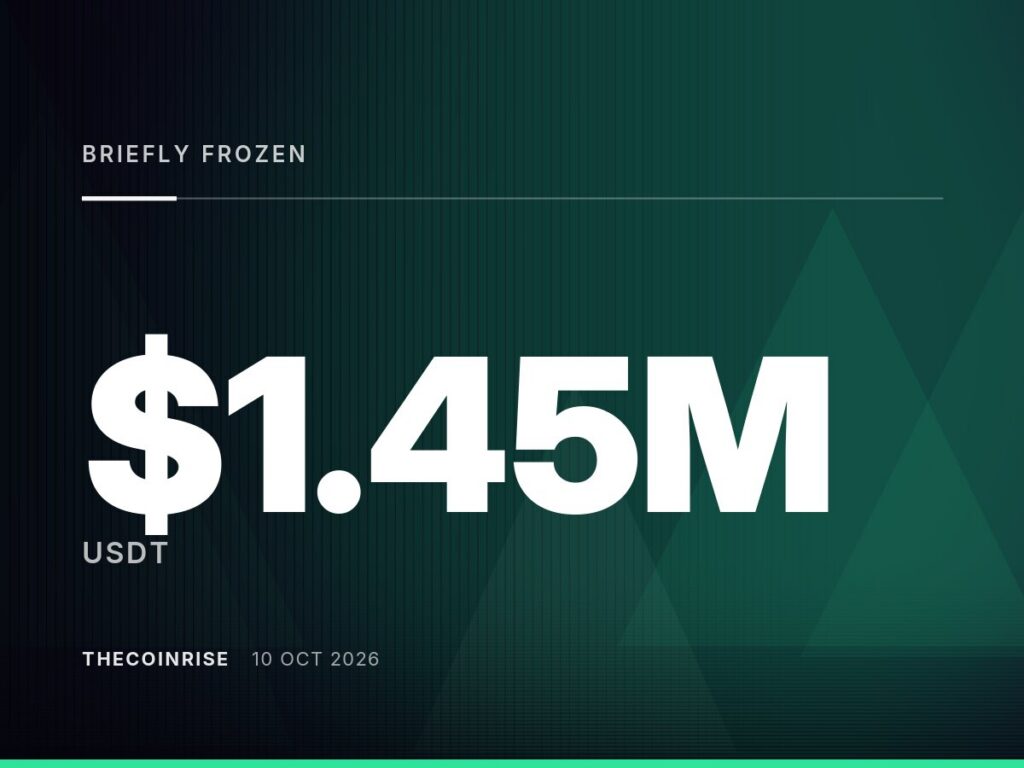
Tether froze about $1.45 million worth of USDT held in TRON-based vaults connected to THORChain on October 9, according to multiple reports. The freeze disrupted swap activity on the network before Tether reversed the action and released the funds later the same day.
THORChain operates as a cross-chain decentralized exchange, allowing users to swap native assets across different blockchains without relying on wrapped tokens or centralized intermediaries. Its vaults hold liquidity across multiple chains, including TRON, to facilitate these swaps. When Tether froze the USDT sitting in those vaults, it effectively locked up a portion of the liquidity THORChain needed to process transactions.
The freeze stalled swaps that depended on the affected vaults, according to the reports. Users attempting transactions involving the frozen funds would have faced delays or failures until Tether lifted the restriction. The exact reason Tether initiated the freeze was not disclosed in the available reporting.
Tether has a long-standing practice of freezing USDT addresses in response to law enforcement requests, suspected illicit activity, or compliance obligations tied to its role as a centralized stablecoin issuer. This authority is built into USDT's smart contracts on supported blockchains, including TRON. The company has frozen funds on various occasions in the past, typically citing cooperation with investigations or sanctions enforcement.
The incident has drawn attention because THORChain has positioned itself as infrastructure that cannot freeze or seize user funds, given its decentralized architecture. Commentary following the freeze noted the apparent tension between that positioning and the fact that a centralized stablecoin issuer could still interrupt the network's operations simply by freezing the underlying asset. THORChain itself did not freeze anything. The disruption originated entirely from Tether's control over USDT.
This distinction matters for understanding where decentralization actually applies in cross-chain systems. A decentralized exchange protocol can process transactions without a central operator approving each one. But if the assets being swapped are themselves centrally controlled, as USDT is, the protocol remains exposed to actions taken by the issuer of those assets. The freeze-and-unfreeze sequence illustrated that exposure in practice rather than in theory.
Market Impact
The episode is unlikely to have caused lasting damage given the funds were unfrozen the same day, but it highlights a structural risk facing any protocol that relies on centralized stablecoins for liquidity. Projects marketing themselves on censorship resistance may face renewed scrutiny over how much of their value flow still depends on assets that issuers can freeze at will.
For THORChain specifically, the stalled swaps serve as a reminder that cross-chain liquidity pools inherit the compliance risk of every asset they hold. Traders and liquidity providers may factor this into how they assess counterparty and operational risk when using the network, even though the freeze was resolved quickly and without reported losses.
Tether's brief freeze and swift reversal did not appear to cause lasting disruption, but it underscored how centralized stablecoin controls can still touch decentralized infrastructure built to route around them.
Frequently Asked Questions
Why did Tether freeze funds linked to THORChain?
The specific reason was not disclosed in available reporting. Tether routinely freezes USDT addresses for compliance, legal, or law enforcement reasons.
Did THORChain itself freeze user funds?
No. The freeze originated from Tether's control over USDT, not from any action taken by THORChain's protocol.
How long were the funds frozen?
Reports indicate Tether reversed the freeze and released the approximately $1.45 million in USDT the same day it was imposed.
Why does this matter for decentralized exchanges?
It shows that protocols relying on centrally issued stablecoins remain exposed to issuer actions, even if the exchange itself operates without a central authority.