Head to head
Compare
Comparisons with the method stated up front: what was measured, on what date, from which source, and who each option is actually wrong for. No affiliate ranking dressed as research, and no use of the word "best" without a stated basis for it. Where we cannot measure something we say so rather than scoring it anyway.
- 20stories in this section
- 24 Aug 2026most recent
- Labelledpaid placements carry a disclosure
What this section covers
Exchanges and access
Fees as actually charged, withdrawal limits, registrations held, and the outage and incident record - the things that decide whether you can get your money out.
Finance and Business NewsCustody and wallets
What each option protects against, what it does not, and what happens when you lose the device. Security compared against a threat, not against a feature list.
Blockchain NewsFunds and instruments
Spot funds against futures funds against holding the asset: fee drag, tracking, tax treatment and what each one exposes you to that the others do not.
Market NewsWhere our coverage sits
Editorial stories by section, counted live from this site. Paid placements are excluded - they are not reporting, and the masthead carries their number.
Latest reporting
Both post data to Ethereum and let Ethereum settle disputes, but the sequencer, the validator set and the upgrade keys are decided separately on each chain.
August 24, 2026
Why does a Base or Arbitrum transaction cost what it does, and what moves that cost?
Both layer-2 networks charge two separate fees per transaction, priced by different formulas. Their own documentation explains how - and shows why a widely repeated Arbitrum savings figure doesn't come from Arbitrum at all.
August 20, 2026
Arbitrum vs Optimism: who can stop or reorder your transaction, and how long it takes
Both networks route transactions through a single sequencer before settlement on Ethereum. Their own documentation describes different bypass windows and override roles if that sequencer stalls or censors — here is what each actually specifies, and what neither confirms.
August 20, 2026
Arbitrum vs Optimism: what a batch to Ethereum actually secures, and what it doesn’t
Both rollups eventually post data to Ethereum and inherit its resistance to reversal. Everything before that point — who orders your transaction, who can catch a bad batch, who holds the upgrade keys — runs through a small number of permissioned actors that differ between the two chains.
August 20, 2026
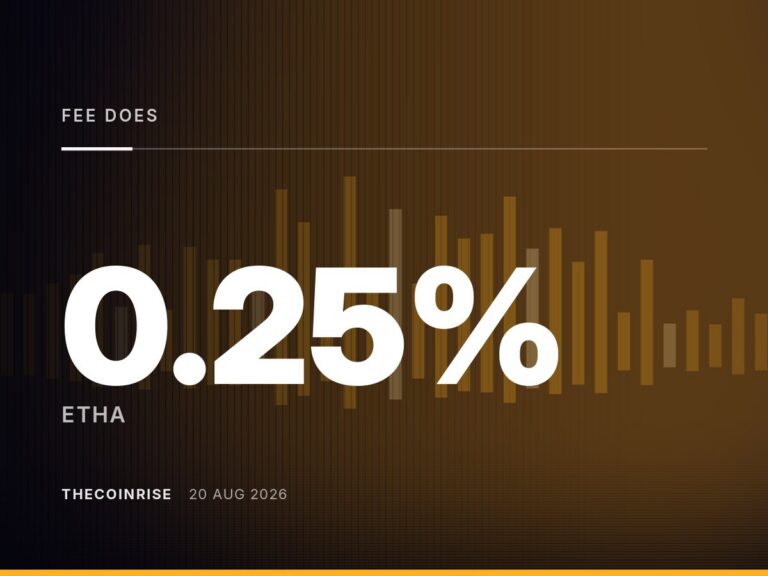
ETHA vs IBIT: same 0.25% fee, very different fund – what that fee does and doesn’t tell you
BlackRock's bitcoin and ether ETFs charge an identical annual fee. Everything else about them - size, one-year return, drawdown, even how tracking error is measured - comes from different sources, different dates, and in places conflicts outright.
Both funds are cheap, both hold bitcoin through the same custodian, and the expense-ratio gap between them is one basis point. What none of the sources reviewed can tell you is the spread you'd actually pay or how tightly either fund tracks bitcoin on its own.
GBTC charges 1.50%, IBIT charges 0.25% — but that gap doesn't explain why GBTC still holds billions in assets, why long-time holders can't easily leave, or why sources disagree on how each fund's shares are created and redeemed.

IBIT's custody arrangement is documented in a BlackRock SEC filing; the claim that GBTC uses the same custodian comes only from a third-party comparison site with no filing cited.
August 17, 2026
Could Coinkite or Ledger see your keys? What the Coldcard flaw and Ledger’s Recover controversy actually show
The Coldcard hack was not a vendor looking at anyone's private key - it was weak randomness that made some keys guessable by any attacker. Ledger's optional Recover feature raises a closer version of the same question: whether pieces of a user's key ever leave the device to anyone other than the user.
August 17, 2026
Coldcard vs Ledger: what a secure element protects, and why it didn’t stop the theft
Coldcard's chips were never breached; the flaw sat one layer below, in the code that generates the seed before any secure element sees it.
Ledger's own research team found and disclosed physical flaws in two Trezor wallets, in 2025 and 2026. Here is what each disclosure actually covers, and what the record does not show about Ledger's own hardware.
August 17, 2026
Kraken vs Bitstamp: what their reserve disclosures actually check, and who checked them
Kraken has, at times, published a cryptographic proof of reserves. Bitstamp points to a traditional outside audit. Neither is the same claim, and neither exchange has a fresh, independently corroborated reserves figure on record in the reporting we hold.
The posted maker/taker rates say OKX is cheaper on spot limit orders and Bybit costs slightly more on futures market orders. Neither number accounts for the bid-ask spread, and no source reviewed here measures it for either exchange.
Crypto.com's reserve disclosure and Coinbase's audited financial statements answer different questions, checked by different people. Neither proves the exchange behind it could survive a bank-run-style withdrawal surge.
One product holds bitcoin. The other holds CME futures contracts that must be rolled forward, at a cost that has looked very different depending on when you measured it.
A Merkle-tree proof of reserves checks that an exchange's coins match a summary of what it owes, on one date. A financial audit checks the whole business. Here is where the difference actually matters.
August 16, 2026
Binance vs Coinbase: why ‘what each is registered to do, by country’ has no verified answer
Comparison sites credit each exchange with specific licenses in specific countries. Almost none of those claims trace back to a regulator, a filing, or even a dated source.
August 15, 2026
Ethereum vs Solana: what a transaction actually costs, and what ‘finality’ means on each
A viral 40x gap in one day's total network fees says nothing about what a single transaction costs on either chain — and the three outlets that repeated the figure cite different, unconfirmed sources for it.
The basics, in plain English
How do you decide what "better" means?
Each page names its measure before it compares anything - lowest total cost on a stated trade size, or fastest withdrawal, or fewest counterparties. Change the measure and the winner changes, which is why the measure is stated first.
Are these affiliate rankings?
No. Nothing on this site is ranked by what it pays. Paid placements are labelled Sponsored, sit in their own section and carry nofollow on every outbound link - and they are never comparisons.
Why does every page say who an option is wrong for?
Because a comparison with a single winner is almost always hiding the reader whose situation it does not fit. Naming that reader is more useful than a score.
How current are the figures?
Every number carries the date it was checked. Fees and limits move; a comparison without dates is a comparison you cannot verify.