

Fresh share contributions outpaced a paper loss tied to Bitcoin's price movement, according to newly reported fund data.
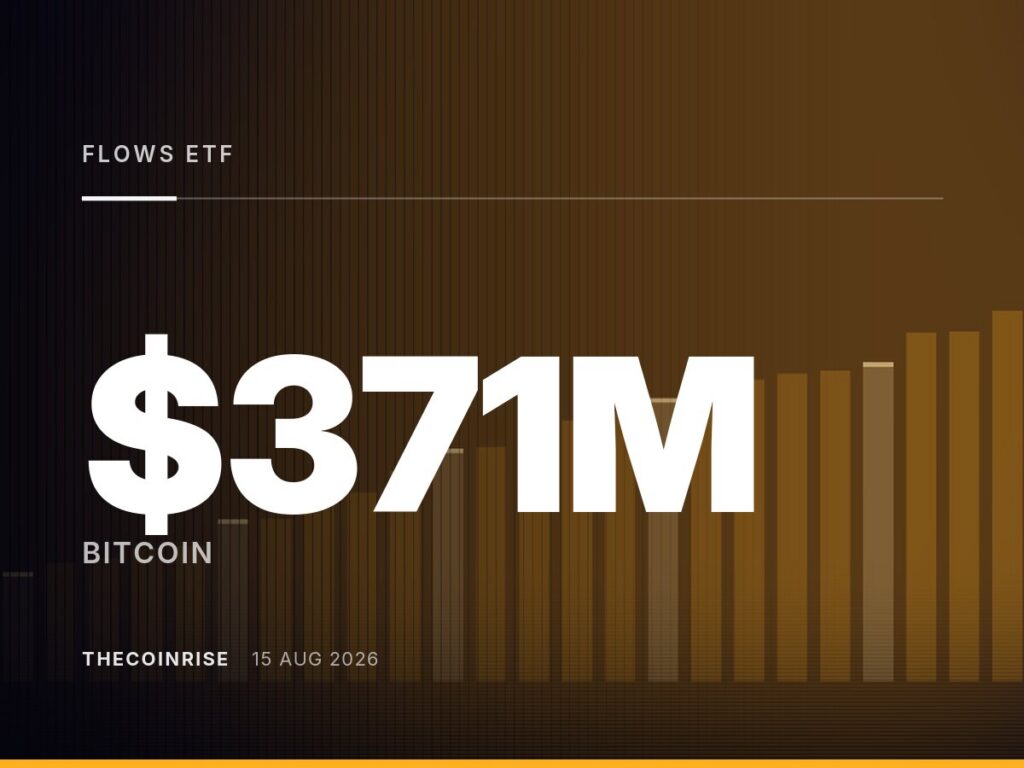
Morgan Stanley's Bitcoin ETF pulled in $371 million of share contributions, according to reporting from CryptoSlate and The Cryptonomist. Over the same period, Bitcoin's price movement wiped out $66.8 million in value tied to the fund's holdings.
The two figures describe different things. The $371 million reflects fresh money entering the fund through share creations. The $66.8 million figure reflects a paper loss caused by Bitcoin's price falling during the period in question. Investors added new capital even as the value of existing holdings declined.
This pattern is not unusual for exchange-traded funds that track a volatile underlying asset. Bitcoin ETFs allow investors to gain exposure to Bitcoin's price without holding the asset directly. That structure means fund flows and price performance can move in opposite directions within the same reporting window.
Inflows into a Bitcoin ETF signal that investors are adding to their positions. A decline in Bitcoin's price during the same stretch reduces the value of those existing holdings. Both can happen at once if buyers view a price pullback as an entry point rather than a signal to exit.
Morgan Stanley's ETF is one of several products offering regulated Bitcoin exposure to institutional and retail investors. Since the U.S. approval of spot Bitcoin ETFs, asset managers have competed for market share through fee structures, custody arrangements, and distribution reach. Fund flow data has become a closely watched indicator of investor sentiment toward Bitcoin as an asset class.
The reported figures suggest that demand for share contributions held up despite the price-driven erosion in fund value. Whether this reflects a broader trend across other Bitcoin ETFs was not addressed in the available reporting. Analysts typically weigh flow data alongside broader market conditions before drawing conclusions about investor sentiment.
Neither CryptoSlate nor The Cryptonomist detailed the exact reporting period covered by these figures, nor did they specify the ETF's total assets under management. The scale of the $371 million inflow relative to the fund's overall size was not disclosed in the available reporting.
Market Impact
Continued share contributions into a Bitcoin ETF, even amid a price-driven paper loss, can be read as a sign that institutional and retail demand for regulated Bitcoin exposure remains intact. Fund flows are often used by market participants as a proxy for sentiment, separate from short-term price action.
The divergence between inflows and Bitcoin's price movement highlights how ETF investors can behave differently from spot market traders. A pullback in Bitcoin's price does not automatically translate into reduced demand for ETF shares. This dynamic may factor into how other asset managers position competing Bitcoin funds going forward.
The reported figures illustrate a split between fresh capital entering Morgan Stanley's Bitcoin ETF and the paper loss tied to Bitcoin's price decline. Further data on flows across other Bitcoin ETFs would help clarify whether this pattern reflects a broader market trend.
Frequently Asked Questions
What do the $371 million and $66.8 million figures represent?
The $371 million reflects new share contributions into Morgan Stanley's Bitcoin ETF. The $66.8 million reflects a paper loss in the fund's holdings caused by Bitcoin's price decline over the same period.
Why would inflows rise while the fund's value falls?
Investors can add new capital to an ETF even as the price of its underlying asset declines. The two figures track different things: new money entering the fund versus the market value of assets it already holds.
Does this indicate broader demand for Bitcoin ETFs?
The reporting covers only Morgan Stanley's fund and does not include comparable data from other Bitcoin ETF providers, so it cannot be generalized to the wider market without additional information.
How are Bitcoin ETF inflows typically interpreted?
Analysts often use ETF inflows as one indicator of investor sentiment toward Bitcoin, though they usually weigh this data alongside broader price trends and market conditions before reaching conclusions.