

One breach, three published accounts and three different numbers; one ETF outflow, two accounts, and no disagreement at all.
One breach, three published accounts and three different numbers; one ETF outflow, two accounts, and no disagreement at all.
Three Outlets Describe One Breach and None of Them Match
A hot-wallet hack at Mercado Bitcoin has been reported by BlockchainReporter, Crypto News Australia and The Cryptonomist EN, with Unchained also carrying the story, and the four of them do not agree on what actually happened. They diverge on how many blockchains the attacker touched, on how much was taken, and on how much has since been frozen or recovered. That is three separate points of disagreement inside a single event, not one figure reported with minor variation. None of these are primary filings from Mercado Bitcoin itself, which is the reason this cannot be settled by picking the outlet with the most detail or the earliest timestamp.
Corroboration across three independent publishers would normally be the strongest signal this newsroom can offer a reader, and for the basic fact of a breach, it is: three outlets agree something happened. But corroboration on the existence of an event is not corroboration on its scale. Here the count of publishers is high and the agreement on specifics is low, which is a different and weaker kind of evidence than three outlets converging on the same number. A reader should take away that a hack occurred and that the scale is unresolved, not average the figures into one.
The ETF Outflow Is Reported Once, by Two Outlets, Without Contradiction
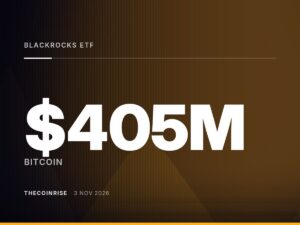
Set against that is BlackRock's IBIT, which shed roughly $405 million as redemptions accumulated, a figure that CryptoBriefing and Cointelegraph both carry without variation, putting the claim at two independent publishers rather than three. That is a lower corroboration count than the hack story, but it is corroboration without conflict, which is the opposite failure mode. Both outlets describe the same fund, the same iShares Bitcoin Trust wrapper, and the same characterisation of it as the largest outflow period since June. There is no competing number here to weigh against another.
The contrast between the two stories is the point of this edition. More publishers does not automatically mean more certainty, and fewer publishers does not automatically mean less. The hack has twice the sourcing of the ETF outflow and is less settled, because the sourcing disagrees with itself; the outflow has thinner sourcing and is more settled, because it does not. A reader using publisher count as a shortcut for confidence would rank these two stories backwards.
Neither Account Settles What Happens Next
None of this tells a reader whether the hack's final tally, once published, will land closer to any one of the three current figures, nor does it tell them whether BlackRock's redemption pace continues. The IBIT reporting explains a mechanism, that spot Bitcoin ETFs can amplify price swings when demand reverses, but a documented outflow of this size does not by itself establish a trend beyond the window already reported. The hack reporting establishes that an incident occurred and that its scale is contested; it does not establish which of the three versions is closer to correct, and this edition will not guess on their behalf.
Hold the Mercado Bitcoin hack as the story to watch for a correction or reconciliation, since it is the one where more sourcing has produced less agreement rather than more, and that gap is the editorial signal worth tracking, not the numbers themselves.
Stories in this edition
Publisher counts are as at publication and keep moving; each story page carries the live number.
- Mercado Bitcoin Hack: Reports Split on Chains, Loss Size 3 independent publishers — the hack story whose three outlets disagree on scale, used as the example of high corroboration without agreement
- BlackRock's Bitcoin ETF IBIT Sheds $405M as Outflows Hit Multi-Month High 2 independent publishers — the ETF outflow story whose two outlets agree without contradiction, used as the contrasting case of lower corroboration with consistency
Hold the Mercado Bitcoin hack as the story to watch for a correction or reconciliation, since it is the one where more sourcing has produced less agreement rather than more, and that gap is the editorial signal worth tracking, not the numbers themselves.