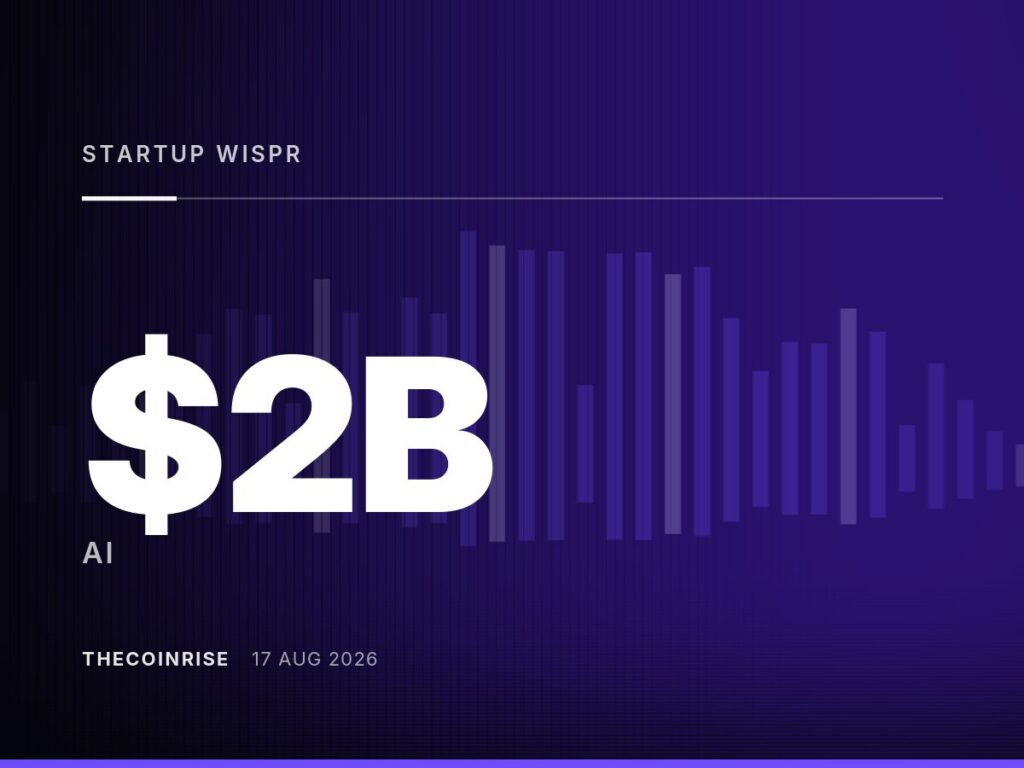


CryptoBriefing reports that fresh investor demand has pushed the artificial intelligence company's valuation to $2 billion.
Wispr Flow has been valued at $2 billion, CryptoBriefing reported on August 17. The report ties the figure to strong investor interest in artificial intelligence startups more broadly. No further details on the transaction structure, lead investors, or funding round size were disclosed in the report.
The valuation places Wispr Flow among a growing list of AI companies commanding multibillion-dollar price tags well before reaching the scale of established technology firms. Investors across venture capital and private markets have been directing large sums toward AI-focused startups over the past two years. That trend has accelerated as generative AI tools move from experimental products into daily business and consumer use.
High valuations for young AI companies have become common as capital chases perceived leaders in the space. Investors are betting that early movers in specific AI applications can capture outsized market share. This dynamic has driven up prices for startups with strong technical teams or defensible product niches, even when revenue remains modest relative to valuation.
The broader AI funding environment has drawn comparisons to earlier technology investment cycles, including the dot-com era and, more recently, the crypto token boom. Some market observers caution that valuations detached from current earnings carry risk if growth expectations are not met. Others argue that AI's potential to reshape software, labor, and enterprise workflows justifies aggressive early-stage pricing.
Wispr Flow's jump to a $2 billion valuation arrives amid a wider wave of capital formation targeting AI infrastructure, tooling, and application companies. Large technology firms and specialized venture funds have both been active participants in this funding wave. The scale of capital committed to the sector has made AI one of the largest categories of private investment activity in recent years.
Details beyond the valuation figure itself remain limited at this stage. CryptoBriefing's report did not specify the identity of investors participating in the round, nor did it outline how the valuation was calculated. As with many private company valuations, the figure typically reflects terms agreed upon by a specific set of investors rather than a public market price. Readers should treat the number as a private-market benchmark rather than a definitive measure of the company's current worth.
The development is notable primarily as a data point in the ongoing expansion of AI startup valuations. It illustrates how quickly capital can flow toward companies operating in high-interest technology categories. Further reporting may clarify the specifics of the round, the investors involved, and how the company plans to use the capital raised.
Market Impact
A $2 billion valuation for an AI startup underscores continued investor confidence in the sector, even as broader market conditions for technology funding have fluctuated. Large private valuations can influence how other startups in similar spaces price future funding rounds, potentially raising expectations across the AI startup ecosystem.
For markets more broadly, sustained investor demand for AI companies suggests capital continues to favor technology categories seen as having long-term structural growth. This pattern has parallels in how crypto and blockchain startups have historically attracted concentrated investor interest during periods of sector enthusiasm. Any slowdown in AI funding activity, or a correction in valuations, could have ripple effects on adjacent venture and private equity markets.
Wispr Flow's reported $2 billion valuation adds to a growing tally of highly valued AI startups, reflecting investor confidence that continues to shape private technology markets.
Frequently Asked Questions
What is Wispr Flow's reported valuation?
According to CryptoBriefing, Wispr Flow has been valued at $2 billion amid strong investor interest in AI startups.
Who invested in Wispr Flow's latest valuation round?
The report did not disclose the specific investors involved in reaching the $2 billion valuation.
Why are AI startups attracting such high valuations?
Investors have been directing significant capital toward AI companies, betting on their potential to reshape software and enterprise workflows, which has driven valuations higher across the sector.
Does a high private valuation guarantee future company performance?
No. Private valuations reflect terms agreed upon by specific investors at a point in time and are not a guarantee of future growth or public market performance.