

The central bank has set a ceiling on how much digital assets can count toward exchange capital requirements.
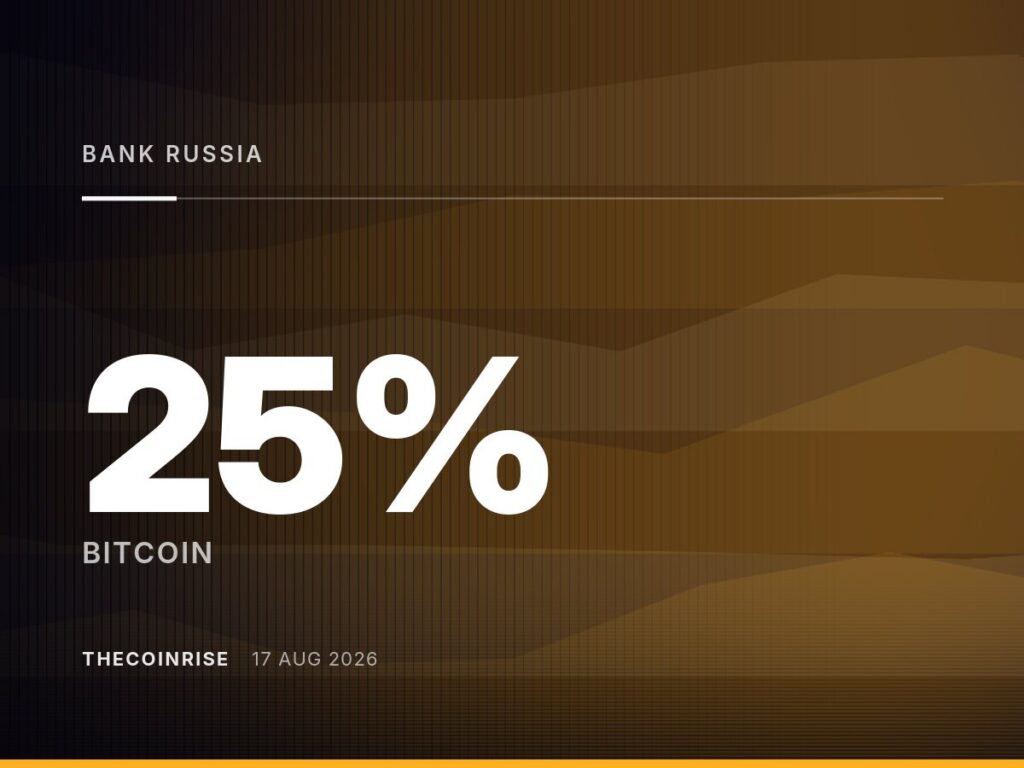
The Bank of Russia has introduced a rule capping cryptocurrency at 25% of the capital that exchanges and market brokers can count for regulatory purposes. The measure was reported separately by CryptoBriefing and Bitcoin.com News on August 17, 2026.
Under the new framework, firms operating in Russia's financial markets can no longer treat digital assets as a dominant share of their regulatory capital base. Instead, crypto holdings will be capped at one quarter of the total figure used in capital calculations. The remaining three-quarters must come from other recognized asset classes.
Capital requirements exist to ensure brokers and exchanges hold enough resources to absorb losses and meet obligations to clients. Regulators typically set rules on which assets can count toward that capital, and how much weight riskier assets should carry. By limiting crypto's share, the Bank of Russia appears to be treating digital assets as a higher-risk category that should not anchor a firm's financial stability.
Russia has taken an uneven approach to cryptocurrency regulation in recent years. Authorities have alternated between restricting domestic crypto payments and exploring digital assets for cross-border trade, partly as a response to Western sanctions. The latest capital rule suggests regulators want firms engaging with crypto to maintain buffers of more traditional, presumably more liquid or stable, assets alongside any digital holdings.
The move fits a broader global pattern. Financial regulators in multiple jurisdictions have introduced or tightened capital and risk-weighting rules for crypto-exposed institutions over the past several years. Basel Committee guidance on bank capital treatment of crypto assets has informed similar debates elsewhere, even though Russia operates largely outside that international framework due to sanctions isolation.
Neither CryptoBriefing nor Bitcoin.com News detailed the precise mechanics of how the 25% threshold will be calculated, or which specific classes of market participants fall under the rule. It remains unclear whether the cap applies uniformly to all licensed brokers and exchanges, or whether exemptions exist for certain types of firms. Further clarification from the Bank of Russia would help market participants understand compliance timelines and enforcement mechanisms.
The rule arrives as Russian authorities continue refining their stance on digital assets amid economic pressure from international sanctions. Domestic crypto mining and trading have grown, even as the ruble-denominated financial system faces external isolation. A capital rule aimed at exchanges and brokers signals that regulators want oversight of crypto-adjacent financial infrastructure, even while broader crypto policy remains inconsistent.
Market Impact
The rule could push Russian exchanges and brokers to diversify their capital bases away from heavy crypto concentration. Firms that previously relied on digital assets to satisfy capital thresholds may need to raise additional capital in other forms, or restructure their balance sheets to comply.
For the broader Russian crypto market, the measure signals continued regulatory tightening rather than loosening, even as the country has shown interest in crypto for sanctions-evasion purposes in international trade. Investors and platform operators should watch for further guidance from the Bank of Russia on implementation details and compliance deadlines.
The 25% capital cap adds another layer to Russia's evolving and often contradictory crypto policy, tightening oversight of exchanges even as the broader use of digital assets in the economy continues to expand.
Frequently Asked Questions
What exactly did the Bank of Russia announce?
The central bank set a rule capping cryptocurrency at 25% of the capital that exchanges and market brokers can count toward regulatory capital requirements.
Which firms are affected by the rule?
Reports indicate the cap applies to exchanges and market brokers operating in Russia's financial markets, though full details on scope were not specified in initial coverage.
Why would a regulator limit crypto's share of capital?
Regulators generally treat volatile or less liquid assets as riskier for capital purposes, and capping their share is meant to ensure firms hold sufficient stable resources to cover potential losses.
Does this mean Russia is banning crypto for financial firms?
No. The rule limits how much crypto can count toward capital calculations, it does not report an outright ban on firms holding or trading digital assets.