

Fresh Bhutanese Bitcoin transfers coincide with heavy whale accumulation as the market tests key resistance.
Bhutan's government has again transferred 300 BTC, CoinGape reported, marking another instance in a pattern of on-chain movements tied to the kingdom's sovereign Bitcoin holdings. The transfer comes as Bitcoin approaches the $65,000 resistance zone, a level traders are watching closely for signs of a breakout or rejection.
Bhutan has periodically shifted portions of its Bitcoin reserves, which the country accumulated through state-backed mining operations. These transfers have drawn attention from market watchers because sovereign wallet activity can hint at treasury management decisions, even when the ultimate purpose of a transfer, whether custodial reshuffling or an outright sale, is not always immediately clear.
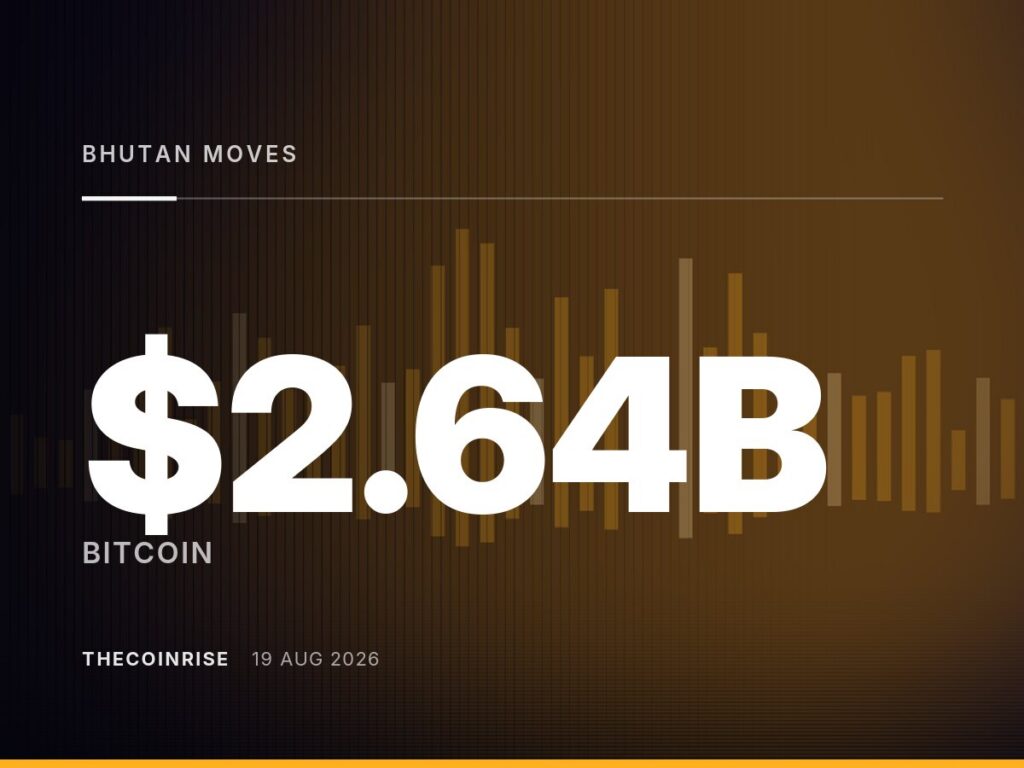
Separately, AMBCrypto reported that whale-sized wallets bought roughly $2.64 billion worth of Bitcoin around the same period. Large accumulation of this scale typically draws scrutiny from traders trying to gauge whether bigger holders view current prices as an entry point or are positioning ahead of anticipated volatility.
The juxtaposition of a sovereign entity moving coins while whales accumulate has fueled discussion about whether the market is being set up for a so-called bear trap. In such a scenario, a temporary price dip driven by visible selling pressure or on-chain transfers could shake out short-term holders before a reversal higher. AMBCrypto framed the question directly, noting the tension between Bhutan's movement and simultaneous large-scale buying.
Neither source detailed whether Bhutan's 300 BTC transfer represented a sale to an exchange, an internal wallet reorganization, or a transfer to a custodial partner. On-chain movements of this kind are often interpreted differently depending on the destination address, and without confirmation of where the coins ended up, market participants are left to weigh multiple explanations.
Bitcoin's approach toward the $65,000 resistance level adds another layer of significance to the timing. Resistance zones often see increased volatility as traders test whether buying demand can absorb any selling pressure. The presence of large-scale whale buying alongside a sovereign transfer has become a focal point for those tracking short-term market structure heading into this test.
Market Impact
Sovereign wallet activity from Bhutan can influence short-term sentiment, particularly when it coincides with a major resistance test like the $65,000 level for Bitcoin. Traders often treat visible government-linked transfers as a signal worth monitoring, even when the underlying intent remains unconfirmed.
The reported $2.64 billion in whale accumulation suggests that larger holders may be positioning for continued upside, or at minimum absorbing any selling pressure tied to Bhutan's transfer. If Bitcoin holds above key support levels despite the on-chain movement, it could reinforce the bear trap narrative some traders are discussing. A failure to hold support, however, would raise fresh questions about the strength of current demand near resistance.
As Bitcoin tests the $65,000 resistance level, both Bhutan's renewed Bitcoin transfer and large-scale whale buying remain key data points for traders assessing near-term market direction.
Frequently Asked Questions
What did Bhutan's government reportedly do with its Bitcoin?
CoinGape reported that Bhutan's government moved 300 BTC again, continuing a pattern of periodic transfers from its sovereign Bitcoin holdings.
How much Bitcoin did whales reportedly buy around the same time?
AMBCrypto reported that whale wallets purchased approximately $2.64 billion worth of Bitcoin during the same period as Bhutan's transfer.
What is a 'bear trap' in this context?
A bear trap refers to a scenario where a price dip, potentially triggered by visible selling or transfers, shakes out short-term sellers before the market reverses upward. AMBCrypto raised this possibility given the timing of the whale buying.
Why does the $65,000 level matter for Bitcoin right now?
CoinGape noted Bitcoin is approaching the $65,000 resistance zone, a level traders watch closely to gauge whether buying demand can overcome selling pressure and push prices higher.
Is it confirmed that Bhutan sold its 300 BTC?
The reports describe the coins as moved or offloaded, but details on the destination of the transfer, such as an exchange or internal wallet, were not specified in the available reporting.