

Long positions bore the brunt of losses as leveraged bets unwound across derivatives markets.
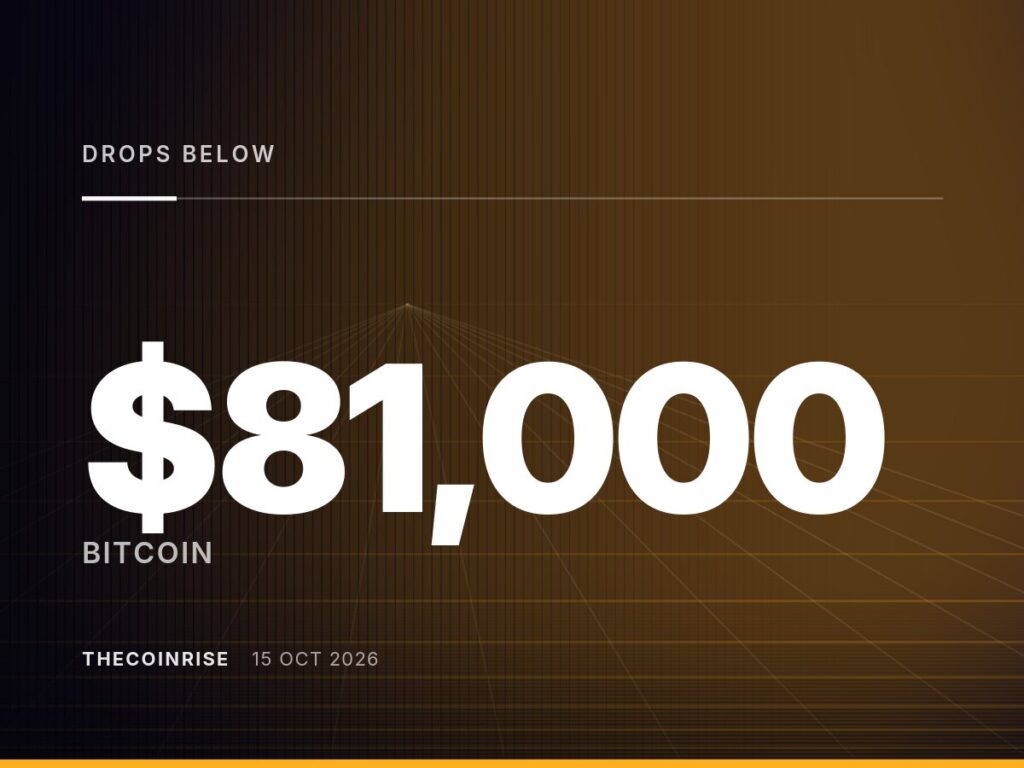
Bitcoin fell below the $81,000 mark, a move that forced open leveraged positions to close automatically across major derivatives exchanges. The decline rattled traders who had bet on continued upward momentum.
CryptoBriefing reported that the drop triggered $485 million in liquidations tied directly to Bitcoin's price action. BeInCrypto separately reported a broader figure, estimating total crypto liquidations across the market approached $1 billion. The two outlets differ on the scale of the sell-off, but both point to a sharp and sudden deleveraging event.
According to BeInCrypto, long positions accounted for the majority of the losses. That pattern typically signals that traders had positioned for further price gains before the downturn. When prices move against leveraged longs, exchanges liquidate those positions to cover losses, which can accelerate the price decline further.
Liquidation cascades like this are a recurring feature of crypto derivatives markets. High leverage allows traders to control large positions with relatively small amounts of capital. That amplifies both gains and losses. A rapid price move in either direction can trigger a chain reaction, as forced selling or buying adds pressure to the existing trend.
The scale of liquidations, whether closer to $485 million or nearing $1 billion, underscores how exposed traders remain to sudden volatility. Bitcoin's break below $81,000 represents a notable technical level that many market participants watch closely. Price action below key thresholds often invites additional selling as stop-loss orders and automated risk management systems activate.
This episode arrives amid a broader period of price swings across digital asset markets. Volatility has remained a defining characteristic of crypto trading throughout the year. Large liquidation events tend to draw attention from both retail and institutional observers, since they can reveal how much leverage is embedded in the system at any given time.
Neither CryptoBriefing nor BeInCrypto specified the exact exchanges most affected or the precise timeframe over which the liquidations occurred. The discrepancy between the two reported totals may reflect differences in methodology, data sources, or the scope of assets included in each calculation.
Market Impact
Large liquidation events typically increase short-term volatility, as forced selling or buying adds to existing price momentum. Traders using leverage face heightened risk during these periods, since cascading liquidations can push prices further from recent levels before stabilizing.
The divergence between the $485 million and nearly $1 billion figures highlights the difficulty of measuring market-wide liquidation activity precisely. Different tracking platforms often capture different sets of exchanges and instruments. Market participants should treat liquidation totals as directional indicators of stress rather than exact figures, pending further data from exchanges and analytics providers.
Bitcoin's move below $81,000 triggered significant forced selling across derivatives markets, with long traders absorbing most of the losses. The exact scale of the liquidations remains subject to differing estimates, but the event reflects ongoing volatility and leverage risk in crypto trading.
Frequently Asked Questions
What caused the liquidations?
Bitcoin's price fell below $81,000, triggering the automatic closure of leveraged positions that could no longer meet margin requirements on derivatives exchanges.
Why do the reported liquidation totals differ?
CryptoBriefing reported $485 million tied to Bitcoin specifically, while BeInCrypto reported broader crypto market liquidations nearing $1 billion. Differences likely stem from varying data sources and the scope of assets tracked.
What does it mean that longs took the majority of losses?
It means traders betting on rising prices were disproportionately affected, as the price decline forced their leveraged long positions to close at a loss.
Are liquidation cascades common in crypto markets?
Yes, high leverage in crypto derivatives markets makes sudden price moves prone to triggering chains of forced liquidations, which can further amplify volatility.