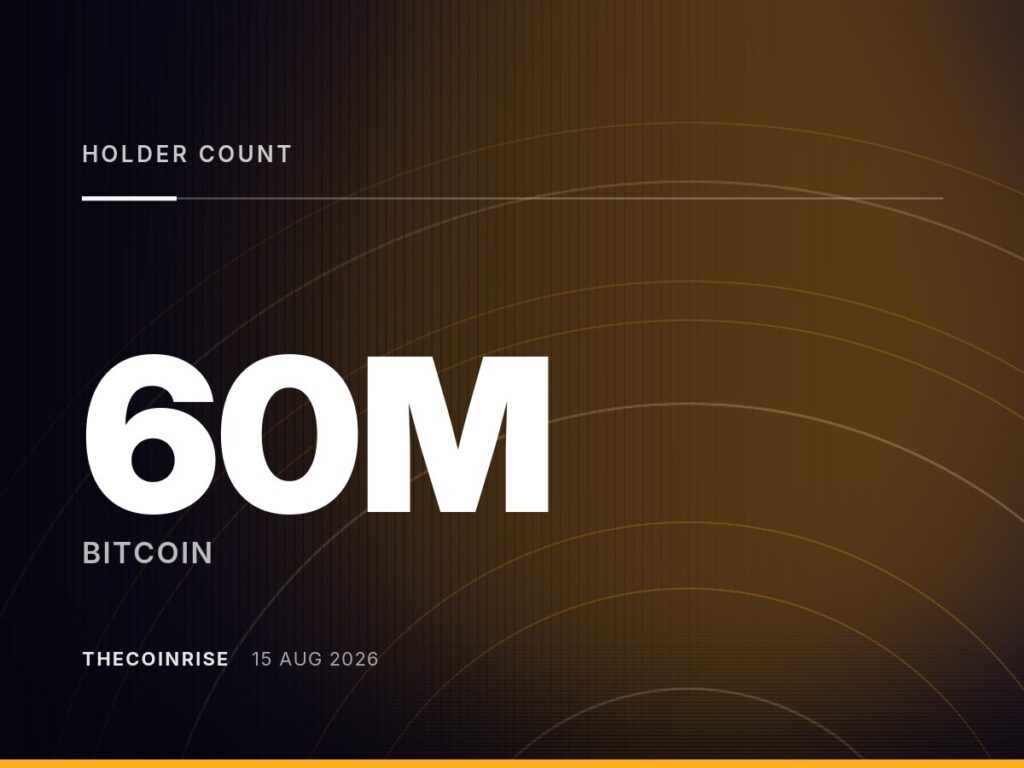


AMBCrypto reports Bitcoin addresses are approaching a 60 million milestone, sparking debate on whether adoption growth can push BTC to new highs.
Bitcoin's network of holders is reportedly nearing a 60 million milestone, according to AMBCrypto. The outlet frames this growth as a potential signal worth watching for traders and long-term investors alike.
Holder counts, often tracked through unique wallet addresses, are commonly used as a proxy for adoption. A rising number suggests more individuals or entities are entering the Bitcoin ecosystem. It does not, however, directly measure trading volume or capital inflows.
The distinction matters. An address is not always the same as a person. Exchanges, custodians, and institutional platforms can hold assets across many wallets. Still, sustained growth in holder figures is often viewed by market participants as a sign of expanding interest in the asset.
AMBCrypto's report ties this milestone to the broader question of whether Bitcoin can reach a new all-time high. Price records are driven by a mix of factors. These include liquidity, macroeconomic conditions, regulatory clarity, and shifts in institutional demand.
Holder growth alone has not historically guaranteed price appreciation. Bitcoin has seen periods where wallet counts rose steadily while price consolidated or declined. Conversely, sharp rallies have occurred even when holder growth was modest. The relationship between the two metrics is not linear.
Market watchers often pair holder data with other on-chain indicators. These include exchange balances, dormant supply, and whale accumulation patterns. Taken together, these metrics can offer a fuller picture of market sentiment than holder counts alone.
The timing of this reported milestone also coincides with ongoing discussion about Bitcoin's role in institutional portfolios. Custody solutions, exchange-traded products, and regulatory developments have shaped access to the asset in recent years. Broader participation in the network could reflect some of these structural changes.
AMBCrypto's coverage does not assert that the 60 million figure guarantees a price outcome. Instead, it presents the milestone as a data point for readers to weigh against other market signals. Readers should treat holder counts as one input among many when assessing Bitcoin's trajectory.
As with most on-chain metrics, verification and context matter. Analysts typically caution against drawing firm conclusions from a single indicator. The approach of a round-number milestone, such as 60 million holders, often draws attention regardless of its direct market effect.
Market Impact
If the reported growth in Bitcoin's holder base is accurate, it could reinforce a narrative of expanding adoption. This narrative has previously supported bullish sentiment among traders and long-term investors. However, holder growth by itself has not been a reliable predictor of near-term price direction in past market cycles.
Traders will likely continue watching liquidity conditions, exchange flows, and macroeconomic developments alongside adoption metrics. Any price reaction to the milestone, should it materialize, would probably reflect a combination of sentiment and broader market conditions rather than the holder count alone.
The reported approach toward a 60 million holder milestone adds another data point to ongoing debate over Bitcoin's price trajectory. Whether it translates into new highs will depend on a wider set of market and macroeconomic factors.
Frequently Asked Questions
What does the 60 million holder milestone refer to?
It refers to the reported number of Bitcoin addresses or holders approaching that figure, as noted by AMBCrypto. This is typically measured through unique wallet addresses on the network.
Does a higher holder count guarantee a Bitcoin price increase?
No. Holder growth is one adoption indicator among many. Historically, it has not shown a direct or guaranteed link to short-term price movements.
Why is the holder count considered significant by analysts?
It is often used as a proxy for network adoption and participation. Analysts pair it with other on-chain metrics to assess broader market sentiment.
Can wallet addresses overstate the actual number of Bitcoin holders?
Yes. A single individual or institution can control multiple addresses, and exchanges may hold assets across many wallets, complicating direct comparisons to individual ownership.