

AI-related revenue reached just $341 million in the first half of 2026, a fraction of the capital deployed.
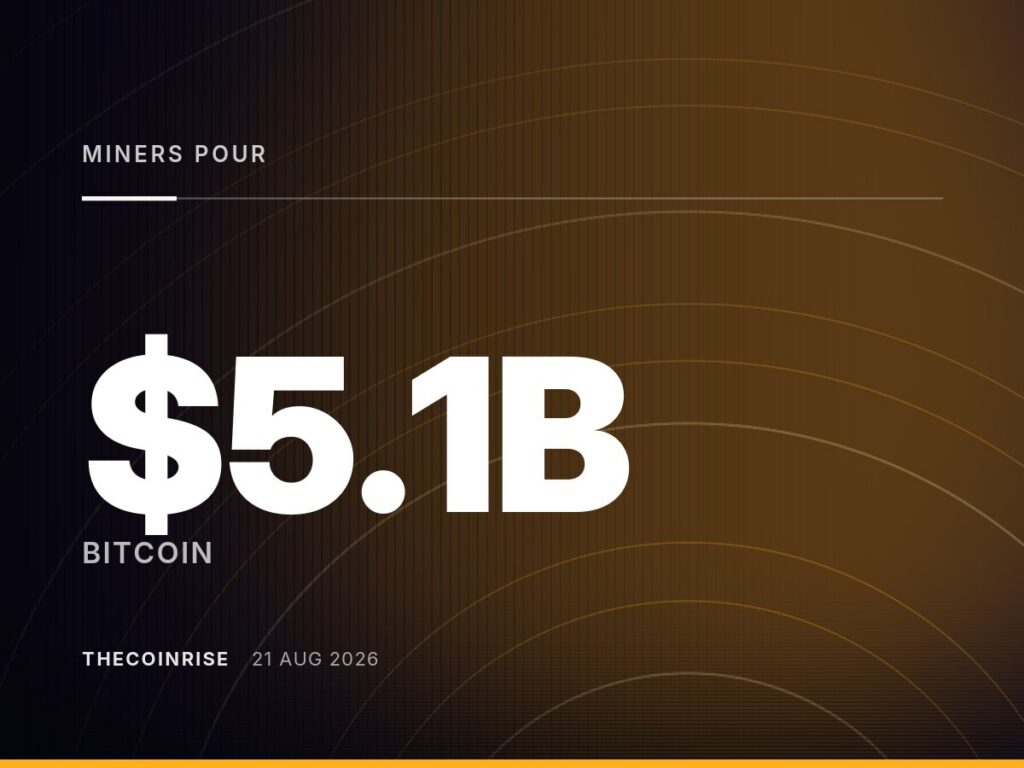
Bitcoin mining companies have collectively spent $5.1 billion chasing revenue from artificial intelligence infrastructure, according to figures reported this week. The investment covers data centers, computing hardware, and related infrastructure aimed at capturing demand from the AI boom. Despite the scale of spending, revenue tied to those AI initiatives reached only $341 million during the first half of 2026.
The resulting ratio, described as roughly 15 to 1, highlights a widening gap between capital outlay and returns. Miners have increasingly looked beyond Bitcoin production as a way to diversify income. Rising energy costs and shrinking mining margins have pushed many operators to explore new revenue streams.
Bitcoin mining has traditionally relied on block rewards and transaction fees to generate profit. Periodic halving events reduce those rewards over time, squeezing margins for companies with high energy and equipment costs. AI infrastructure, particularly data centers built for machine learning workloads, has been viewed by some miners as a natural extension of their existing expertise in power management and large-scale computing.
The strategy mirrors a broader trend across the mining sector. Several publicly traded mining firms have repurposed or expanded facilities to host AI computing clients rather than solely running mining rigs. The appeal lies in AI's growing demand for computing power, which some miners hope will provide steadier income than the volatile economics of Bitcoin mining alone.
However, the reported figures suggest that translating infrastructure investment into meaningful revenue has proven slower than anticipated. Building AI-focused data centers requires significant upfront capital, specialized hardware, and long lead times before facilities become fully operational and revenue-generating. Contracts with AI clients can also take time to negotiate and scale, delaying the point at which spending converts into cash flow.
The scale of the mismatch, $5.1 billion invested against $341 million earned, has raised questions about the pace of this diversification push. Analysts and industry observers are likely to watch upcoming quarterly results closely to see whether AI-related revenue accelerates as more facilities come online. The current numbers suggest the payoff, if it materializes, may take longer than some investors initially expected.
Market Impact
The disclosed spending gap could weigh on investor sentiment toward mining companies that have pivoted heavily toward AI infrastructure. Shareholders may press management teams for clearer timelines on when AI revenue is expected to scale relative to capital already committed. Companies with heavier debt loads tied to data center buildouts could face additional scrutiny over balance sheet health.
For the broader mining sector, the figures may prompt more conservative guidance around future AI-related capital expenditure. Firms that have not yet made large AI commitments might take a more cautious approach, waiting for peers' results before expanding further. The situation also underscores the execution risk involved in diversifying away from core Bitcoin mining operations.
The $5.1 billion AI push by Bitcoin miners marks a significant bet on diversification beyond mining rewards. Whether that bet pays off will depend on how quickly AI revenue can catch up to the capital already spent.
Frequently Asked Questions
How much have Bitcoin miners invested in AI infrastructure?
Reported figures indicate Bitcoin mining companies have collectively invested $5.1 billion in AI-related infrastructure and data centers.
How much AI revenue have miners generated so far?
AI-related revenue for these mining companies totaled $341 million in the first half of 2026, according to the reported data.
Why are Bitcoin miners investing in AI?
Miners are seeking to diversify income beyond Bitcoin block rewards and fees, using their existing expertise in power infrastructure and large-scale computing to serve AI computing demand.
Does the revenue gap mean AI investments have failed?
The reported gap reflects early-stage returns rather than a definitive outcome. AI data center projects often require long build-out periods before generating substantial revenue.