

Comments from New York Fed President John Williams on the rate outlook coincided with renewed buying in bitcoin markets.
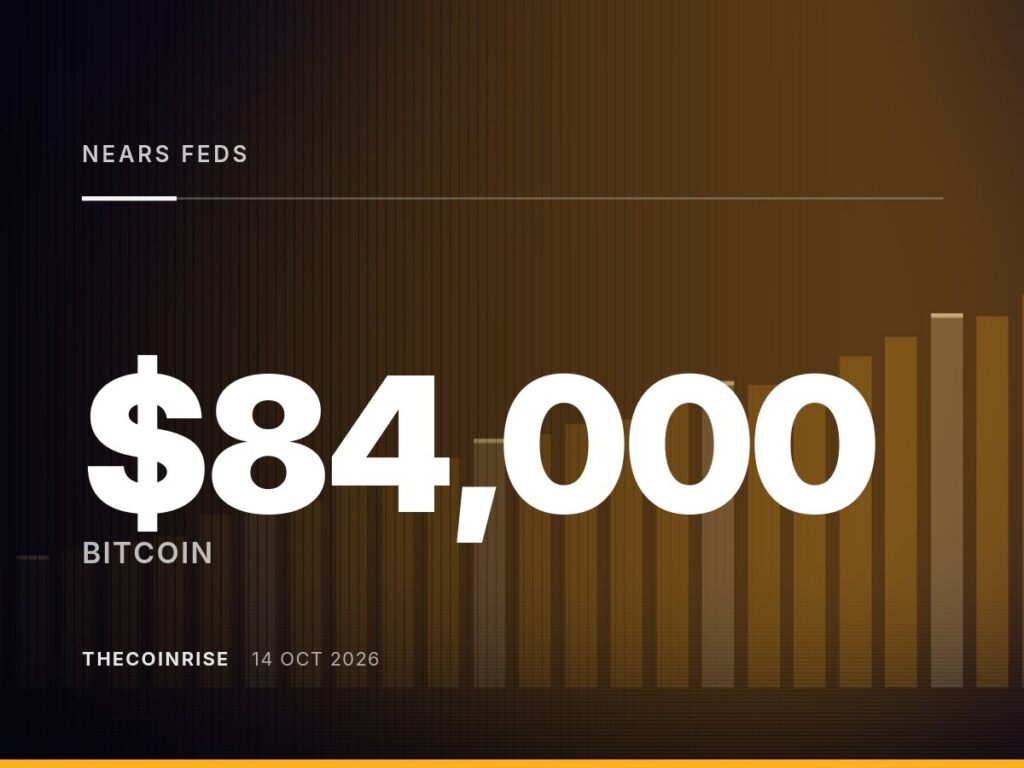
Bitcoin advanced toward the $84,000 mark following comments from New York Federal Reserve President John Williams. He said he does not foresee the central bank raising interest rates in 2027. The statement added to a market narrative built around the Federal Reserve maintaining an accommodative stance well into the medium term.
Williams is one of the most closely watched voices on the Federal Open Market Committee. His remarks carry weight because the New York Fed president holds a permanent voting seat on the committee. Traders parsed his comments for signals about the broader trajectory of monetary policy heading into the back half of the decade.
The rally in bitcoin reflects a pattern seen repeatedly over the past several years. Lower or stable interest rate expectations tend to lift demand for assets perceived as carrying higher risk and higher potential reward. Bitcoin, alongside equities and other speculative instruments, often benefits when borrowing costs are expected to stay contained.
Attention has also turned to upcoming U.S. inflation data. Analysts covering the crypto market have flagged that fresh inflation readings could either reinforce or challenge the current rate outlook. A softer inflation print would likely support the case for continued policy patience from the Fed. A hotter reading could complicate that narrative and introduce fresh volatility.
The interplay between Fed commentary and inflation data has become a central theme for digital asset markets throughout the current cycle. Bitcoin's price action has grown increasingly sensitive to macroeconomic signals rather than crypto-specific catalysts alone. This shift reflects the asset's deepening integration with traditional finance, including growing institutional holdings and exchange-traded product flows.
Market participants are now watching whether bitcoin can sustain its move toward and potentially above $84,000. Much may depend on how incoming economic data shapes expectations for the Fed's path over the coming months. The central bank's own projections and subsequent public statements from officials will likely remain key inputs for traders positioning in bitcoin and related assets.
The broader digital asset market has shown a tendency to track macro headlines closely in recent sessions. Moves tied to Federal Reserve commentary have at times produced sharper swings than crypto-specific news. This underscores how intertwined digital asset pricing has become with conventional monetary policy expectations.
Market Impact
A rate environment seen as stable or easing tends to support demand for bitcoin and other higher-risk assets, as investors weigh reduced opportunity costs of holding non-yielding instruments. Williams' comments, if reinforced by incoming inflation data, could extend the current bid in crypto markets. However, any upside surprise in inflation figures could quickly shift sentiment and reintroduce volatility across both crypto and traditional risk markets.
The sensitivity of bitcoin's price to Federal Reserve commentary highlights the asset's growing correlation with macroeconomic indicators. This dynamic has implications for traders and institutions managing crypto exposure alongside broader portfolios, as monetary policy signals now factor more heavily into short-term price movements than in earlier market cycles.
Bitcoin's move toward $84,000 illustrates how closely tied crypto markets have become to Federal Reserve signaling and inflation expectations. Forthcoming economic data releases are likely to remain a key factor shaping near-term price direction.
Frequently Asked Questions
Who is John Williams and why do his comments matter for bitcoin?
John Williams is president of the Federal Reserve Bank of New York and holds a permanent voting seat on the Federal Open Market Committee. His remarks on interest rate expectations are closely watched because they can influence broader market sentiment toward risk assets, including bitcoin.
Why would no rate hikes in 2027 affect bitcoin's price?
Expectations of stable or lower interest rates can reduce the appeal of holding cash or low-risk assets, pushing some investors toward higher-risk instruments like bitcoin. This dynamic has repeatedly influenced crypto market sentiment in recent years.
What role does U.S. inflation data play in bitcoin's near-term outlook?
Upcoming inflation readings could confirm or undercut current expectations for a patient Federal Reserve policy stance. Softer inflation data would likely support the current narrative, while hotter figures could introduce renewed volatility across crypto markets.
Has bitcoin's price become more sensitive to Federal Reserve commentary?
Market observers have noted that bitcoin's price action increasingly tracks macroeconomic signals, including Fed statements and inflation data, reflecting its deeper integration with traditional financial markets.