

Bitcoin's rally defies expectations after a setback for crypto market structure legislation and a tightening move from the Federal Reserve.
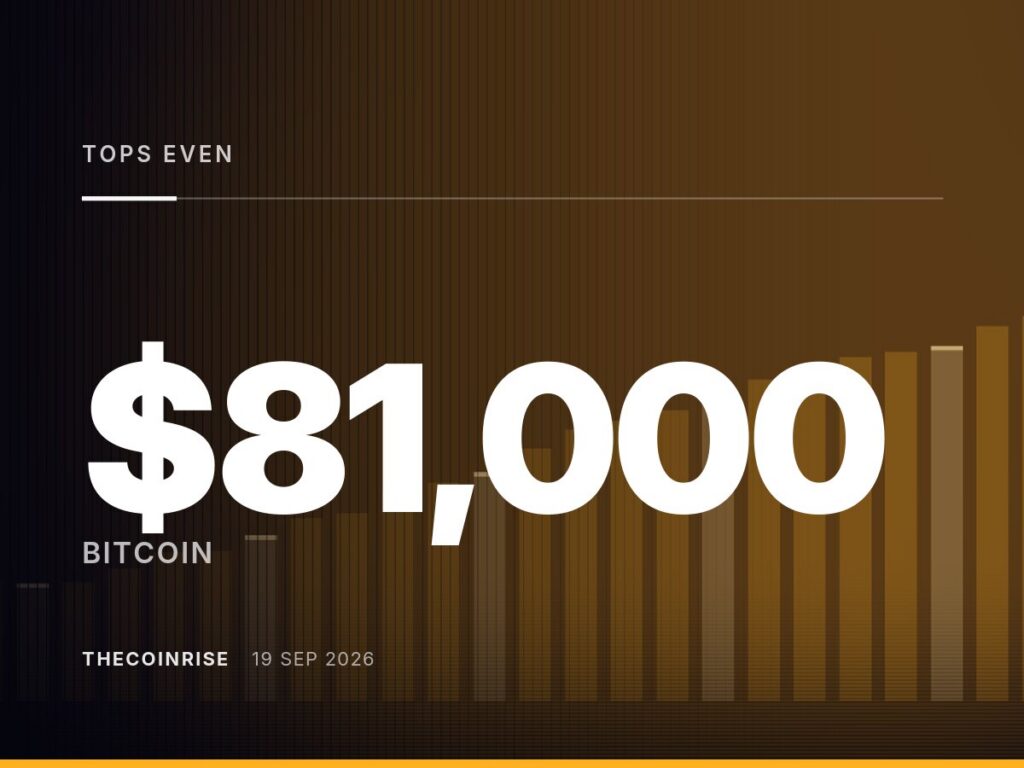
Bitcoin traded above $81,000 this week, a move that caught attention because it came alongside two developments many expected to weigh on prices. The Federal Reserve raised interest rates, and the CLARITY Act, a closely watched piece of digital asset legislation, hit a setback in Congress.
The CLARITY Act has been positioned as a key effort to define regulatory jurisdiction over digital assets in the United States. It aims to clarify which agency, the Securities and Exchange Commission or the Commodity Futures Trading Commission, oversees different categories of crypto tokens. Market participants have viewed passage of the bill as a step toward reducing regulatory uncertainty for exchanges, issuers, and institutional investors.
Reports differ on the exact status of the legislation. One account describes the bill as delayed, suggesting further consideration remains possible. Another characterizes the outcome as a failure, implying the current version did not advance. Both descriptions point to the same underlying event: the bill did not pass as anticipated in this legislative window.
Separately, the Federal Reserve's decision to raise interest rates typically signals tighter monetary policy. Higher rates generally increase the appeal of holding cash and bonds relative to riskier assets, including cryptocurrencies. Historically, rate hikes have coincided with pullbacks in Bitcoin and other digital assets as liquidity conditions become less favorable.
Despite both of these headwinds arriving in close succession, Bitcoin's price moved higher rather than lower. The surge above $81,000 has prompted renewed discussion about whether Bitcoin is becoming less sensitive to short-term regulatory and monetary policy news. Some market observers see this as evidence of maturing demand dynamics, while others caution that a single price move does not establish a lasting trend.
The timing of these events matters for how traders interpret the current market cycle. Legislative clarity has long been cited as a factor that could unlock further institutional participation in digital assets. A delay or failure of the CLARITY Act removes, for now, a potential catalyst many had hoped would arrive this year. At the same time, the Fed's rate decision reflects broader macroeconomic conditions that extend well beyond crypto markets.
Taken together, the divergence between expected and actual price behavior underscores how difficult it can be to predict short-term crypto price action from policy headlines alone. Multiple forces, including liquidity, sentiment, and positioning among large holders, can offset or amplify the impact of any single news event.
Market Impact
The immediate market impact centers on how traders recalibrate expectations following two events that traditionally carry bearish implications for risk assets. Bitcoin's resilience above $81,000 may encourage some investors to view regulatory and monetary policy headlines as less predictive of near-term price direction than previously assumed.
For the broader digital asset industry, continued uncertainty around the CLARITY Act's status leaves questions about market structure regulation unresolved. Exchanges, custodians, and institutional allocators awaiting clearer rules may need to continue operating under existing frameworks until further legislative movement occurs. The rate hike's longer-term effects on liquidity across financial markets, including crypto, remain to be seen in subsequent trading sessions.
Bitcoin's move above $81,000 amid a stalled legislative push and a Fed rate hike highlights the asset's continued unpredictability in the face of macro and policy news. Market participants will likely watch for further clarity on both fronts in the weeks ahead.
Frequently Asked Questions
What is the CLARITY Act?
The CLARITY Act is proposed U.S. legislation intended to clarify which federal regulator, the SEC or the CFTC, oversees different types of digital assets. Supporters argue it would reduce regulatory ambiguity for crypto businesses and investors.
Did the CLARITY Act pass or fail?
Reports differ on this point. One account describes the bill as delayed, leaving room for future action, while another describes it as having failed to advance. Both indicate the legislation did not pass as expected.
Why did Bitcoin's price rise despite the rate hike?
The exact cause is not specified in current reporting. Rate hikes typically pressure risk assets by tightening liquidity, but Bitcoin's price movement suggests other factors, such as demand or positioning, may have offset that effect.
How might this affect future crypto regulation?
Until the CLARITY Act's status is fully resolved, market structure rules for digital assets in the United States remain uncertain, which could continue to affect institutional participation and industry planning.