

Digital asset manager ties Bitcoin's next move to upcoming Federal Reserve policy decisions
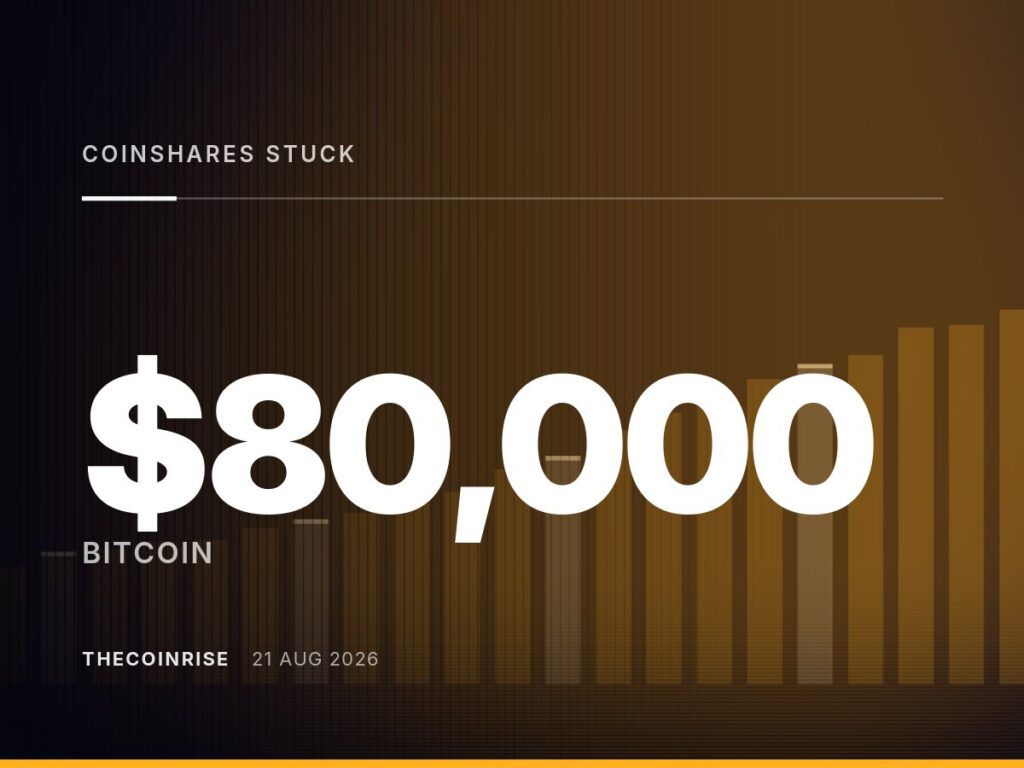
CoinShares has published an outlook suggesting Bitcoin will likely stay range-bound in the near term, with $80,000 acting as a ceiling. The digital asset manager's analysis points to macroeconomic conditions, rather than crypto-specific catalysts, as the main driver of price direction right now.
According to the reporting, CoinShares frames the Federal Reserve's policy path as the central variable for Bitcoin's next move. Whether the asset breaks above $80,000 or continues consolidating below it may depend heavily on upcoming Fed decisions and the broader interest rate environment.
This view fits a pattern seen throughout much of the current cycle, where Bitcoin's price action has tracked traditional macro signals closely. Rate expectations, liquidity conditions, and dollar strength have all played outsized roles in shaping crypto markets over the past several years. CoinShares' framing suggests that pattern continues to hold.
A range-bound outlook implies neither a strong bullish breakout nor a sharp decline is currently expected by the firm. Instead, CoinShares appears to be describing a period of consolidation, where Bitcoin trades within established bounds while the market awaits clearer signals from policymakers.
The $80,000 level referenced in the analysis functions as a technical and psychological marker. A sustained move above it would likely require a shift in monetary policy expectations, such as clearer signals on rate cuts or changes in the Fed's balance sheet approach. Conversely, a more hawkish stance from the central bank could reinforce the ceiling CoinShares describes.
Institutional research firms like CoinShares have grown increasingly influential in shaping how traders and asset managers interpret Bitcoin's macro linkages. Their reports are widely followed by institutional investors who allocate to digital assets through funds and other regulated products. A cautious near-term call from such a firm can influence positioning among larger market participants, even if it does not immediately move retail sentiment.
The timing of this outlook is notable given ongoing uncertainty around the Fed's rate trajectory. Markets have spent much of the year parsing incoming economic data for clues about when, or whether, the central bank will ease policy further. Bitcoin, alongside other risk assets, has remained sensitive to these signals.
Market Impact
If CoinShares' range-bound outlook proves accurate, traders may see reduced volatility in Bitcoin markets until the Federal Reserve provides clearer policy guidance. Institutional investors watching this research could adjust positioning to reflect a wait-and-see approach rather than committing to directional bets.
A sustained ceiling near $80,000 could also affect sentiment in related crypto assets, many of which tend to move in tandem with Bitcoin. Should Fed signals shift meaningfully in either direction, the reaction in Bitcoin's price could be more pronounced given the current period of consolidation described in the analysis.
CoinShares' outlook underscores how closely Bitcoin's price action remains tied to traditional macroeconomic policy, particularly decisions from the Federal Reserve. Investors will likely watch upcoming Fed communications closely for signs of whether the $80,000 level holds or breaks.
Frequently Asked Questions
What is CoinShares predicting for Bitcoin?
CoinShares projects Bitcoin will likely remain range-bound, trading below $80,000, according to its recent analysis.
Why does the Federal Reserve matter for Bitcoin's price?
The Fed's interest rate decisions influence liquidity and risk appetite across markets, and Bitcoin has shown sensitivity to these macro signals throughout the current cycle.
What would need to happen for Bitcoin to break above $80,000?
According to the reporting, a break above that level would likely depend on clearer signals from the Federal Reserve, such as changes to rate expectations or monetary policy.
Does a range-bound forecast mean Bitcoin's price will drop?
Not necessarily. A range-bound outlook suggests consolidation within existing bounds, rather than a prediction of a sharp decline or rally.