

Sentiment gauges show crypto markets trending toward greed, raising questions about how long Ethereum's rally can hold.
The Crypto Fear and Greed Index, a widely watched gauge of market sentiment, has moved sharply higher in recent days. CoinGape reported the index at 79 on August 24, while Invezz cited a reading of 83 the following day in a separate piece on XRP. Both figures sit within the range typically labeled “extreme greed,” a zone that historically accompanies periods of strong buying interest across crypto assets.
The index compiles several inputs, including volatility, trading volume, social media activity, market dominance, and survey data, to produce a single sentiment score. A reading above roughly 75 is generally interpreted as extreme greed, while scores below 25 signal extreme fear. The recent jump suggests traders have grown more confident, though the exact number varies depending on the data provider and the moment it is calculated.
For Ethereum specifically, the rise in sentiment comes as the asset has been part of a broader rally across major cryptocurrencies. CoinGape’s report frames the question directly: whether elevated greed readings support continued upside for Ethereum or instead signal a market that has grown overheated. Neither outlet reported a specific price target or forecast tied to the index reading.
Market watchers often treat extreme greed as a double-edged signal. On one hand, it can reflect genuine momentum, with capital flowing into risk assets and demand outpacing supply. On the other, sustained periods of extreme greed have preceded pullbacks in past cycles, as late buyers enter near local tops and profit-taking follows. The index alone does not predict direction; it measures mood, not fundamentals.
The discrepancy between the 79 and 83 readings reported a day apart illustrates how sentiment indices can shift quickly and vary by source. Different platforms weight their inputs differently, and the index is recalculated frequently as new data arrives. Readers should treat the specific number as a snapshot rather than a fixed benchmark.
Both reports tie the sentiment discussion to price outlooks for major tokens, Ethereum in one case and XRP in the other. This suggests the greed reading is being applied broadly across the market rather than isolated to a single asset, reinforcing that the current mood reflects sentiment toward crypto as a whole rather than Ethereum-specific catalysts.
Sources disagree on this story
This article was published before the reports below were compared. The reporting above stands; what follows is where the published accounts do not agree.
Invezz and The Cryptonomist EN give different Crypto Fear & Greed Index readings for the same date, August 25, 2026, while CoinGape's figure is from a separate day and not directly comparable.
What all sources agree on
- Ethereum and the broader crypto market were rallying, with ETH approaching or trading near the $2,500 resistance level.
- Spot Ethereum ETFs recorded significant net inflows, cited by CoinGape as $697 million for the week of Aug 17-21.
- Momentum indicators (RSI) were described as overbought or extremely overbought across sources, though for different assets and timeframes.
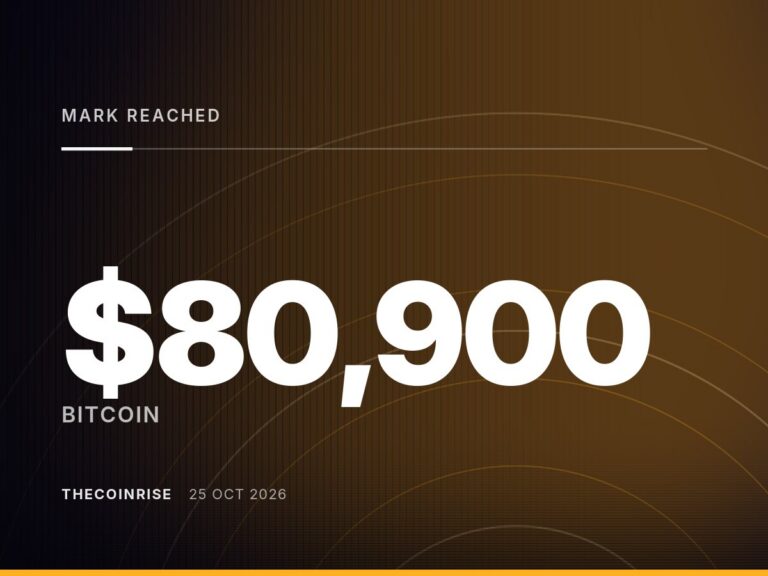
- Bitcoin was reported trading at elevated levels, with CoinGape citing ~$77,000 (Aug 24) and Invezz/Cryptonomist citing above $80,000 (Aug 25).
Where the reports disagree
1Value of the Crypto Fear & Greed Index on August 25, 2026
the Crypto Fear and Greed Index has jumped to the extreme greed zone of 83, its highest level in months.
Bitcoin topping $80,000 and a Fear & Greed Index of 74 confirm the broad risk appetite driving the move.
What would settle it: The official Crypto Fear & Greed Index snapshot/archive for August 25, 2026 (e.g., alternative.me's historical data).
What to make of it
Treat the general narrative of an ETH/BTC rally, ETF inflows, and overbought technical readings as consistent across reports, but do not rely on any single Fear & Greed Index figure for August 25, 2026 until the discrepancy between 83 (Invezz) and 74 (The Cryptonomist EN) is resolved against the index provider's own published data.
Market Impact
A sustained move into extreme greed territory can encourage further short-term buying as traders chase momentum, potentially supporting continued gains for Ethereum and other large-cap tokens. However, historical patterns suggest such readings can also precede increased volatility if sentiment reverses quickly.
Traders and analysts often use the index alongside other indicators, such as trading volume and derivatives positioning, rather than relying on it in isolation. Because the reported figures differ between sources, market participants should view the exact score as directional context rather than a precise measurement, while recognizing that broad optimism is currently a feature of the crypto market environment.
Whether Ethereum's rally extends further remains uncertain, but the shift toward extreme greed underscores a market currently leaning bullish. Investors will likely watch for confirmation from price action and volume data in the days ahead.
Frequently Asked Questions
What is the Crypto Fear and Greed Index?
It is a composite score, typically ranging from 0 to 100, that measures overall sentiment in crypto markets using factors like volatility, volume, and social media activity.
Why do the reported index values differ between sources?
Different platforms calculate the index using their own weighting of inputs and update it at different times, which can produce slightly different scores even on nearby dates.
Does extreme greed mean Ethereum's price will keep rising?
Not necessarily. Extreme greed reflects trader sentiment, not a guaranteed price direction, and has historically preceded both continued rallies and pullbacks.
Is the Fear and Greed Index specific to Ethereum?
No. It measures sentiment across the broader crypto market and is commonly referenced when discussing outlooks for multiple assets, including Ethereum and XRP.