

The bitcoin miner turned data-center operator has delivered the initial phase of a multibillion-dollar agreement to supply AI computing capacity to Microsoft.
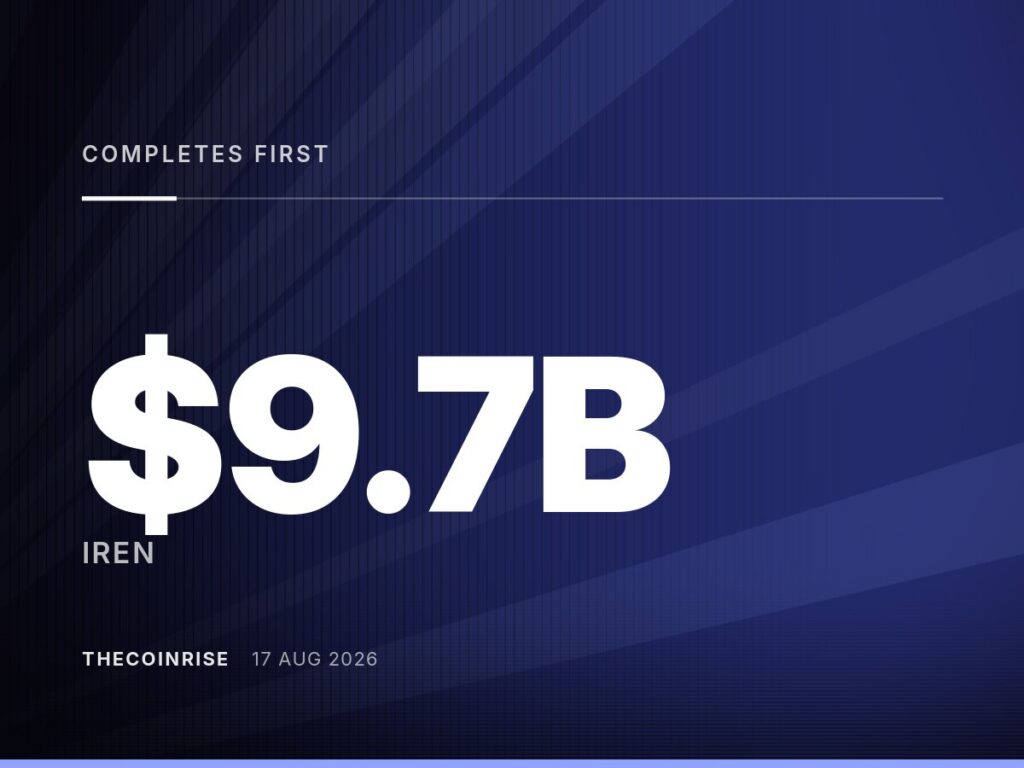
IREN has completed the first of four AI cloud deployments owed to Microsoft under a $9.7 billion agreement, according to reports from CryptoBriefing and The Block. The delivery marks a tangible milestone in a deal that positions IREN as a supplier of AI computing capacity to one of the world's largest technology companies.
IREN, previously known as Iris Energy, built its business mining bitcoin using large-scale data center facilities. Over the past two years, the company has increasingly redirected that infrastructure toward artificial intelligence workloads. Graphics processing units and data center capacity built for crypto mining can, in many cases, be adapted or expanded to serve AI compute demand, and IREN has leaned into that overlap.
The $9.7 billion Microsoft agreement represents one of the largest commitments IREN has secured to date. Structuring the deal into four separate deployments suggests a phased rollout, likely tied to construction timelines, power availability, and hardware procurement. The completion of the first phase indicates that IREN has moved from contractual commitment into operational delivery.
Microsoft has been aggressively expanding its AI compute capacity to support its own cloud services and its partnership with OpenAI. Sourcing capacity from external providers like IREN allows Microsoft to scale faster than building every facility in-house. It also gives specialized infrastructure firms with available power and land a path to diversify revenue beyond volatile crypto mining margins.
For IREN, the milestone offers evidence that its pivot toward AI infrastructure is generating revenue-producing outcomes rather than remaining aspirational. Bitcoin miners across the industry have faced pressure from rising energy costs, shrinking mining margins after halving events, and competition for grid capacity. Diversifying into AI hosting has become a common strategy among firms with existing data center footprints and power contracts.
Neither CryptoBriefing nor The Block detailed the specific timeline for the remaining three deployments under the agreement. It also remains unclear what portion of the $9.7 billion total the first phase represents, or how deployment progress will be recognized in IREN's financial reporting going forward.
Market Impact
Confirmation of an operational milestone under the Microsoft deal could support investor confidence in IREN's transition away from a pure bitcoin mining model. Companies with diversified revenue tied to AI infrastructure contracts have generally drawn different valuation treatment than mining-only peers exposed to bitcoin price swings.
The development may also draw attention to other crypto miners pursuing similar AI hosting strategies, since large technology firms continue seeking compute capacity outside their own data centers. Broader implications for the sector will likely depend on whether IREN discloses further details on deployment pace, revenue recognition, and the remaining three phases of the agreement.
The delivery represents an early but concrete step in a large, multi-year infrastructure agreement, with three more deployments still pending under the $9.7 billion contract.
Frequently Asked Questions
What is IREN's business?
IREN, formerly Iris Energy, originally operated as a bitcoin mining company and has expanded into AI cloud computing infrastructure using its data center capacity.
What does the $9.7 billion Microsoft deal involve?
The agreement covers four planned AI cloud deployments from IREN to Microsoft, with the first now reported as completed. Details on the remaining three phases have not been disclosed.
Why would Microsoft source AI computing capacity externally?
Microsoft has been scaling AI infrastructure rapidly to support cloud services and AI partnerships, and sourcing capacity from outside providers can help it expand faster than building every facility itself.
Why are bitcoin miners moving into AI infrastructure?
Many miners already control data centers and power contracts, which can be repurposed or expanded for AI workloads, offering a revenue stream less tied to bitcoin price volatility.