

The exchange will remove all XMR spot pairs on November 30, citing its special treatment rules rather than a specific cause.
KuCoin said on Thursday it will delist Monero (XMR) on November 30, triggering a sharp selloff in the privacy-focused cryptocurrency. The exchange will remove four spot trading pairs — XMR/USDT, XMR/USDC, XMR/ETH and XMR/BTC — at 8:00 UTC that day.
Deposits of XMR on KuCoin were suspended as soon as the announcement went out. Users have until December 31 to withdraw their remaining holdings, though KuCoin warned it could cut off withdrawals earlier if the Monero network stops producing blocks or processing transfers.
The exchange is also winding down related products ahead of the delisting. Its flexible savings offering for XMR will end on November 27, three days before the spot pairs disappear. Trading bots and the Convert swap service tied to Monero will be discontinued alongside the spot pairs on November 30. KuCoin further confirmed that XMR will no longer count as eligible collateral under its VIP Loan program, and it urged affected borrowers to post alternative collateral to avoid forced liquidation.
- Nov. 13MEXC removed its XMR spot and perpetual markets
- November 26KuCoin confirmed it would remove XMR from trading
- November 27XMR flexible savings product discontinued
- December 31Deadline for users to withdraw remaining XMR
In its notice, KuCoin said the move was made in line with its Special Treatment Rules. The exchange made no mention of its XMR/USDT perpetual futures contract, which carried $33 million in 24-hour volume at the time of the announcement, per CoinMarketCap figures.
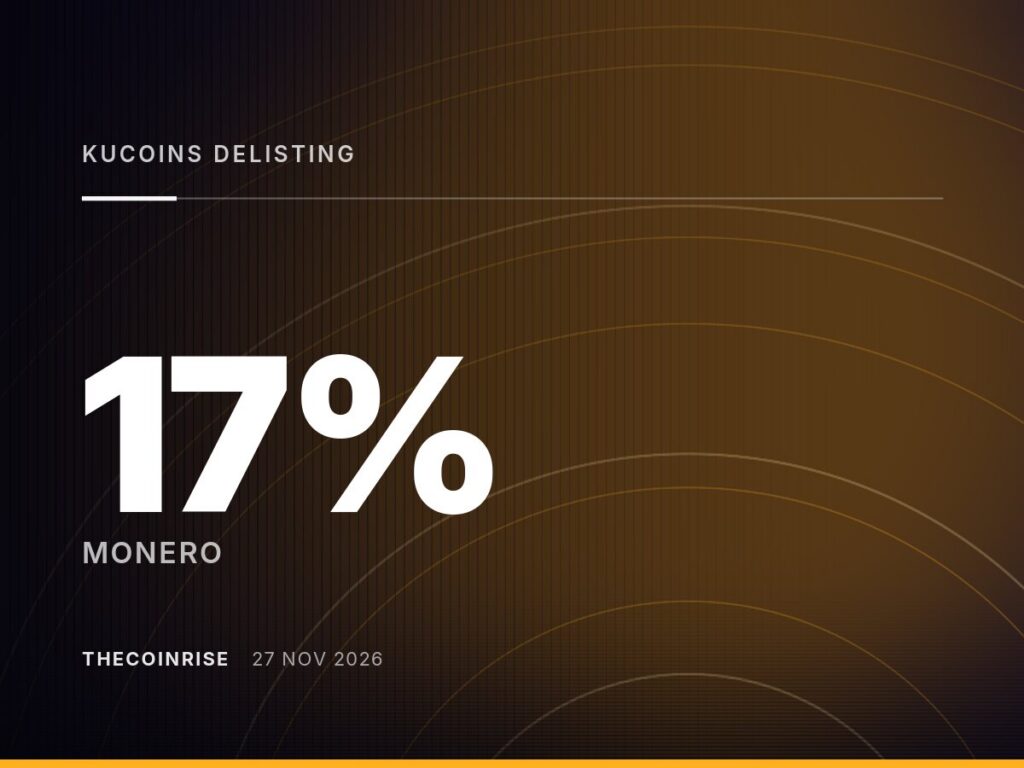
The price reaction was immediate and steep, though reported magnitudes varied. CryptoBriefing put the drop at as much as 17%, with XMR later paring losses to trade near $450, still down 14%. U.Today reported a decline of roughly 15%, with the token touching a low of $436 based on Kraken data on TradingView. BeInCrypto recorded a 12% drop following the announcement.
KuCoin had been a significant venue for Monero liquidity before the announcement. Its XMR/USDT pair carried $73.8 million in 24-hour volume on Thursday, representing 47% of all XMR spot trading volume across exchanges, according to CoinMarketCap data. HTX's XMR/USDT pair ranked second with $29.5 million in volume. On the derivatives side, Binance held the largest XMR perpetual market, with $89.3 million in 24-hour volume.
- 26 Nov 14:22CryptoBriefing · first report
- 26 Nov 15:08U.Today
- 26 Nov 15:39BeInCrypto
- 26 Nov 18:06Coin Edition
- 26 Nov 18:10Crypto Economy
- 26 Nov 18:13NewsBTC
- 27 Nov 00:12BlockchainReporter
Monero around this story
What Monero futures prices on Hyperliquid showed between the first report and our publication. It shows timing, not cause: prices move for many reasons at once.
Market Impact
Removing the single largest spot venue for XMR trading strips out nearly half of the token's visible liquidity, which can widen spreads and amplify volatility on the exchanges that remain, including HTX. The loss of KuCoin's lending and collateral support adds pressure on holders who had used XMR within margin or loan positions, some of whom may now need to post different collateral or unwind positions quickly.
The delisting also revives scrutiny of privacy coins on centralized exchanges more broadly. BeInCrypto has pointed out that KuCoin is keeping Zcash listed despite removing Monero, raising questions about whether other privacy-focused tokens could face similar exchange pressure going forward.
Monero holders on KuCoin now face a hard deadline: trading ends November 30, and withdrawals close December 31 unless the network itself runs into trouble first.
Frequently Asked Questions
When will KuCoin delist Monero?
KuCoin will remove all four XMR spot trading pairs — XMR/USDT, XMR/USDC, XMR/ETH and XMR/BTC — at 8:00 UTC on November 30.
Can users still withdraw XMR from KuCoin?
Yes, withdrawals remain open until December 31, though KuCoin said it could close them earlier if the Monero network stops producing blocks or processing transfers.
Why did KuCoin delist Monero?
KuCoin cited its Special Treatment Rules in the delisting notice but did not disclose a specific reason for removing XMR.
How much did Monero's price fall?
Reported drops ranged from 12% to 17% across different sources, with XMR touching a low near $436 before paring some losses.
Does this affect other Monero-related products on KuCoin?
Yes, KuCoin is discontinuing XMR flexible savings on November 27 and ending trading bot and Convert support for XMR on November 30, while also removing XMR as eligible collateral under its VIP Loan program.