
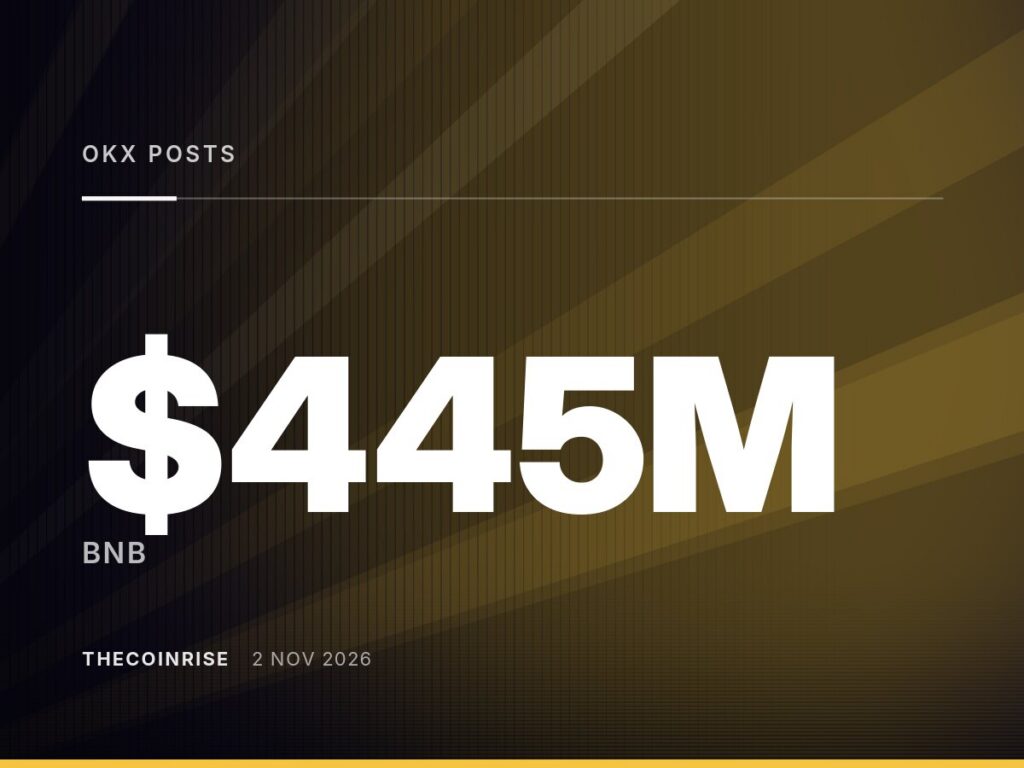


Exchange-level fund flows diverge sharply, with OKX gaining deposits while Binance records a multibillion-dollar net withdrawal.
OKX drew $445 million in net inflows, according to data reported by Cointelegraph and CryptoBriefing. The figure places OKX among the top gainers in exchange-level deposit activity for the period covered.
Binance, the largest crypto exchange by trading volume, saw the opposite trend. Net outflows from Binance exceeded $7 billion over the same timeframe, the reports said. That gap between the two platforms represents one of the more pronounced divergences in exchange flow data in recent memory.
Exchange inflow and outflow figures track the net movement of crypto assets into and out of wallets associated with a given platform. Analysts and traders often use this data as a rough proxy for shifts in user sentiment, custody preferences, or trading activity. A large outflow does not necessarily indicate distress at an exchange. It can also reflect users moving funds to cold storage, other platforms, or decentralized finance protocols.
The scale of the Binance outflow figure stands out given the exchange's size and typical trading volume. Binance has historically processed the largest share of global spot and derivatives trading among centralized platforms. A net withdrawal of this magnitude would represent a meaningful shift in where market participants choose to hold or deploy their assets, even relative to Binance's substantial balance sheet.
OKX's inflow gain, while smaller in absolute terms, suggests the exchange may be benefiting from some of that reallocation. Exchanges compete not only on trading fees and liquidity but also on perceived custody security, regulatory standing, and product offerings. Shifts in net flows can sometimes follow changes in any of these areas, though the specific drivers behind this particular movement were not detailed in the reports.
It remains unclear from available reporting what time period these flow figures cover or what specifically triggered the divergence. Exchange flow data is typically compiled using blockchain analytics tools that track wallet addresses attributed to known exchange custody, a methodology that can carry some margin of estimation. Readers should treat the raw figures as directional indicators of fund movement rather than precise measures of exchange health.
Both OKX and Binance operate as major venues for spot and derivatives trading across a wide range of digital assets. Flow data involving either platform tends to draw attention from traders monitoring liquidity conditions and potential shifts in market structure.
Market Impact
Large net outflows from a dominant exchange like Binance can influence short-term liquidity conditions, particularly if funds move toward self-custody or alternative trading venues rather than remaining active in the broader market. Traders sometimes interpret such shifts as an early signal of changing risk appetite, though outflows alone do not confirm a change in overall market direction.
For OKX, a sustained pattern of net inflows could support deeper order books and tighter spreads if the deposited assets remain active on the platform. Market participants will likely watch subsequent flow reports to see whether this divergence persists or proves to be a short-lived fluctuation tied to a specific event or reporting window.
The flow data highlights a notable split in exchange-level activity, with OKX gaining deposits while Binance recorded a large net withdrawal. Further reporting may clarify the timeframe and underlying causes behind the shift.
Frequently Asked Questions
What do exchange net inflows and outflows measure?
They track the net movement of crypto assets into or out of wallets identified as belonging to a given exchange, based on blockchain analytics.
Does a large outflow mean Binance is losing users?
Not necessarily. Outflows can reflect users moving funds to cold storage, other exchanges, or decentralized platforms, rather than leaving the ecosystem entirely.
How large was the gap between OKX and Binance flows?
Reports indicate OKX gained $445 million in net inflows while Binance recorded net outflows exceeding $7 billion over the same period.
Is this kind of divergence common between major exchanges?
Flow differences between exchanges occur regularly, but a gap of this size between two major platforms is considered notable by market observers.





Read More
All News


November 2, 2026
Bitcoin Midterm Pattern: Clear Trend or No Pattern?

November 2, 2026
Ethereum Whale Buy: One Whale or Two, Reports Differ

November 2, 2026