

Conflicting weekly gain figures from two outlets underscore a fast-moving rally tied to banking sector interest.
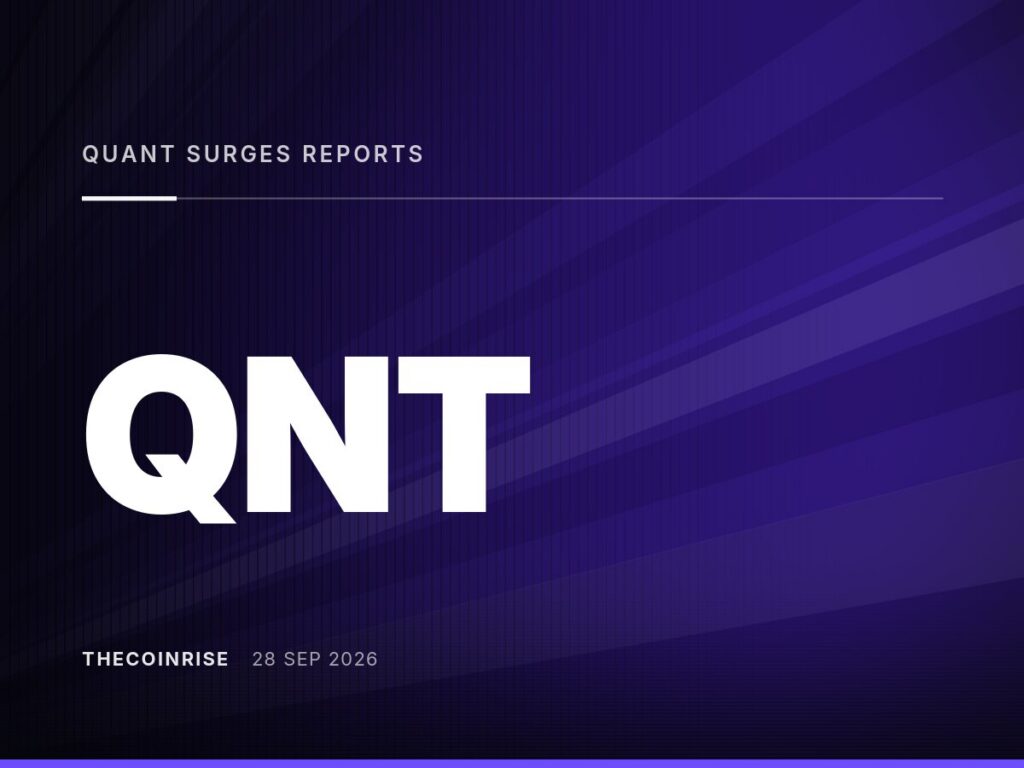
Quant Network's native token QNT posted one of the sharpest moves in the crypto market this week. CryptoPotato reported the token rocketed 75% in a single trading session, part of what it described as a 180% rally over seven days. Cryptopolitan, reporting a day later, put the weekly gain closer to 300%, linking the surge directly to new banking deals in the United States and the United Kingdom.
The two figures diverge, and neither outlet's exact methodology for calculating the weekly percentage was detailed in the available reporting. Both agree on the core narrative: QNT experienced an outsized rally this week, and banking sector engagement appears to be the driving catalyst.
Quant Network positions itself as an interoperability layer for financial institutions. Its Overledger technology is designed to let banks and regulated entities connect disparate blockchain networks and legacy systems without rebuilding core infrastructure. That pitch has long made Quant a name watched closely by traditional finance observers, even during periods when its token traded far below the highs of the broader 2021 bull cycle.
Banking-sector validation matters disproportionately for tokens like QNT compared with more consumer-facing crypto assets. Institutional adoption signals are often treated by traders as evidence that a project's technology has cleared internal compliance and risk hurdles at large, heavily regulated organizations. That combination can compress skepticism quickly when news breaks, producing the kind of rapid price action seen this week.
The scale of the move also reflects QNT's relatively thin market compared to top-tier cryptocurrencies. Lower liquidity tokens tend to see amplified price swings, both up and down, when new demand or a fresh narrative enters the market. A rally of the magnitude described by either source would represent a significant re-rating of the asset within days rather than months.
Neither report detailed the specific banks involved, the scope of the reported agreements, or whether these arrangements represent pilot programs, formal partnerships, or early-stage exploratory talks. That distinction matters for assessing how durable the rally might prove, since crypto markets have previously reacted strongly to banking headlines that later turned out to describe limited-scope pilots rather than full production deployments.
Market Impact
A move of this size in a single asset can ripple through sentiment across the broader altcoin market, particularly among tokens tied to institutional blockchain infrastructure narratives. Traders often treat sharp single-asset rallies as evidence that banking and institutional adoption stories are gaining traction more broadly, which can lift related tokens even without direct news of their own.
At the same time, rapid percentage gains of this scale historically invite volatility on the way back down, especially once initial momentum buying slows. Readers should note that the figures reported by CryptoPotato and Cryptopolitan differ meaningfully, a reminder that percentage gains calculated from different starting points or timeframes can produce widely varying headline numbers for the same underlying move.
Quant's rally this week reflects renewed attention to blockchain interoperability tools within traditional banking, though the precise scope of the reported US and UK engagements remains to be clarified in further detail.
Frequently Asked Questions
What caused QNT's price surge this week?
Reports from CryptoPotato and Cryptopolitan attribute the rally to new banking-sector engagements involving Quant Network in the United States and United Kingdom, though specific details of those arrangements were not fully outlined.
Why do the reported weekly gain figures differ?
CryptoPotato reported a 180% weekly rally alongside a 75% single-day move, while Cryptopolitan cited a 300% weekly gain. The discrepancy likely stems from different timeframes or starting prices used to calculate the percentage move.
What does Quant Network do?
Quant Network builds Overledger, an interoperability platform intended to let banks and financial institutions connect blockchain networks with existing legacy systems without overhauling core infrastructure.
Does banking interest guarantee QNT's price will keep rising?
No. This article reports market activity and stated facts only. Rapid rallies in lower-liquidity tokens can be followed by significant volatility, and no price outcome should be assumed based on past moves.


Read More
All News
October 22, 2026
OCC Stablecoin Rule: Outlets Disagree on NPRM Date
October 22, 2026