

The payments firm says stablecoin-linked card usage is set for rapid growth over the next several years.
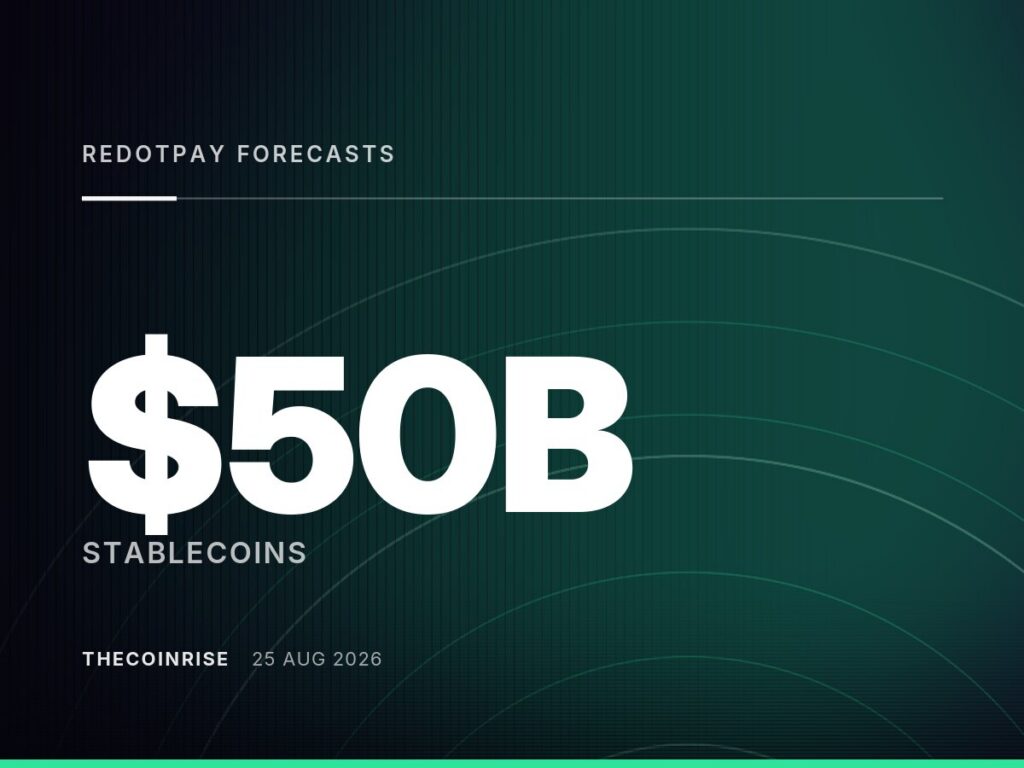
RedotPay, a crypto payments company, has forecast that stablecoin card spending could climb to $50 billion a year by 2028. The projection reflects the firm's view that dollar-pegged digital tokens are moving beyond trading and settlement into everyday retail use.
Stablecoins were originally built to help crypto traders move funds between exchanges without exposure to volatile price swings. Tokens like USDT and USDC are pegged to the U.S. dollar and backed by reserves of cash or short-term government debt. Over time, their use case has widened. Payment companies now issue cards that let users spend stablecoin balances directly at merchants, converting tokens to fiat currency at the point of sale.
RedotPay's forecast suggests this card-based spending model is gaining traction. Reaching $50 billion in annual volume by 2028 would mark a significant jump from current levels, though the company did not detail the baseline figures used to reach that estimate. The projection was reported by crypto.news and Yahoo Finance, both citing RedotPay as the source.
The growth of stablecoin card spending fits into a broader trend of digital assets integrating with traditional financial infrastructure. Major card networks and fintech firms have already partnered with stablecoin issuers to expand payment options. These partnerships aim to give crypto holders a way to use their holdings for daily transactions, rather than holding them purely as trading instruments.
Regulatory clarity has also played a role in shaping expectations for stablecoin adoption. Governments in several jurisdictions have moved to establish clearer rules for stablecoin issuance and reserve backing. Clearer frameworks tend to encourage banks and payment processors to work with stablecoin providers, since compliance risk becomes easier to manage.
RedotPay's forecast arrives as competition intensifies among crypto payment providers. Multiple companies now offer stablecoin-linked debit or prepaid cards, targeting users in regions where access to traditional banking services can be limited. These products often promise lower fees for cross-border transactions compared with conventional card networks.
The $50 billion figure represents a target for total industry-wide stablecoin card spending rather than a single company's volume. It illustrates how payment firms view stablecoins as a growing share of consumer transactions, even as the broader crypto market continues to focus on trading and investment activity.
Market Impact
If accurate, growth of this scale would signal deepening integration between stablecoins and mainstream payment systems. Card networks, banks, and fintech firms that build stablecoin acceptance into their infrastructure early could capture a larger share of this expanding transaction volume.
The forecast also underscores the importance of regulatory clarity for stablecoin issuers. Continued growth in card spending would likely depend on stable reserve backing, transparent audits, and consistent rules across jurisdictions where these cards are used.
RedotPay's $50 billion projection highlights stablecoins' expanding role beyond crypto trading and into daily consumer spending. Whether the forecast materializes will depend on continued merchant adoption, regulatory developments, and competition among payment providers.
Frequently Asked Questions
What did RedotPay forecast about stablecoin card spending?
RedotPay projected that annual stablecoin card spending could reach $50 billion by 2028, reflecting expected growth in everyday use of dollar-pegged tokens for purchases.
How does stablecoin card spending work?
Users hold stablecoins in a digital wallet linked to a card. At checkout, the stablecoin balance is converted to fiat currency so it can be spent like a traditional debit or prepaid card.
Why are stablecoins being used for card payments now?
Payment firms have built infrastructure connecting stablecoin wallets to card networks, while clearer regulations in some regions have made banks and processors more willing to support these products.
Does the $50 billion figure represent one company's activity?
No, the projection refers to industry-wide stablecoin card spending across multiple providers, not the volume of a single company.