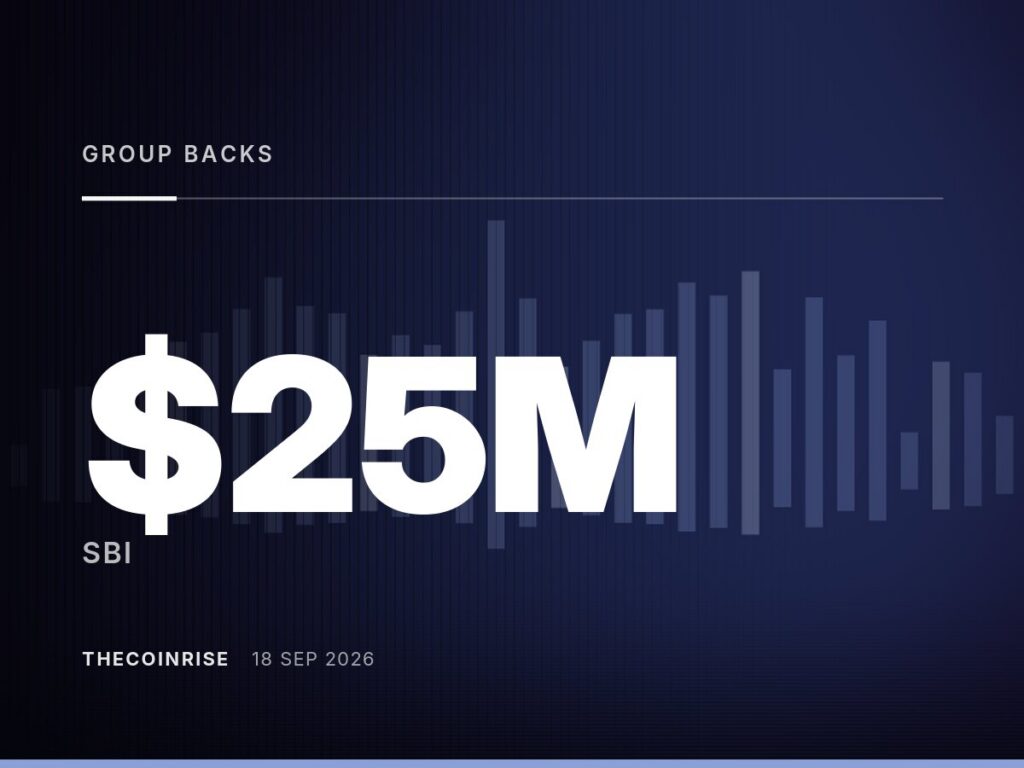


Singapore-based dtcpay adds SBI Group as an investor, growing its Series A round to US$25 million.
dtcpay has expanded its Series A funding round to US$25 million, with backing from SBI Group. The announcement was reported by Fintech News Singapore and The Block on September 18, 2026. dtcpay describes itself as a stablecoin payments firm, positioning it within a growing segment of financial technology focused on digital dollar transactions.
SBI Group is a major Japanese financial services conglomerate with a long history of investing in blockchain and digital asset companies. Its involvement in dtcpay’s funding round adds a well-capitalized institutional name to the company’s investor base. Details on the specific size of SBI Group’s contribution, or on other participants in the round, were not disclosed in the available reporting.
Stablecoin payments have become one of the more active corners of the crypto industry over the past two years. Companies in this space build infrastructure that lets businesses accept, settle, or move value using tokens pegged to fiat currencies, most commonly the US dollar. The appeal lies in faster settlement and lower transaction costs compared with traditional cross-border payment rails.
Singapore has positioned itself as a regional hub for this kind of activity. The city-state’s regulators have issued licensing frameworks for digital payment token services, drawing fintech firms that want regulatory clarity. dtcpay’s base of operations there places it within a cluster of companies working on compliant stablecoin infrastructure for merchants and institutions.
The expansion of a Series A round, rather than a fresh raise, suggests dtcpay had already secured initial commitments before SBI Group’s participation was added. Companies sometimes extend early funding rounds when new investors express interest after the round has technically opened or partially closed. This pattern can reflect growing confidence in a startup’s trajectory without requiring a full new pricing round.
Neither report provided a valuation figure for dtcpay following the expanded raise. Details about planned use of the capital, such as geographic expansion, licensing, or product development, were also not specified in the available coverage.
Sources disagree on this story
This article was published before the reports below were compared. The reporting above stands; what follows is where the published accounts do not agree.
Reports on dtcpay's expanded $25 million Series A agree on the core deal but differ on when the initial $10 million tranche closed.
What all sources agree on
- dtcpay completed a $25 million Series A funding round with SBI Group joining as a strategic investor.
- SBI invested through SBI Ventures Asset and the SBI-NTU-Kyobo Digital Innovation Fund.
- Vertex Ventures Southeast Asia & India led the initial $10 million tranche of the round.
- Genedant Capital and existing investor Kwee Liong Tek also participated.
- The funding is earmarked for product development and merchant network expansion.
- dtcpay holds a Major Payment Institution licence from the Monetary Authority of Singapore and an Electronic Money Institution licence in Luxembourg.
Where the reports disagree
1Month the initial $10 million Series A tranche closed
The company had initially raised US$10 million in the round in March, with Vertex Ventures Southeast Asia & India leading the earlier tranche.
Vertex Ventures announced the initial $10 million Series A on March 17, with the capital intended for product development, infrastructure work and entry into newly licensed jurisdictions.
Dtcpay said the investment completed its $25 million Series A, which began with a $10 million tranche led by Vertex Ventures Southeast Asia & India in April.
What would settle it: Vertex Ventures' original funding announcement or dtcpay's own dated press release from the initial tranche.
What to make of it
Treat the $25 million total, SBI's entry via SBI Ventures Asset and the SBI-NTU-Kyobo fund, and the other named participants as established; the specific month the first $10 million closed (March vs. April) is unresolved and should not be cited as settled.
Market Impact
The funding news adds to a broader trend of institutional capital flowing into stablecoin infrastructure providers rather than speculative token projects. Investors like SBI Group, with established footprints in traditional finance and digital assets, lend credibility to payment-focused crypto startups seeking to work with banks and merchants.
For the stablecoin sector generally, continued venture investment signals that backers expect payment use cases to expand even amid regulatory uncertainty in various jurisdictions. Singapore's regulatory posture may continue to attract similar firms and capital, reinforcing the city-state's role as a testing ground for compliant stablecoin commerce.
dtcpay's expanded Series A, backed by SBI Group, underscores sustained investor appetite for stablecoin payment infrastructure. Further details on the company's plans and valuation may emerge as reporting on the deal continues.
Frequently Asked Questions
What does dtcpay do?
dtcpay is described as a stablecoin payments company based in Singapore, focused on infrastructure for digital dollar-based transactions.
How much did dtcpay raise in its Series A round?
The company expanded its Series A funding round to a total of US$25 million, according to reports from Fintech News Singapore and The Block.
Who is SBI Group?
SBI Group is a Japanese financial services conglomerate with a track record of investing in blockchain and digital asset companies. It joined dtcpay's Series A as a backer.
Was a company valuation disclosed alongside the funding news?
No valuation figure for dtcpay was included in the available reporting on the expanded Series A round.