

Visa, Mastercard and Stripe are building new rails linking stablecoins to traditional bank accounts, even as token issuance plateaus.
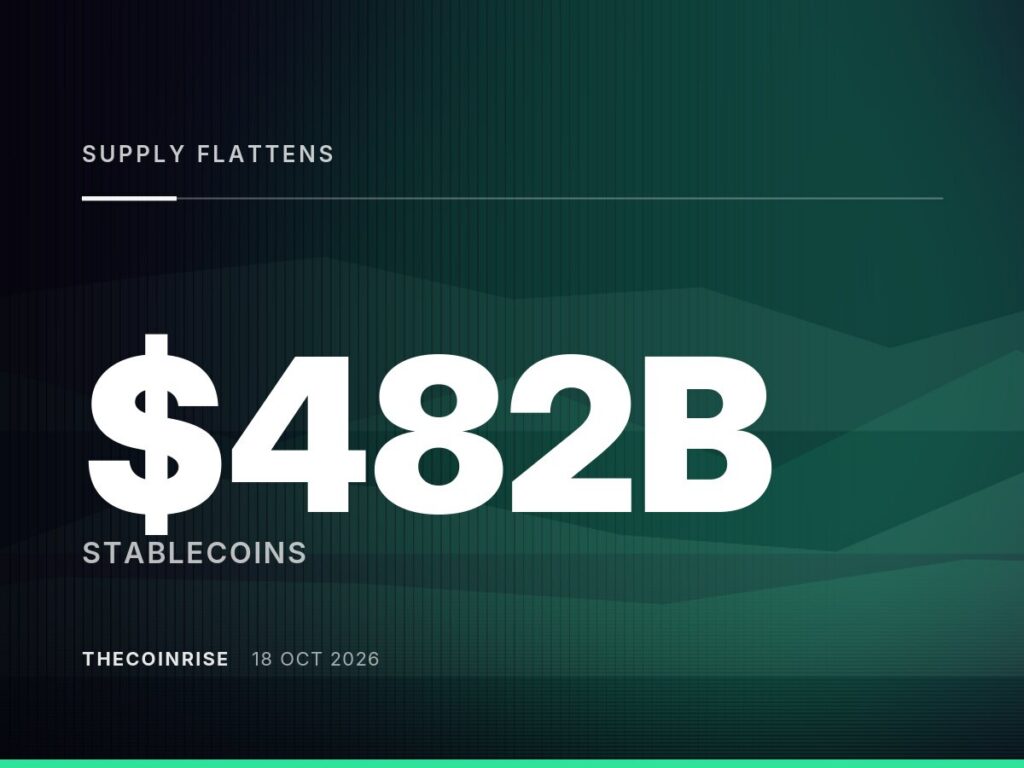
Stablecoin supply growth has stalled, according to data reported by CoinDesk and CryptoBriefing. Yet payment volume using stablecoins rose sharply over the same period, climbing 45% to roughly $482 billion. The gap between flat issuance and surging usage suggests stablecoins are being used more actively rather than simply held or minted in larger quantities.
Stablecoin supply refers to the total value of tokens like USDT and USDC in circulation. Payment volume measures how much of that supply actually moves through transactions. A rising payment figure alongside flat supply implies existing tokens are changing hands more frequently. That pattern points toward stablecoins functioning less as a store of value and more as a transaction tool.
Visa, Mastercard and Stripe are named in the reporting as key players building connections between stablecoin networks and traditional cash systems. These companies operate the infrastructure that banks, merchants and card networks rely on worldwide. Their involvement signals that stablecoins are moving closer to mainstream payment rails rather than remaining confined to crypto exchanges and wallets.
The interest from established payments firms reflects a broader shift in how the industry views stablecoins. For years, stablecoins served mainly as a bridge between fiat currency and crypto trading. Increasingly, they are being positioned as a settlement tool for cross-border payments, merchant transactions and corporate treasury operations. Connecting crypto rails to cash accounts lowers the friction of converting between the two.
The stalled supply figure does not necessarily indicate declining demand for stablecoins overall. It may instead reflect market conditions, regulatory uncertainty in certain jurisdictions, or a maturing issuance cycle after a period of rapid growth. Supply and usage do not always move in tandem, and analysts often watch both metrics together to gauge the health of the stablecoin sector.
The involvement of major card networks and payment processors also carries implications for how stablecoins are regulated and monitored. Visa and Mastercard operate under extensive compliance frameworks in most countries. Their participation could bring stablecoin transactions under closer scrutiny from banking regulators, even as it expands access for everyday users and merchants.
Market Impact
A 45% jump in payment volume, even without new supply growth, suggests stablecoins are becoming more embedded in everyday commerce rather than just crypto trading. If Visa, Mastercard and Stripe continue building infrastructure that links stablecoins to bank accounts, merchants and consumers may gain easier ways to send and receive stablecoin payments without directly interacting with crypto exchanges.
This could increase transaction activity for major stablecoin issuers even if total circulating supply remains steady. It may also accelerate competition among payment processors seeking to offer stablecoin settlement as a service, potentially influencing how banks and fintech firms price cross-border transfers going forward.
The flattening of stablecoin supply alongside a sharp rise in payment volume illustrates a shift toward utility over accumulation. As Visa, Mastercard and Stripe deepen their involvement, stablecoins appear to be moving further into mainstream payment infrastructure.
Frequently Asked Questions
What does it mean that stablecoin supply has stalled?
It means the total value of stablecoins in circulation has stopped growing, remaining roughly flat rather than increasing as it has in prior periods.
Why did payment volume rise even though supply did not?
Existing stablecoins appear to be changing hands more frequently, meaning the same supply is being used for a larger number of transactions.
How are Visa, Mastercard and Stripe involved in stablecoins?
According to the reporting, these companies are building connections that let stablecoin value move more easily between crypto networks and traditional cash accounts, such as bank accounts and cards.
Does this change affect ordinary stablecoin holders?
The reporting does not detail specific product changes for individual users, but expanded payment infrastructure could eventually make it easier to spend or receive stablecoins through familiar payment tools.