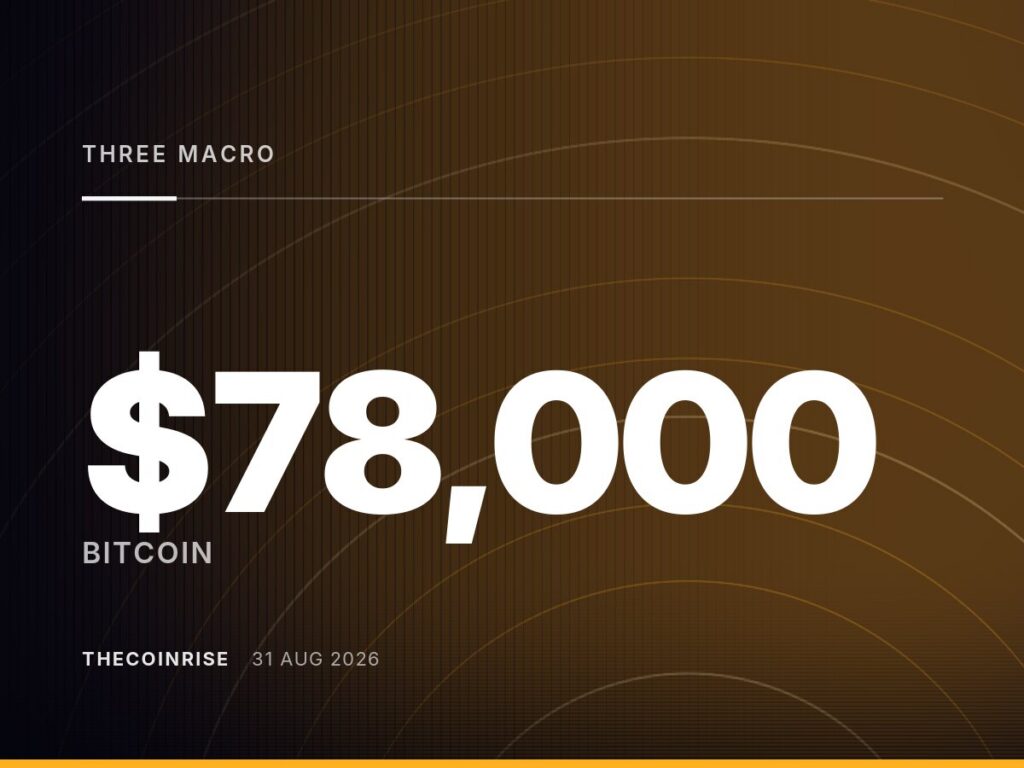


Traders weigh monetary policy, macroeconomic data, and broader risk sentiment as bitcoin holds near the $78,000 level
Bitcoin is hovering close to $78,000, a level that market watchers describe as a critical test point shaped by three separate macro forces. The convergence of these pressures has drawn attention from traders trying to gauge whether the asset can hold its footing or faces renewed volatility.
The first factor centers on monetary policy expectations. Interest rate outlooks from major central banks continue to influence how investors price risk assets, including bitcoin. Shifts in expectations for rate cuts or hikes tend to ripple quickly through crypto markets, given their sensitivity to liquidity conditions.
The second element involves incoming macroeconomic data. Inflation readings, employment figures, and other indicators shape how investors interpret the broader economic trajectory. These data points often serve as catalysts for short-term price swings across both traditional and digital asset markets.
The third factor is the general state of risk sentiment across financial markets. Bitcoin has increasingly traded in correlation with equities and other risk-sensitive assets during periods of macro uncertainty. When investors grow cautious about broader economic conditions, that caution frequently spills into crypto positioning as well.
Together, these three forces create a layered set of conditions that traders must navigate simultaneously. Unlike isolated events, the current setup reflects overlapping pressures that can reinforce or offset one another depending on how each develops. This complexity makes it harder for market participants to isolate a single driver behind bitcoin's price action.
The $78,000 level itself has taken on technical significance as a reference point for traders assessing support and resistance. Price behavior around such levels often attracts additional attention, as both algorithmic and discretionary traders monitor whether the level holds during periods of macro stress.
Bitcoin's price history shows repeated instances where macro-driven uncertainty has coincided with heightened volatility. The current environment appears to fit that pattern, with multiple forces acting on the market at once rather than a single, clearly defined catalyst.
Market observers note that the interplay between monetary policy, economic data, and risk sentiment is not unique to crypto markets. However, bitcoin's relatively smaller market size and its growing integration with institutional trading strategies mean it can react more sharply to these combined pressures than some traditional assets.
Market Impact
If monetary policy expectations shift unexpectedly, bitcoin could see rapid repricing as liquidity assumptions change. Similarly, unexpected economic data releases have the potential to trigger short-term volatility, particularly if they alter views on the pace of central bank action.
Broader risk sentiment remains a key variable as well. Should equity markets or other risk assets face renewed pressure, bitcoin's correlation with those markets could amplify downside moves. Conversely, stabilizing sentiment across financial markets could help support price levels near $78,000, though no specific outcome can be assumed without further data.
As these three macro forces continue to interact, bitcoin's position near $78,000 will likely remain sensitive to incoming data and policy signals. Market participants are watching closely for clarity on any of the three fronts.
Frequently Asked Questions
Why is bitcoin's price near $78,000 considered significant right now?
The level has become a reference point where traders assess support and resistance amid overlapping macroeconomic pressures.
What are the three macro factors affecting bitcoin's price?
Reports point to monetary policy expectations, incoming macroeconomic data, and broader financial market risk sentiment as the key influences.
How does risk sentiment in equity markets affect bitcoin?
Bitcoin has increasingly traded in correlation with equities during periods of macro uncertainty, meaning shifts in risk appetite can influence its price.
Could bitcoin's price move sharply based on economic data releases?
Yes, inflation, employment, and other economic indicators have historically triggered short-term volatility in bitcoin markets.