

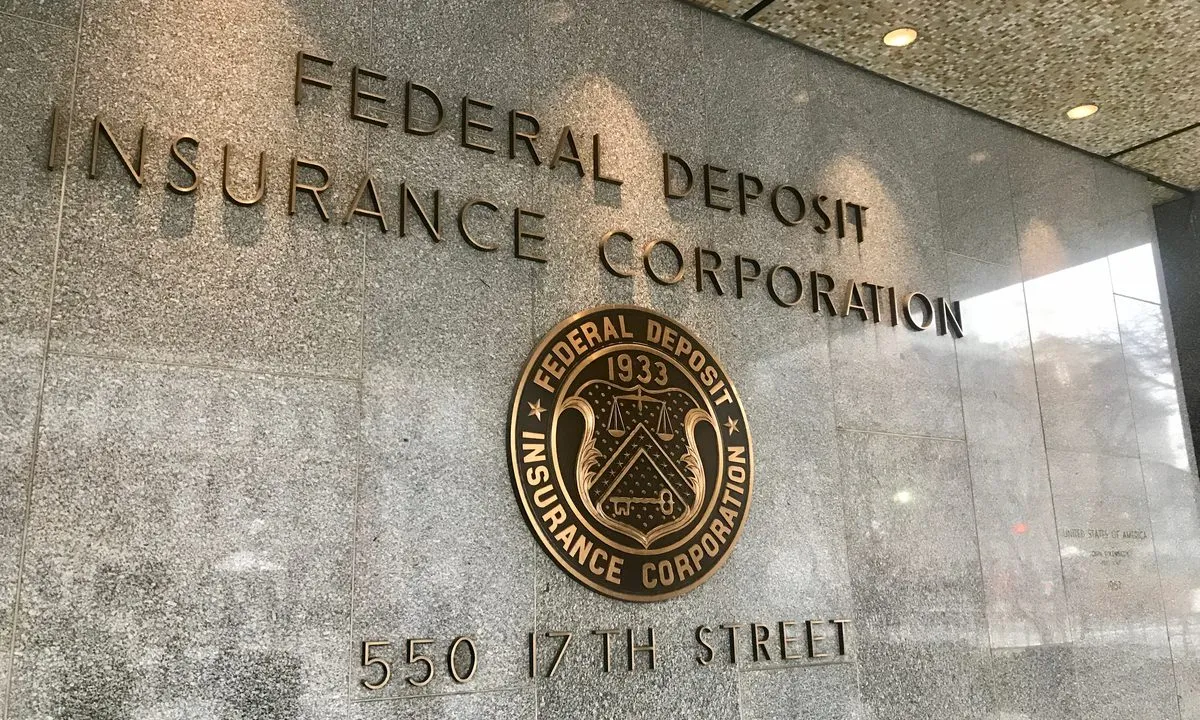


The United States Federal Deposit Insurance Corporation (US FDIC) is getting ready to release its first draft of stablecoin issuers’ regulations under the GENIUS Act. FDIC Acting Chairman Travis Hill said that the proposal will be sent to the House Financial Services Committee by the end of the month.
GENIUS Act Drives Institutional Stablecoin Adoption
Notably, this marks an important step toward federal oversight of the growing stablecoin market. The draft rules are expected to provide key requirements for stablecoin issuers. These include standards for having enough capital, managing liquidity, handling reserves, and controlling risks.
While specific details are not yet available, Hill noted that the goal is to make sure stablecoin operators follow strict financial and operational guidelines similar to those for traditional banks.
He also confirmed that a new rule will be released early next year. This rule will address financial standards, such as capital, liquidity, and reserve management. It will work alongside the GENIUS Act to create a consistent federal guideline for financial products linked to digital assets.
In addition to stablecoin rules, the House Financial Services Committee is also creating guidance on tokenized deposits. Once the FDIC’s draft rules are finalized, they could change how stablecoin issuers work. This will affect how they design products, manage reserves, and meet compliance standards across the industry.
What Does the GENIUS Act Demand?
The signing of the GENIUS Act in July was described as a historic moment for the broader cryptocurrency sector. The GENIUS Act, signed into law by President Donald Trump, provides regulatory clarity for USD-pegged stablecoin issuers.
Now that regulatory clarity for stablecoins has been established through the GENIUS Act, issuers are required to maintain a strict 1:1 reserve backing. Additionally, each digital dollar should be fully backed by a U.S. dollar or an equivalent low-risk asset. All issuers in the region are required to obtain eighth federal or state licenses and comply with Anti-Money Laundering protocols.
Furthermore, stablecoin issuers are restricted from using customer reserves for anything beyond redemption or safe investments. This is intended to reduce systemic risks and protect investors’ funds. Precisely, it would avoid the kind of shadow banking issues that have plagued parts of the financial sector.
GENIUS Act Sparks Growth in Stablecoin Market
Since the GENIUS Act became law, the stablecoin market has picked up new energy. With clearer rules in place, issuers and investors feel more confident, driving up trading volumes and increasing wallet use. Experts point out that the law has removed much of the regulatory uncertainty that once slowed innovation.
Developers can now build projects without worrying about sudden legal pushback. The Act also created space for more companies to join the stablecoin market. Payment platforms, fintech firms, and even non-financial businesses can now issue or use stablecoins within an approved framework.
Read More
All News




BlockchainFX is the world’s first crypto exchange connecting traditional finance with blockchain. Join the $BFX presale today and secure your chance for 100x gains!
Join Now