

Blockchain analytics firm Elliptic says coinjoin activity tied to the Binance breach has sharply accelerated since November 17.
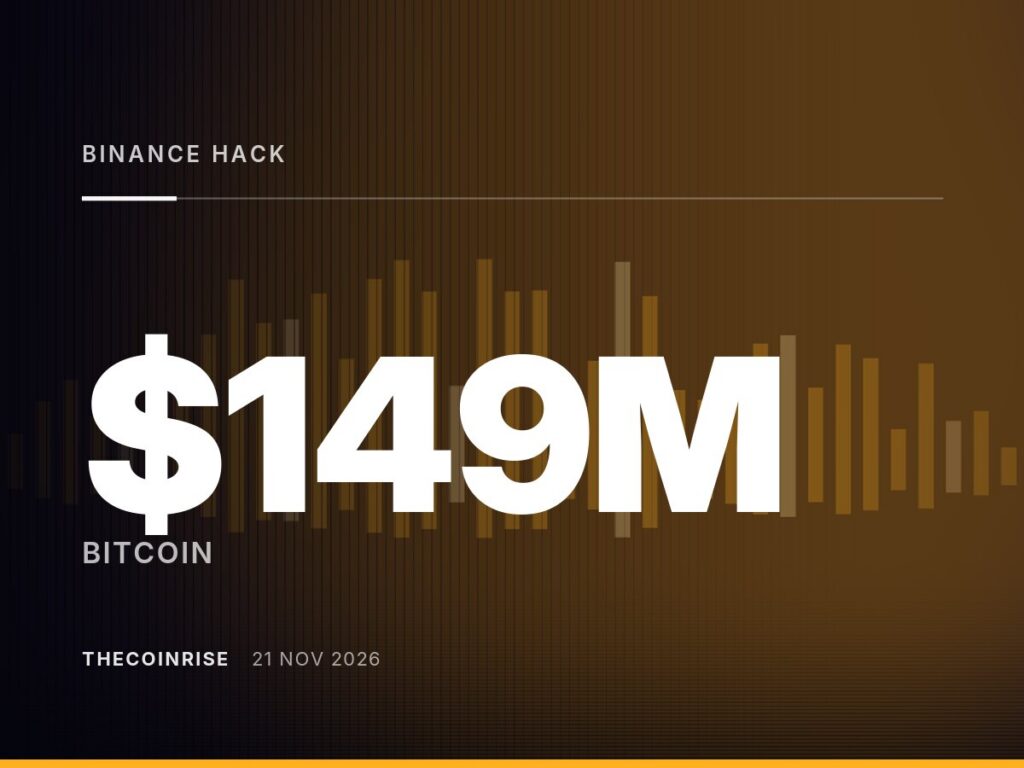
Blockchain intelligence firm Elliptic has flagged a sharp increase in laundering activity connected to the Binance hack. The firm says $149 million worth of bitcoin linked to the breach has now passed through coinjoin mixing services. These tools blend multiple users' transactions together, making it harder to trace where individual coins originated or ended up.
According to Elliptic's data, the pace of this laundering has quickened dramatically in recent days. Roughly 90% of the $149 million total was processed through coinjoins since November 17, suggesting a coordinated push to move funds quickly. Analysts tracking stolen crypto often watch for these bursts of activity as a signal that holders are trying to convert illicit assets before investigators can intervene.
Separately, reports indicate the same actors moved $860 million worth of Ether, a figure disclosed alongside the bitcoin laundering update. Some coverage ties this Ether movement to a broader laundering effort valued at $6.4 billion, though the relationship between the bitcoin coinjoin activity and the larger Ether transfers has not been fully detailed across all reporting. The scale of the figures underscores how large sums tied to major exchange breaches can remain in motion long after an initial theft.
Coinjoin mixing is a privacy technique rather than a single company or service. It allows multiple parties to combine their transactions into one, obscuring the direct link between sender and receiver addresses. Law enforcement and blockchain forensics firms like Elliptic have developed techniques to partially unwind this obfuscation, but mixing still complicates asset recovery and tracing efforts significantly.
Binance, one of the world's largest cryptocurrency exchanges, has previously dealt with security incidents that resulted in losses of user or platform funds. The exchange has not been detailed in these reports as issuing a new statement specific to this laundering update. Historically, exchanges affected by large thefts work with blockchain analytics firms and law enforcement agencies to track stolen funds across wallets and services.
The acceleration in mixing activity comes as regulators and compliance teams across the industry continue to scrutinize mixer usage. Several jurisdictions have moved to restrict or sanction certain mixing services in recent years, citing their role in laundering proceeds from hacks and other illicit activity. Elliptic's tracking of this specific laundering operation adds to a body of evidence used by investigators to flag suspicious wallet clusters tied to major breaches.
The total value moved, spanning both bitcoin and Ether, illustrates the scale of assets that can be at stake following a major exchange compromise. It also highlights the ongoing cat-and-mouse dynamic between blockchain analytics firms and actors seeking to obscure stolen funds through privacy-enhancing tools.
Market Impact
The laundering activity itself does not directly move bitcoin or Ether prices, since the volumes involved are a small fraction of daily trading activity across both assets. However, continued scrutiny of mixer usage tied to exchange hacks can influence regulatory conversations around privacy tools and compliance requirements for exchanges and wallet providers.
For Binance specifically, renewed attention to a past security incident can affect user perception of platform security, even without new financial losses reported. Analysts and compliance teams are likely to continue monitoring wallet clusters identified by Elliptic, as further movement of the remaining funds could surface additional details about laundering pathways.
Elliptic's findings add fresh detail to a laundering operation tied to the Binance hack that appears to be intensifying rather than slowing. As tracking continues, further disclosures about how the stolen bitcoin and Ether move through the crypto ecosystem are likely.
Frequently Asked Questions
What is a coinjoin mixer?
A coinjoin mixer combines multiple users' bitcoin transactions into a single transaction. This makes it difficult to trace which funds belong to which original sender or recipient.
How much money has been laundered according to Elliptic?
Elliptic reports $149 million in bitcoin tied to the Binance hack has passed through coinjoin services, with about 90% of that moving since November 17.
Is the $860 million in Ether part of the same laundering total?
Reports describe the $860 million Ether transfer as linked to the same hackers, though its exact relationship to the $149 million bitcoin coinjoin figure has not been fully clarified across all sources.
Has Binance commented on this laundering activity?
Available reporting does not indicate that Binance has issued a specific new statement addressing this laundering update.
Why does mixer activity matter for law enforcement?
Mixers complicate efforts to trace stolen funds, which can slow recovery and prosecution efforts tied to major cryptocurrency thefts.