

Galaxy Digital research shows US institutional bitcoin exposure climbed sharply in September, with Wells Fargo at the front of the pack.
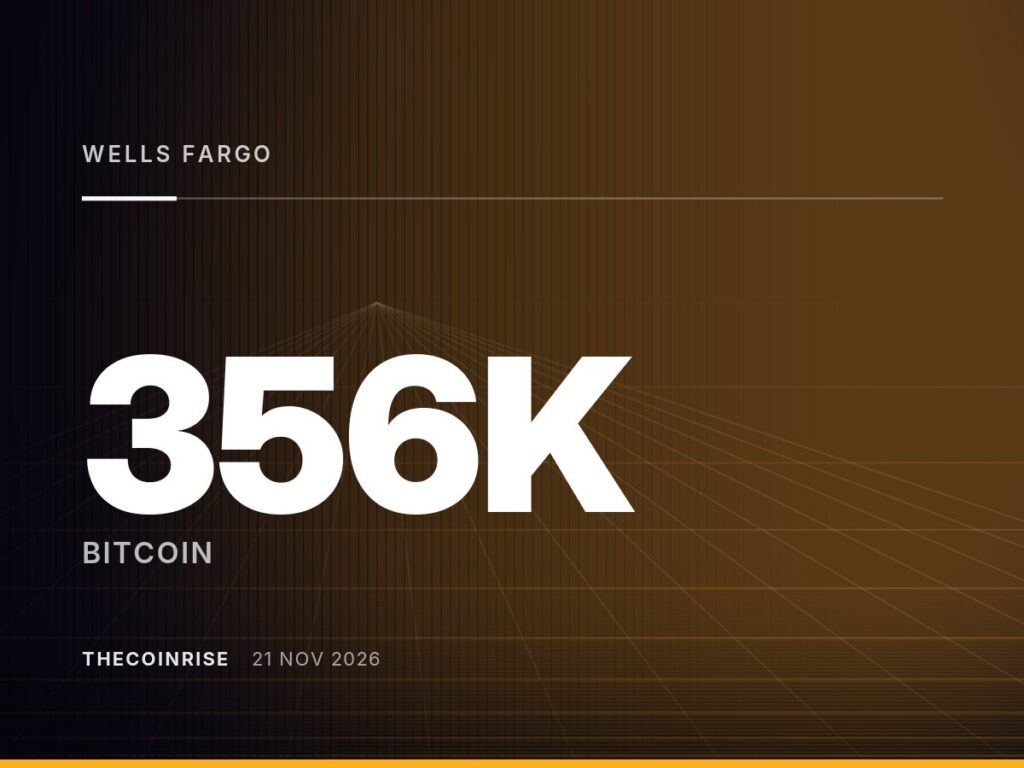
Wells Fargo topped the list of Wall Street firms adding bitcoin exposure in September, according to research referenced by Galaxy. The bank's activity formed part of a broader accumulation trend that pushed total US institutional bitcoin holdings to a reported record of 356,000 BTC. Galaxy's figures suggest the buying was not confined to a single firm but spread across multiple institutional players during the month.
The scale of the reported holdings underscores how far institutional involvement in bitcoin has advanced since the first spot bitcoin exchange-traded funds launched in the United States. Banks, asset managers, and other regulated entities now report direct and indirect bitcoin exposure as part of standard disclosures. September's reported increase suggests that trend continued, and possibly accelerated, even as broader crypto markets saw mixed price action during the month.
Wells Fargo's prominence in the data is notable because large traditional banks have historically moved more cautiously into digital assets than asset managers or hedge funds. A bank-led buying spree, if sustained, would mark a shift in how conservative financial institutions approach bitcoin. It would also suggest growing comfort with custody, compliance, and reporting frameworks that previously slowed bank participation.
The reported 356,000 BTC figure represents aggregated institutional holdings tracked by Galaxy, a crypto-focused financial services and investment firm. Galaxy has published similar institutional tracking data in the past, framing it as evidence of maturing demand from regulated entities. Because the figure aggregates multiple institutions, it does not isolate how much of the total is held directly versus through fund structures or derivative-linked products.
Institutional accumulation of this kind is often cited by market participants as a structural shift in bitcoin ownership. Rather than retail traders driving short-term price swings, larger and more patient capital pools reportedly now hold a growing share of circulating supply. That shift can influence trading volumes, volatility patterns, and the behavior of bitcoin during periods of broader market stress.
The September figures arrive against a backdrop of continued regulatory engagement with digital assets in the United States. Clearer rules around custody, disclosure, and market structure have been cited by analysts as factors encouraging bank participation. Wells Fargo's reported activity fits that pattern, though the full scope of its bitcoin-related products and client offerings was not detailed in the available reporting.
It remains unclear from current reporting whether Wells Fargo's exposure came through direct holdings, client-facing investment products, or a combination of both. Galaxy's research reportedly aggregates data across multiple reporting channels, which can include ETF-related holdings disclosed in regulatory filings. That distinction matters for understanding how directly exposed the bank itself is to bitcoin price movements, versus acting as an intermediary for client demand.
Market Impact
A record level of institutional bitcoin holdings, if confirmed by further disclosures, would reinforce the narrative that bitcoin ownership is becoming more concentrated among regulated financial entities. That could affect how analysts interpret bitcoin's price behavior, since institutional holders often trade on different timelines than retail participants. It may also encourage other banks to expand bitcoin-related offerings if Wells Fargo's activity is seen as validating demand from institutional clients.
For the broader crypto industry, sustained bank-level accumulation would support arguments that digital asset infrastructure, including custody and compliance tools, has matured enough for mainstream financial institutions. At the same time, concentrated institutional holdings can introduce new sensitivities, since large coordinated moves by a handful of firms could have outsized effects on market liquidity during stress events.
The reported figures point to a widening institutional footprint in bitcoin markets, led by a major traditional bank. Further regulatory filings and follow-up research will likely clarify the exact structure and durability of that demand.
Frequently Asked Questions
What does the reported 356,000 BTC figure represent?
It refers to aggregated institutional bitcoin holdings in the United States, according to research cited by Galaxy, reportedly reaching a record level in September.
How was Wells Fargo involved in this trend?
Wells Fargo was reported to lead Wall Street firms in bitcoin buying activity during September, according to the cited research, though the exact mechanism of its exposure was not detailed.
Does this mean Wells Fargo holds bitcoin directly?
Current reporting does not specify whether the exposure came through direct holdings, client investment products, or both.
Why does institutional bitcoin accumulation matter?
Growing institutional holdings suggest bitcoin is increasingly treated as a held asset by regulated financial firms, which can influence market liquidity and price dynamics over time.