

The long-standing base cost for simple ETH transfers is being revisited as part of Ethereum's next network upgrade.
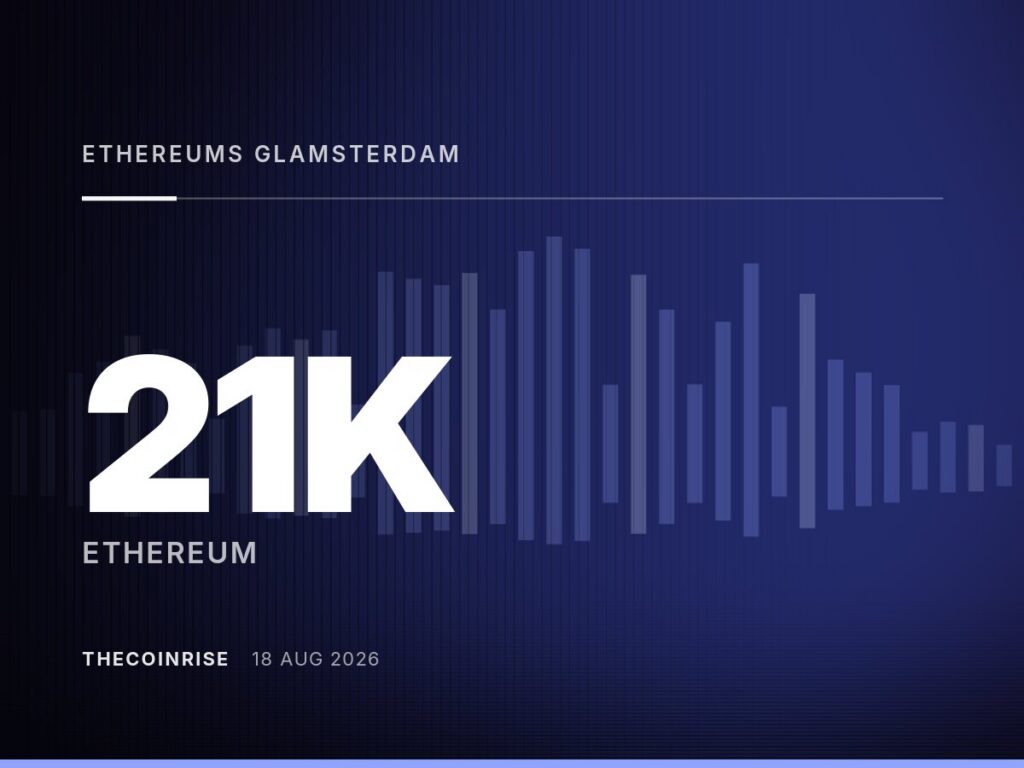
Ethereum's base transaction cost has stayed at 21,000 gas since the network went live. That figure represents the minimum amount of computational work required to move ether from one address to another. It has functioned as a fixed constant that developers, wallet providers, and exchanges have built into their systems for nearly a decade.
According to reporting from CoinDesk and CryptoBriefing, Ethereum's next major upgrade, known by the codename Glamsterdam, is expected to change this rule. Both outlets described the shift as a break from a standard that wallets have depended on since Ethereum's earliest days. Neither report specified the exact new value or the precise mechanism driving the change.
The 21,000 gas figure has long served as a baseline in Ethereum's fee market. Every transaction pays at least this amount, with additional gas charged for more complex operations like smart contract calls. Wallets use the number to estimate transaction costs before submission, and many applications hardcode it directly into their fee logic.
Ethereum's gas costs have not been static across the network's history. Previous upgrades have adjusted the pricing of specific operations to better reflect their true computational burden on validators. Some of these changes targeted operations that were priced too cheaply relative to the resources they consumed, creating incentives for network strain. A revision to the base transfer cost would represent a more foundational change, since it touches nearly every transaction rather than a narrow subset of contract interactions.
Glamsterdam is the name assigned to Ethereum's next scheduled network upgrade, following the naming convention the Ethereum community has used for prior forks. Details about its full scope have been rolled out gradually through developer discussions and proposal reviews. The gas rule change appears to be one component of that broader upgrade package, according to the two outlets' reporting.
For everyday users, the practical effect of any gas cost adjustment would likely surface in transaction fee estimates. If the base cost rises, simple transfers could become marginally more expensive. If it falls, the opposite could occur. Neither outlet specified which direction the change would take, only that the fixed assumption itself is set to be revised.
Wallet developers, exchange integrations, and infrastructure providers that reference the 21,000 figure directly in their code will need to review and potentially update those references once Glamsterdam's specifications are finalized. Because the constant has remained unchanged for so long, many software implementations may not have been built with the flexibility to adjust automatically.
Market Impact
A change to Ethereum's base gas cost would primarily affect the technical layer of the ecosystem rather than trigger immediate price movement. Wallet providers, custody platforms, and decentralized applications that hardcode the 21,000 gas assumption would need to audit and update their systems ahead of the upgrade's activation.
Broader market impact would depend on how the change affects average transaction fees across the network. Higher fees could influence user behavior on layer-1 Ethereum, potentially reinforcing demand for layer-2 scaling solutions. Lower fees could ease costs for simple transfers. Given that specific parameters have not yet been detailed publicly, market participants are likely to wait for further technical specifications before adjusting strategies.
Ethereum's Glamsterdam upgrade appears poised to revise one of the network's oldest fixed assumptions. Further technical details are expected as the upgrade's specifications are finalized ahead of deployment.
Frequently Asked Questions
What is the 21,000 gas rule?
It is the fixed minimum gas cost charged for a basic ether transfer on Ethereum, unchanged since the network's launch.
What is Glamsterdam?
Glamsterdam is the codename for Ethereum's next scheduled network upgrade, following the project's established naming convention for forks.
Why does this matter for wallets?
Many wallet applications hardcode the 21,000 gas figure into their fee estimation logic, so a change could require software updates.
Has Ethereum changed gas costs before?
Yes, previous upgrades have adjusted pricing for specific contract operations, though the base transfer cost has remained constant until now.
Will transaction fees definitely increase?
Reports have not specified the exact new gas value or direction of change, so the effect on fees remains unclear until further details emerge.