

Corroboration speed split sharply this cycle: one court ruling went from single to triple-sourced within an hour, while a protocol delay needed most of a day to reach nine publishers.
Corroboration speed split sharply this cycle: one court ruling went from single to triple-sourced within an hour, while a protocol delay needed most of a day to reach nine publishers.
A Clean Legal Fact Crosses Almost Instantly
The dismissal of the fraud probe against Javier Milei over the LIBRA token was first logged at 02:08 UTC and had already reached three independent publishers, including Buenos Aires Herald, CoinGape and Coinfomania, by 03:06. That is roughly an hour from single-source to corroborated, among the fastest crossings in this batch. A court decision is the kind of claim that corroborates quickly because it is a public record rather than an interpretation, so the short gap says more about the ease of checking a docket than about the newsworthiness of the ruling itself. It closes a chapter, but the speed of confirmation here should not be read as a signal that the underlying LIBRA losses were resolved.
The Widest Spread Took the Longest to Build
The Ethereum Foundation's delay of the Glamsterdam upgrade over 13 flagged security risks ended up the most widely carried story in this set, reaching nine publishers including Bankless, Cointelegraph and CryptoSlate. But that breadth took time: the item was first published at 04:47 UTC and was still being updated with fresh pickups past 00:13 the following day, close to twenty hours later. A wide eventual spread paired with a slow build suggests a technical story that needed outlets with protocol expertise to verify the detail before running it, rather than one that was obviously newsworthy on sight. That gap is worth remembering before treating nine-publisher corroboration as proof the story moved markets quickly.
A Large Dollar Figure Did Not Slow the Crossing
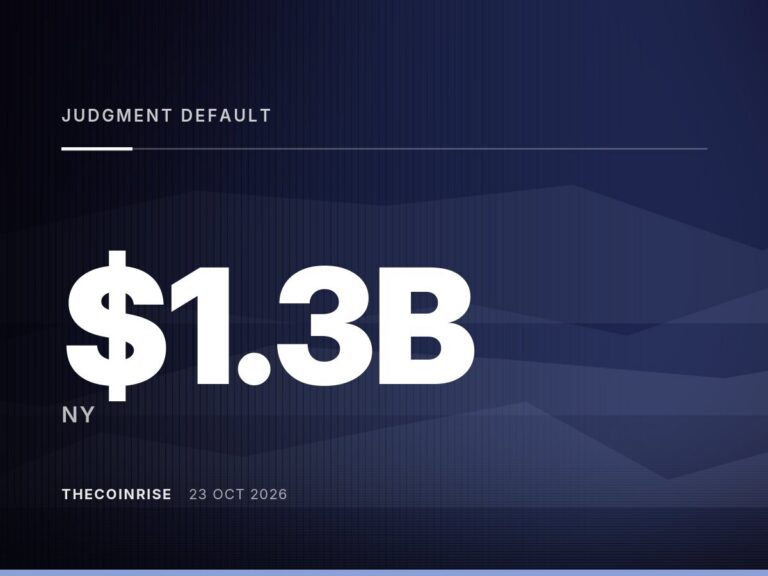
New York's pursuit of more than $1.3 billion from the NovaTech founders moved almost as fast as the Milei story despite its size and complexity. First carried at 10:12 UTC, it had reached six independent publishers, among them Cointelegraph, The Block and Bitcoin.com News, by 00:13 the next day, a gap of roughly fourteen hours. That is notably quicker than Glamsterdam's near-twenty-hour build despite drawing nearly as many outlets, which suggests enforcement actions with a named dollar figure and a filed judgment corroborate faster than a technical risk assessment, even when the headline number is larger.
The ETF Outflow Figure Crossed at a Similar Pace to the Slowest Item
Bitcoin's drop below $82,000 alongside roughly $635 million in US spot ETF outflows took about nineteen and a half hours to go from its first appearance at 06:26 UTC on the 23rd to its last update at 02:01 on the 24th, by which point six independent publishers, including AMBCrypto, Decrypt and Cointelegraph's markets desk, were carrying it. That puts a market-moving flow figure on almost the same clock as the Glamsterdam delay, a reminder that even widely reported price and flow data needs time for fund-flow figures to be checked across data providers before a second and third outlet will commit to the same number.
What the Clock Tells a Reader
None of this establishes which story mattered more to markets this week; corroboration speed measures how quickly a claim could be checked, not how important it turned out to be. The item to hold onto is the Milei dismissal, not because it is the largest story here but because its one-hour crossing is the cleanest illustration in this batch of what fast, verifiable corroboration looks like, against which the slower builds on Glamsterdam and the ETF outflows can be measured.
The gap between a story's first appearance and its second independent confirmation is itself evidence, and this cycle it ran from about an hour to nearly a full day depending on how easily the underlying fact could be checked.
Stories in this edition
Publisher counts are as at publication and keep moving; each story page carries the live number.
- Fraud Allegations Against Milei Dismissed by Argentine Judge in LIBRA Coin Case 3 independent publishers — demonstrates the fastest crossing in the set, used as the benchmark for clean, checkable facts
- 13 Security Risks Push Back Ethereum's Glamsterdam Upgrade Timeline 9 independent publishers — shows the widest eventual spread paired with the slowest build, contrasted against faster crossings
- $1.3 Billion Judgment Default Triggers NovaTech Founders' Pursuit by NY AG 6 independent publishers — shows a large dollar figure corroborating faster than a technical story despite comparable publisher count
- Bitcoin Drops Below $82,000 as US Spot ETFs Shed $635 Million 6 independent publishers — shows a market flow figure needing as long to corroborate as a technical delay
The gap between a story's first appearance and its second independent confirmation is itself evidence, and this cycle it ran from about an hour to nearly a full day depending on how easily the underlying fact could be checked.