

The exchange moved to restore client funds and resume withdrawals after what is being described as the largest crypto hack on record.
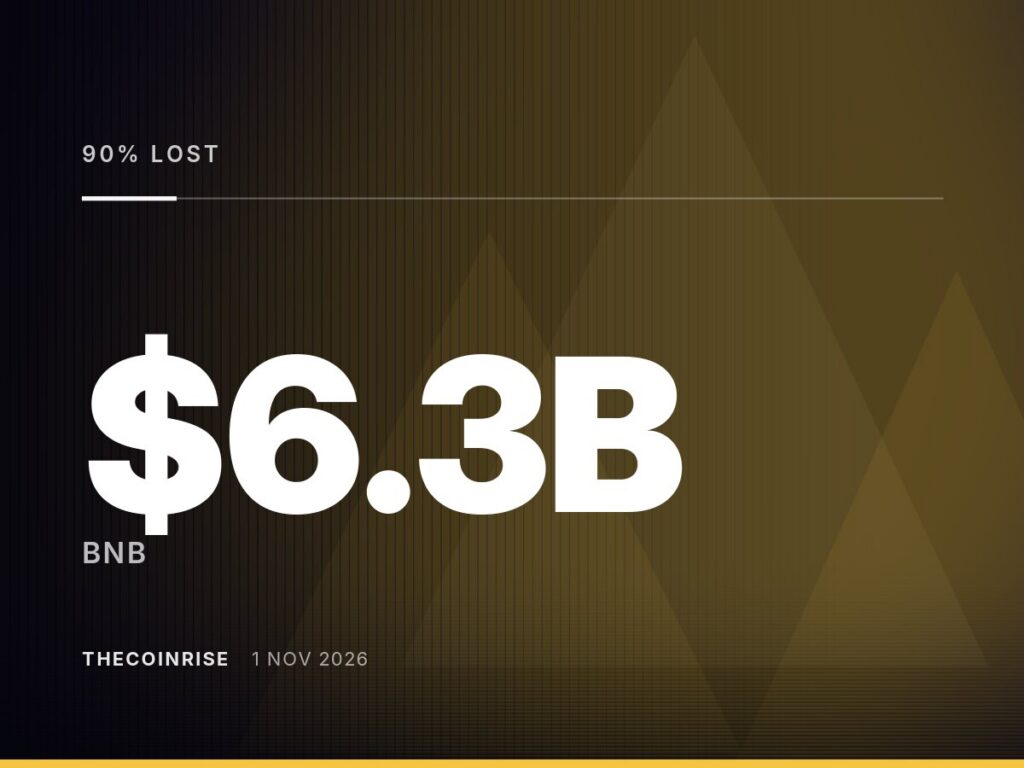
Binance said it has replaced about 90% of the crypto assets lost in a hack now described as the largest in the industry's history. The breach reportedly resulted in losses totaling $6.3 billion, according to multiple reports citing the exchange.
The exchange's recovery effort involved covering the vast majority of affected client holdings before restarting withdrawals, according to Crypto News Flash. That sequencing suggests Binance prioritized shoring up its balance sheet before allowing users to pull funds, a standard step for exchanges managing the aftermath of major security incidents.
Reports diverge somewhat on the scale of user activity following the hack. CoinTurk News reported that $4.65 billion had been withdrawn by users, while also noting that $3 billion of the stolen assets had been frozen. The Guardian, meanwhile, reported that investors withdrew $3.6 billion from the exchange in the wake of the incident. The two figures differ, and it is not clear whether they measure withdrawals over different time windows or use different methodologies.
The freezing of a portion of stolen funds, reported at $3 billion, points to cooperation between Binance, blockchain analytics firms, and potentially other exchanges or law enforcement. Freezing stolen crypto typically depends on tracing funds to wallets or platforms that can act on flagging requests before assets are laundered or cashed out.
A hack of this size, if confirmed at the $6.3 billion figure, would mark a significant escalation from previous major exchange breaches. Binance has not disclosed, according to the available reporting, full technical details of how the breach occurred or which systems were compromised.
The exchange's ability to replace 90% of stolen assets signals it retained substantial reserves or insurance-like mechanisms to absorb the loss. That capacity will likely shape how regulators, competitors, and users assess Binance's resilience going forward, even as questions about the hack's root cause remain unanswered in public reporting.
Market Impact
A hack of this magnitude at the world's largest crypto exchange by volume carries implications beyond Binance itself. Large-scale withdrawals, whether closer to $3.6 billion or $4.65 billion as reported, reflect user caution following the breach, a pattern common after major exchange security incidents.
The exchange's capacity to replace 90% of stolen funds may limit contagion risk to other platforms, provided the figure holds up under further scrutiny. Still, the episode is likely to renew scrutiny of exchange custody practices, reserve transparency, and the broader debate over centralized versus self-custody of digital assets.
Binance's disclosure marks an early step in addressing what is being called the largest crypto hack on record, though full details of the breach and final withdrawal figures remain to be clarified as more reporting emerges.
Frequently Asked Questions
How much was stolen in the Binance hack?
Reports put the total losses at $6.3 billion, which would make it the largest crypto hack recorded to date.
How much of the stolen funds has Binance replaced?
Binance said it has replaced approximately 90% of the assets affected by the hack, according to the exchange's own statements.
How much money have users withdrawn from Binance since the hack?
Figures vary across reports. CoinTurk News cited $4.65 billion in withdrawals, while The Guardian reported $3.6 billion withdrawn by investors.
Have any of the stolen funds been recovered or frozen?
CoinTurk News reported that $3 billion of the stolen assets had been frozen, suggesting cooperation with tracing and enforcement efforts.
Has Binance resumed withdrawals since the hack?
Crypto News Flash reported that Binance moved to restart withdrawals after completing most of its asset replacement process.




Read More
All News

November 1, 2026
Strategy Oct 19 Bitcoin Buy: Did It Happen or Not?
November 1, 2026