

The bank's analysts say the rise of autonomous AI payment agents could pressure the stablecoin issuer's core business model.
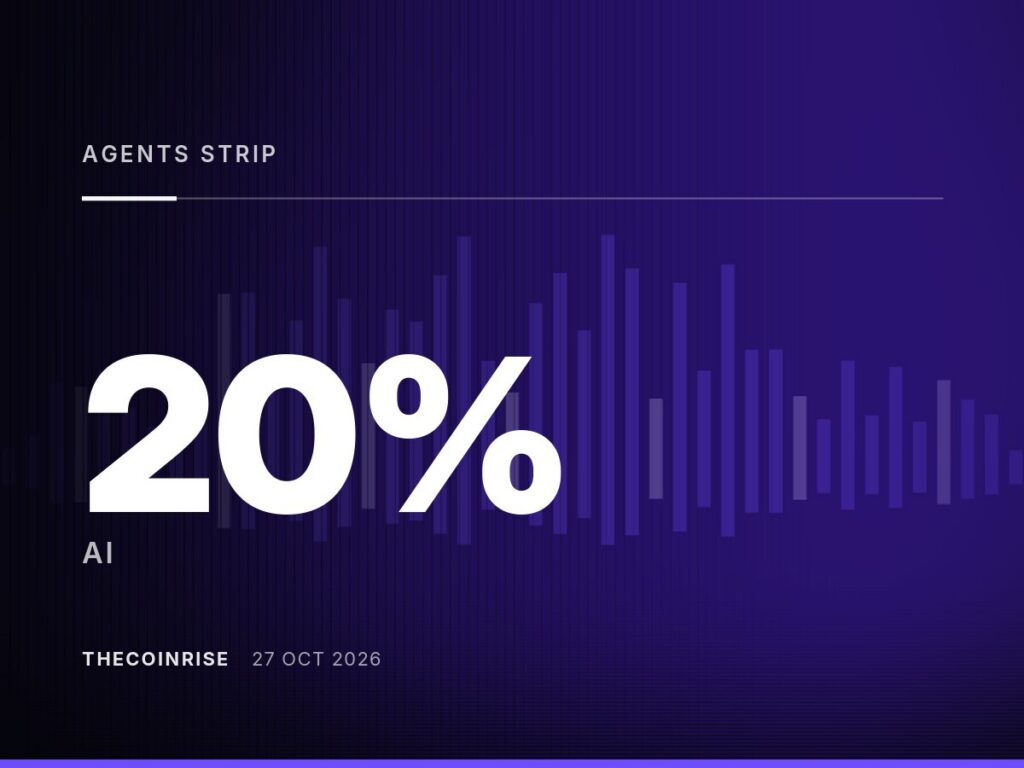
Mizuho has told clients that Circle could face a revenue risk of up to 20% tied to the growth of AI agents operating in payments and commerce. The assessment was reported by The Block and CryptoBriefing on October 27. Both outlets described the figure as an analyst projection rather than a confirmed financial outcome.
Circle generates most of its revenue from interest earned on reserves backing USDC, its dollar-pegged stablecoin. A meaningful share of that income is shared with distribution partners, including Coinbase, under long-standing revenue-sharing agreements. Any shift in how value moves through the stablecoin ecosystem can directly affect how much Circle ultimately retains.
The concern raised by Mizuho centers on autonomous AI agents increasingly capable of initiating and settling transactions without direct human involvement. As these systems take on more purchasing and payment functions, the channels and intermediaries they rely on could differ from today's standard consumer and institutional pathways. That shift could alter which stablecoins, networks, or settlement layers capture the associated economic activity.
Analysts have been watching the broader trend of agentic commerce, where software agents negotiate, transact, and settle payments on behalf of users or businesses. If such agents favor alternative payment rails, other stablecoins, or new infrastructure built specifically for machine-to-machine transactions, issuers like Circle could see reduced transaction volume flowing through their existing distribution relationships.
The 20% figure represents an upper-bound risk estimate rather than a forecast of certain losses. Mizuho's note reportedly frames the scenario as a structural possibility tied to how quickly AI-driven payment systems scale and which infrastructure they ultimately adopt. Neither source indicated a specific timeline for when such risk might materialize.
Circle has built its business around positioning USDC as a trusted, regulated dollar-equivalent asset for both retail and institutional users. The company has also pursued partnerships across payments, decentralized finance, and increasingly within enterprise and developer tooling. How Circle adapts its distribution strategy to accommodate AI-driven transaction flows could prove important to preserving its existing revenue base.
The warning arrives as stablecoin issuers broadly face questions about competitive pressure from new entrants and evolving payment technology. Regulatory clarity in the United States and elsewhere has encouraged more companies to explore stablecoin issuance, increasing competition for the same transaction volume Circle currently captures.
Market Impact
If accurate, Mizuho's projection points to a potential structural shift in how stablecoin revenue is generated and distributed. A move toward AI-driven payment flows could reduce the share of transaction value passing through Circle's existing partnerships, even if overall stablecoin usage continues to grow.
For investors and partners tracking Circle's business, the estimate underscores the importance of how quickly agentic commerce scales and which infrastructure providers benefit most. The broader stablecoin sector may also see increased competition as issuers position themselves for machine-driven transaction volume rather than only human-initiated payments.
Mizuho's estimate highlights a emerging risk factor tied to automation rather than a confirmed financial outcome. How Circle and the wider stablecoin industry adapt to AI-driven payment activity will likely shape future revenue dynamics across the sector.
Frequently Asked Questions
What did Mizuho say about Circle's revenue risk?
Mizuho analysts indicated that AI agents conducting autonomous transactions could put up to 20% of Circle's revenue at risk, according to reports from The Block and CryptoBriefing.
Why would AI agents affect Circle's revenue?
Circle earns much of its income from interest on USDC reserves and shares a portion with distribution partners. Shifts in how AI agents route payments could change which platforms and stablecoins capture that transaction activity.
Is the 20% figure a confirmed financial impact?
No. It is described as an analyst risk estimate reflecting a potential scenario, not a guaranteed or currently realized financial loss for Circle.
Has Circle responded to Mizuho's assessment?
Neither The Block nor CryptoBriefing reported a public response from Circle addressing the specific 20% figure at the time of publication.