

Chainalysis data shows a surge in machine-to-machine crypto payments, though some analysts question how much real economic activity the volume represents.
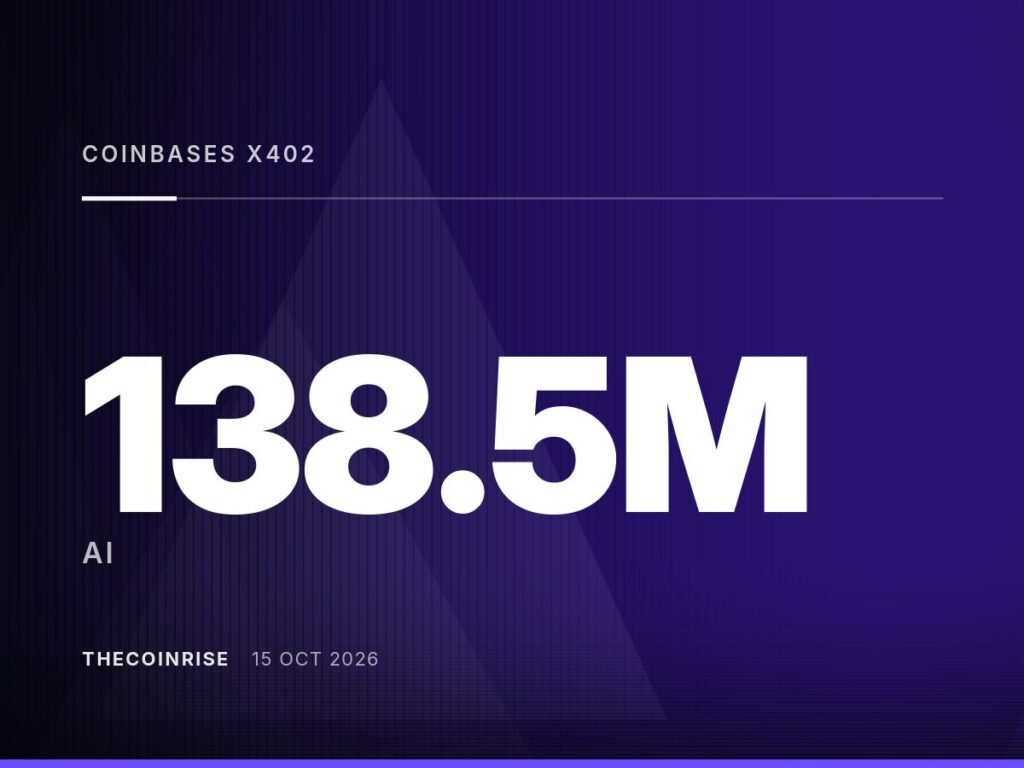
Coinbase's x402 protocol has recorded 138.5 million transactions, according to data from blockchain analytics firm Chainalysis. The figure was cited in reporting this week describing a shift in how crypto payment rails are being used by automated software agents rather than human users.
X402 is built around a decades-old but rarely used HTTP status code, 402, originally reserved for "payment required" responses. Coinbase has repurposed the concept into a protocol that lets software agents send and receive stablecoin payments automatically, without a human approving each transaction. The design is aimed at machine-to-machine commerce, where AI systems pay for data, compute, or services on the fly.
Chainalysis framed the transaction volume as evidence that AI agents are becoming active participants in crypto payment flows, a trend the firm has been tracking as stablecoins increasingly move outside traditional trading and remittance use cases. The 138.5 million figure, if sustained, would represent a meaningful share of activity on networks that support the protocol.
However, a separate report from Cryptopolitan raised questions about what that transaction count actually represents. The outlet suggested the headline number may mask a much smaller underlying economy of distinct AI agents or applications, implying that a relatively small set of automated systems could be generating a large share of the recorded transactions through repeated, low-value activity.
The two accounts do not contradict each other on the core data point, the 138.5 million transactions reported by Chainalysis. They differ on interpretation. One frames the number as a sign of broad adoption of agent-driven payments. The other frames it as a volume metric that may overstate how many independent actors are actually using the system.
This distinction matters for anyone trying to gauge how far AI-driven crypto payments have progressed. Transaction counts are an easy figure to cite, but they do not always reveal how many unique users, wallets, or applications are behind the activity. A protocol dominated by a handful of high-frequency agents looks very different from one used by thousands of independent services, even if both produce similar headline numbers.
Coinbase has positioned x402 as part of its broader push into agentic commerce, an area where major payment and crypto firms are experimenting with letting AI systems transact autonomously. Stablecoins are central to this push because they offer price stability and fast settlement, both useful properties for machine-initiated payments that need to clear without human oversight.
Market Impact
If the 138.5 million transaction figure reflects genuine, broad-based use of AI agent payments, it would support the case that stablecoins are finding a meaningful new use case beyond trading and remittances. That could bolster interest in infrastructure built around agentic commerce, including Coinbase's own products and the underlying blockchain networks that settle x402 transactions.
If instead the volume is concentrated among a small number of agents or applications, as Cryptopolitan's reporting suggests, the near-term market significance may be more limited. Investors and builders watching this space will likely look for follow-up data on unique active agents, transaction value, and the diversity of use cases before drawing firm conclusions about adoption.
The reported 138.5 million x402 transactions mark a notable data point in the early track record of AI-driven crypto payments, even as analysts debate what the number actually reveals about real-world adoption.
Frequently Asked Questions
What is Coinbase's x402 protocol?
X402 is a payment protocol developed around the HTTP 402 status code, which was originally reserved for signaling that payment is required. Coinbase has adapted it to let AI agents and software applications send and receive stablecoin payments automatically.
What did Chainalysis report about x402?
Chainalysis reported that x402 has processed 138.5 million transactions, citing this as evidence that AI agents are increasingly active in crypto payment flows.
Why do some reports question the significance of the 138.5 million figure?
Cryptopolitan's reporting suggested the transaction count may mask a smaller underlying economy, meaning a limited number of AI agents could be driving most of the recorded activity rather than broad, widespread usage.
Why does the distinction between transaction count and unique users matter?
A high transaction count can come from many different users or from a small group transacting repeatedly. Without data on unique agents or wallets, it is difficult to assess how widely adopted a payment system truly is.





Read More
All News



October 15, 2026