

The network logged a 173% jump in new contracts even as active addresses declined over the same period.
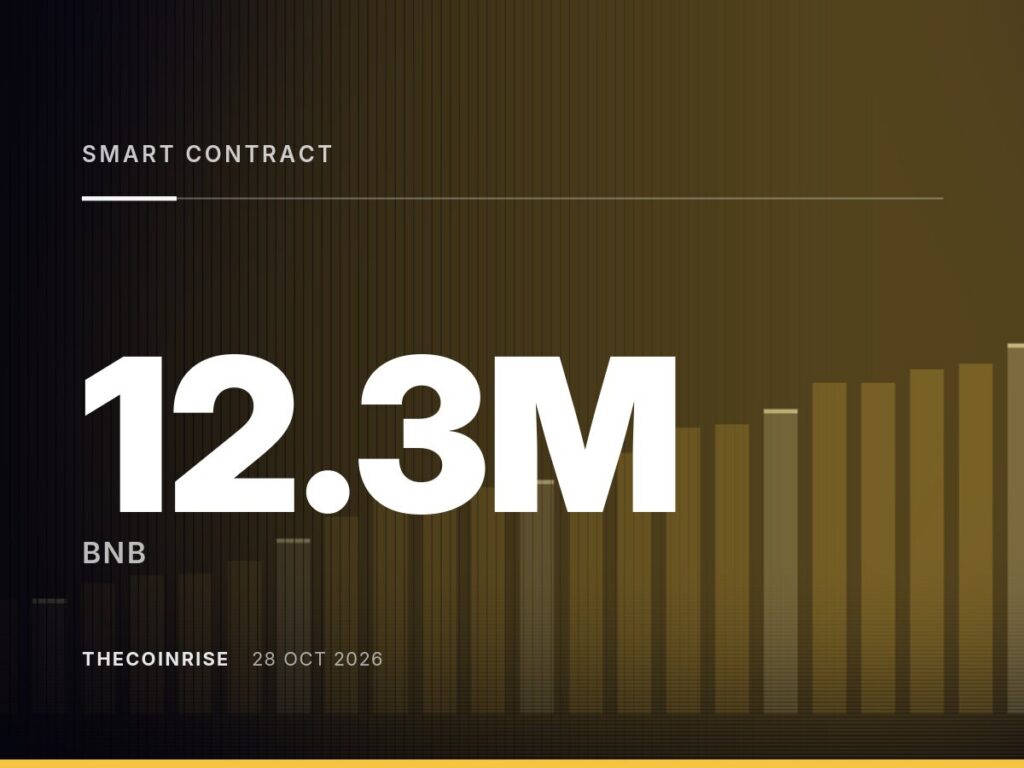
BNB Chain's smart contract deployments climbed to 12.3 million in the third quarter of 2026. That figure represents a 173% increase, effectively tripling the pace of new contracts launched on the network compared with the previous period.
The growth in deployments stands out because it did not come with a corresponding rise in network usage. Active addresses on BNB Chain fell during the same quarter, according to data reported by crypto.news and The Cryptonomist. The divergence between deployment activity and address participation has drawn attention from analysts tracking the chain's development.
Smart contract deployments are a common proxy for developer activity on a blockchain. A rising count typically signals more projects, applications, or testing environments being built on a network. Active addresses, by contrast, measure how many unique wallets are actually interacting with the chain, whether through transactions, transfers, or contract calls.
When these two metrics move in opposite directions, it can indicate several things. Developers may be deploying contracts for testing, speculative projects, or automated systems that do not require broad user engagement. It can also reflect a lag between building infrastructure and attracting users to interact with it. The data provided does not specify which factor, or combination of factors, drove the gap on BNB Chain in the third quarter.
BNB Chain, operated in connection with Binance, has positioned itself as a low-cost alternative to other smart contract platforms. Its fee structure and throughput have made it a frequent destination for decentralized finance applications, gaming projects, and token launches. A sharp rise in contract deployments could reflect renewed interest from builders choosing the chain for new products.
The decline in active addresses, however, complicates a straightforward reading of the quarter as one of unambiguous growth. Network health is often assessed using multiple indicators together rather than any single metric in isolation. Observers tracking BNB Chain will likely watch whether address activity recovers in subsequent quarters, and whether the newly deployed contracts translate into sustained usage.
Market Impact
The contract deployment surge could signal renewed developer confidence in BNB Chain as a platform for launching new applications. If even a portion of the 12.3 million deployed contracts go on to see meaningful adoption, it could support transaction volume and fee generation on the network over time.
At the same time, the drop in active addresses suggests that user engagement has not kept pace with building activity. Market participants evaluating BNB Chain's competitive position relative to other smart contract platforms may weigh both figures together rather than focusing solely on the deployment growth.
The contrast between surging contract deployments and falling active addresses leaves an open question about the underlying drivers of BNB Chain's third-quarter activity. Future data on user engagement will help clarify whether the deployment boom translates into lasting network growth.
Frequently Asked Questions
What does a rise in smart contract deployments indicate?
It generally reflects increased developer activity, such as new projects, applications, or testing environments being launched on a blockchain network.
Why did active addresses fall while deployments rose on BNB Chain?
The available data does not specify a cause. Possible explanations include contracts deployed for testing or automated purposes that do not immediately draw user wallets, or a lag between infrastructure building and user adoption.
How much did BNB Chain contract deployments grow in Q3?
Deployments reached 12.3 million, a 173% increase compared with the prior period, according to data reported by crypto.news and The Cryptonomist.
Is a decline in active addresses necessarily a negative sign?
Not on its own. Active address counts are one of several metrics used to assess network health, and they are typically interpreted alongside other data such as transaction volume and contract usage.