

A sharp rise in network usage on August 21 pushed Solana's fee-burn mechanism to one of its largest single-day totals this year.
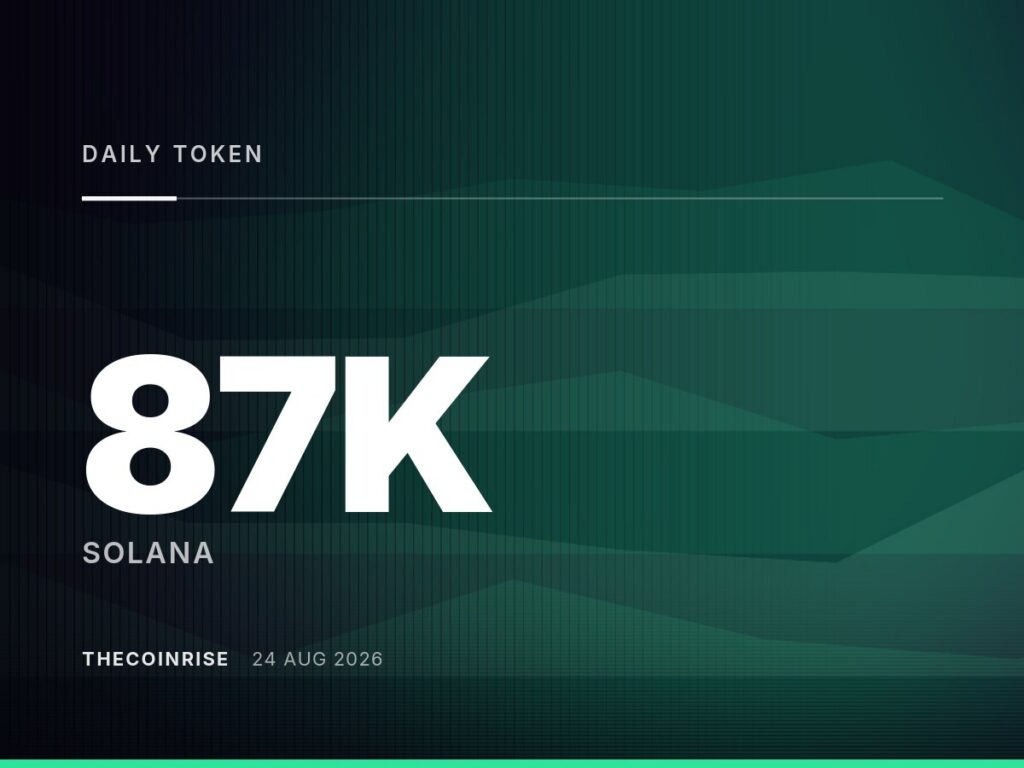
Solana recorded a sharp increase in onchain activity on August 21, with the network’s daily token burn reaching approximately 87,000 SOL. The figure, reported by CryptoBriefing, marks one of the more pronounced single-day burn totals observed on the network in recent months.
Solana’s fee structure automatically destroys a portion of transaction fees, permanently removing tokens from circulation. This burn mechanism scales with network usage. Higher transaction volume and greater onchain demand translate directly into larger burns. The August 21 spike suggests a notable uptick in activity across the network that day.
Coinfomania characterized the event as a reflection of growing community engagement with the Solana ecosystem. The outlet framed the burn increase as a signal that more users and applications are interacting with the chain, rather than as an isolated technical anomaly.
The Cryptonomist EN reported the burn spiked roughly 130 times above typical daily levels. That outlet also noted that some traders are watching a $160 level for SOL, framing it as a price target tied to the activity surge. This detail was not confirmed by the other outlets covering the story.
Burn events tied to network usage differ from scheduled or governance-driven token burns seen on other blockchains. Solana’s burn is a byproduct of transaction throughput rather than a discrete policy decision. That distinction matters for interpreting what the spike actually represents. A large burn day indicates heavy usage during that period, but it does not by itself establish a sustained trend.
Market watchers often treat burn data as a proxy for network health, alongside metrics like active addresses, transaction counts, and total value locked in decentralized applications. A single day of elevated burning can result from a specific event, a surge in trading activity, a popular new application launch, or broader market volatility driving more onchain transactions.
Solana has positioned itself as a high-throughput blockchain aimed at applications requiring fast settlement and low fees. Periods of elevated activity, whether from decentralized finance, non-fungible token trading, or other use cases, tend to show up clearly in burn statistics given the network’s fee model.
Sources disagree on this story
This article was published before the reports below were compared. The reporting above stands; what follows is where the published accounts do not agree.
Three reports describe an 87,000 SOL token burn on August 21, while a second Coinfomania article on the same day describes an $87K dollar-value burn instead.
What all sources agree on
- The event occurred on August 21.
- The burn figure of 87,000/87K is described as the highest in nearly/almost seven months.
- The information traces back to a tweet from @SolanaFloor, per the two Coinfomania articles.
Where the reports disagree
1Whether the 87,000/87K figure is a SOL token count or a dollar value
On August 21, Solana’s onchain activity surged, resulting in a daily burn of 87,000 SOL tokens.
The Solana token burn that day hit 87,000 SOL, according to data reported by Crypto Briefing — the highest single-day figure the network has recorded in nearly seven months.
Recent reports indicate that daily $SOL burn reached 87,000 tokens on August 21, the strongest burn rate in nearly seven months.
Solana’s on-chain activity has surged recently, leading to a significant daily burn of $87K, marking the strongest performance in nearly seven months.
What would settle it: On-chain burn data (e.g., a Solana network explorer or burn-tracking dashboard) for August 21 showing whether the reported 87,000/87K figure represents a SOL token count or a US dollar value.
What to make of it
Treat the occurrence of an unusually large Solana burn event on August 21, described as the highest in nearly seven months, as established across reports; the exact unit of the '87K' figure — SOL tokens versus US dollars — is not settled and should not be repeated as a dollar amount without checking on-chain data.
Market Impact
A significant rise in daily token burn can influence market sentiment around Solana, since reduced circulating supply is sometimes viewed by traders as a supportive factor for price. However, the reported figures describe a single day of activity rather than a confirmed multi-day pattern. Traders citing a $160 target, as noted by The Cryptonomist EN, are expressing a market expectation rather than a guaranteed outcome, and that figure was not corroborated across all sources.
Investors and analysts will likely watch subsequent days of onchain data to determine whether the August 21 spike reflects a temporary surge or the start of a broader increase in network usage. Sustained elevated burn activity, if it continues, could reinforce narratives around Solana's growing adoption, while a quick return to baseline levels would suggest the event was tied to a short-term catalyst.
The August 21 burn spike highlights how closely Solana's fee-burn mechanism tracks network activity, offering a real-time signal that market participants continue to monitor closely.
Frequently Asked Questions
What does it mean when Solana tokens are 'burned'?
Burning refers to permanently removing tokens from circulation. On Solana, a portion of transaction fees is automatically destroyed, so higher network activity results in a larger burn.
How large was the August 21 burn compared to normal days?
The daily burn reached approximately 87,000 SOL, which The Cryptonomist EN described as roughly 130 times above typical daily levels, though this multiplier was not confirmed by every source.
Does a large token burn guarantee a price increase?
No. A burn reflects reduced circulating supply from that day's activity, but it does not on its own determine future price movement. Some traders cited a $160 level as a target, but that reflects market expectation rather than a confirmed outcome.
What could have caused the spike in onchain activity?
Sources did not specify an exact cause. Elevated burns typically result from increased transaction volume, which can stem from trading activity, application usage, or broader market conditions.