

The payments giant also expanded its stablecoin-linked card programs past 225 as institutional use of digital dollars accelerates.
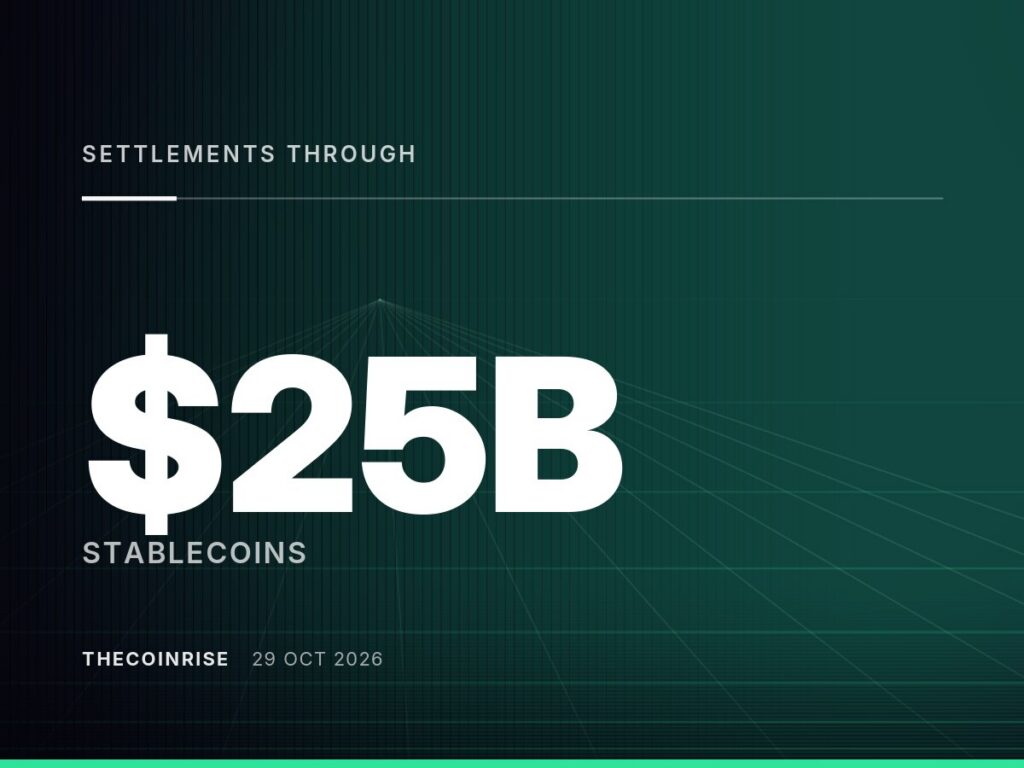
Visa has reported a sharp rise in stablecoin activity across its payment network. The company's annualized stablecoin settlement run rate has surpassed $25 billion, according to figures shared this week. That figure marks a tenfold increase compared with the same period last year.
Alongside the volume growth, Visa disclosed it now supports more than 225 card programs tied to stablecoin infrastructure. These programs let issuers and partners settle transactions using digital dollars rather than relying solely on traditional banking rails. The expansion suggests stablecoins are moving from experimental pilots into everyday payment operations at scale.
Visa has spent several years building out stablecoin settlement capability, framing it as a way to modernize cross-border payments and reduce settlement friction for partners. The latest numbers indicate that effort is translating into measurable transaction volume rather than remaining a limited test case. A tenfold jump in a single year is a notable acceleration for a payments network of Visa's size.
The growth also reflects a wider shift in how traditional financial infrastructure is incorporating stablecoins. Banks, fintechs, and card issuers have increasingly looked to stablecoin rails to speed up settlement times and cut costs tied to currency conversion. Visa's scale gives it a unique vantage point on how quickly that shift is happening across its global merchant and issuer network.
The question of which stablecoins stand to gain the most from this growth remains central to the story. Visa's settlement infrastructure has historically leaned on widely used dollar-pegged tokens that offer deep liquidity and regulatory clarity, since institutional partners tend to favor stablecoins with established compliance track records. As Visa's volume climbs, issuers of the stablecoins embedded in its settlement flows are positioned to see greater transaction throughput tied to their tokens.
The disclosure arrives as regulatory frameworks for stablecoins continue to take shape in major markets, including the United States. Clearer rules around reserve backing and issuer oversight have made large payment networks more comfortable scaling stablecoin integrations. Visa's figures offer one of the clearest signals yet that this regulatory progress is translating into real settlement volume rather than remaining theoretical.
Market Impact
A tenfold increase in Visa's stablecoin settlement run rate points to growing institutional comfort with digital-dollar infrastructure for mainstream payments. For stablecoin issuers embedded in Visa's network, higher settlement volume typically translates into greater liquidity demand and transaction fee revenue, reinforcing their position in the competitive stablecoin market.
The expansion to more than 225 card programs also suggests issuers and fintech partners are increasingly comfortable building consumer-facing products on stablecoin rails. If this trend continues, it could pressure traditional settlement providers to accelerate their own digital-asset integrations, while giving dominant stablecoins an edge in capturing future payment volume.
Visa's reported growth underscores how stablecoins are increasingly embedded in mainstream payment settlement rather than confined to crypto trading. The scale of the increase suggests this shift is gaining momentum heading into next year.
Frequently Asked Questions
What did Visa report about its stablecoin settlement volume?
Visa said its annualized stablecoin settlement run rate has exceeded $25 billion, a tenfold increase from a year earlier.
How many card programs does Visa now support using stablecoin infrastructure?
Visa disclosed it supports more than 225 card programs built around stablecoin settlement rails.
Which stablecoins benefit most from Visa's growth?
Visa has not detailed a full breakdown, but issuers of widely used, compliant dollar-pegged stablecoins integrated into its settlement network are positioned to gain from higher transaction volume.
Why does this growth matter for the broader crypto market?
It signals that major payment networks are scaling stablecoin use beyond pilot programs, pointing to deeper integration of digital dollars into everyday financial infrastructure.